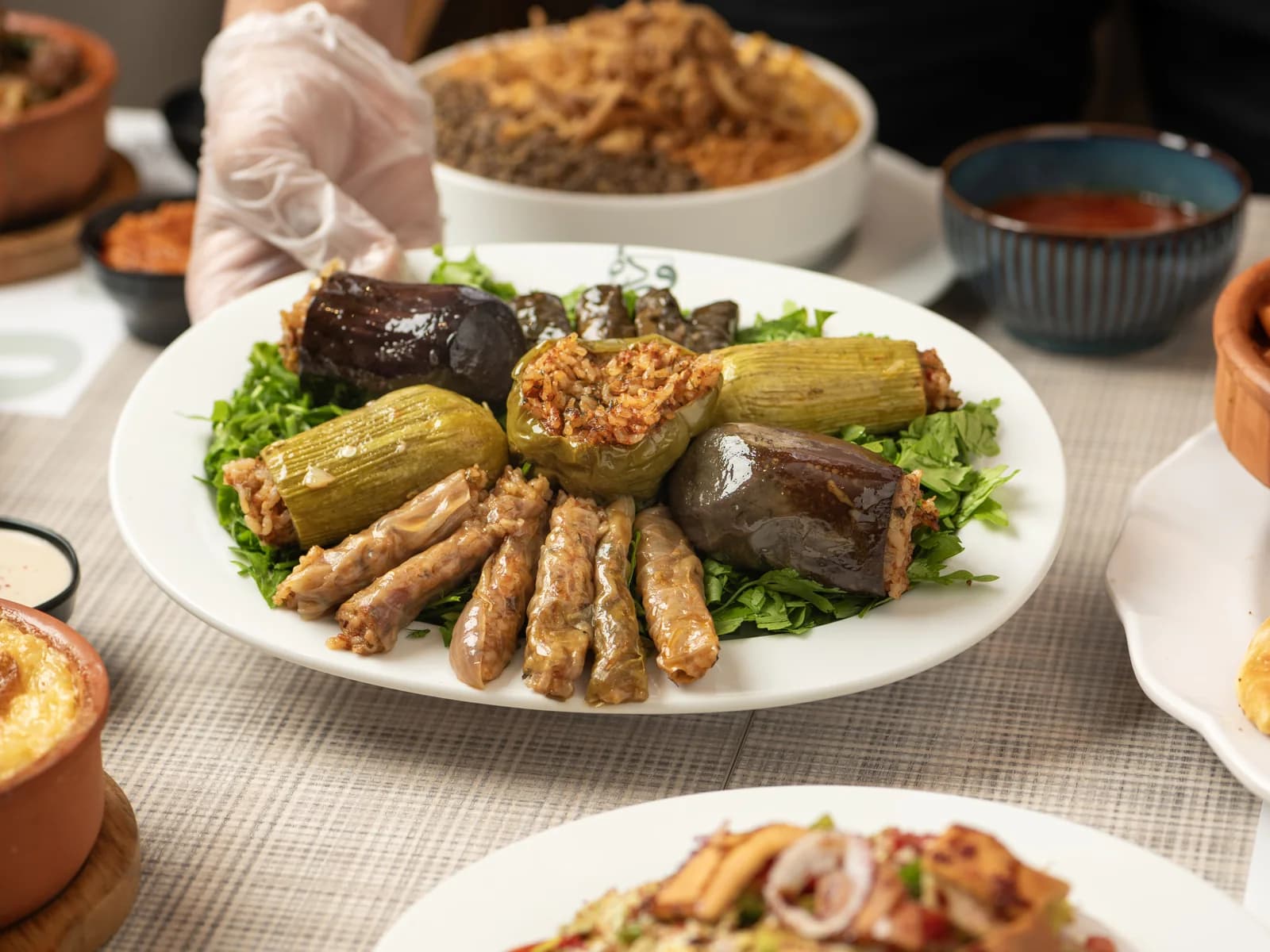
If one dish says «this is Ramadan iftar in an Egyptian home», it is the tray of mahshi. Ramadan mahshi is not just a side dish; it fills the middle of the table with colour: the green of grape leaves, the pale white of cabbage, and golden mombar beside them.
This article is not about how to roll mahshi or about its history; those have their own articles, which we point to. It is about a practical question: how to choose Ramadan mahshi and place it well on the iftar table.
Why mahshi loves Ramadan
- It is prepared ahead: rolling can be done the day before, cooking before maghrib.
- It feeds many: one tray is shared by the whole family.
- It goes with any main dish: chicken, meat, pigeon, grills.
- Its light sourness, especially in grape leaves, opens the appetite after soup.
In Egyptian homes, mahshi day is a gathering day: the women sit rolling while the talk flows. For more of that story, read mahshi in Egyptian cuisine.
Kinds of Ramadan mahshi: which suits your table?
Grape leaves: the lightest and most requested
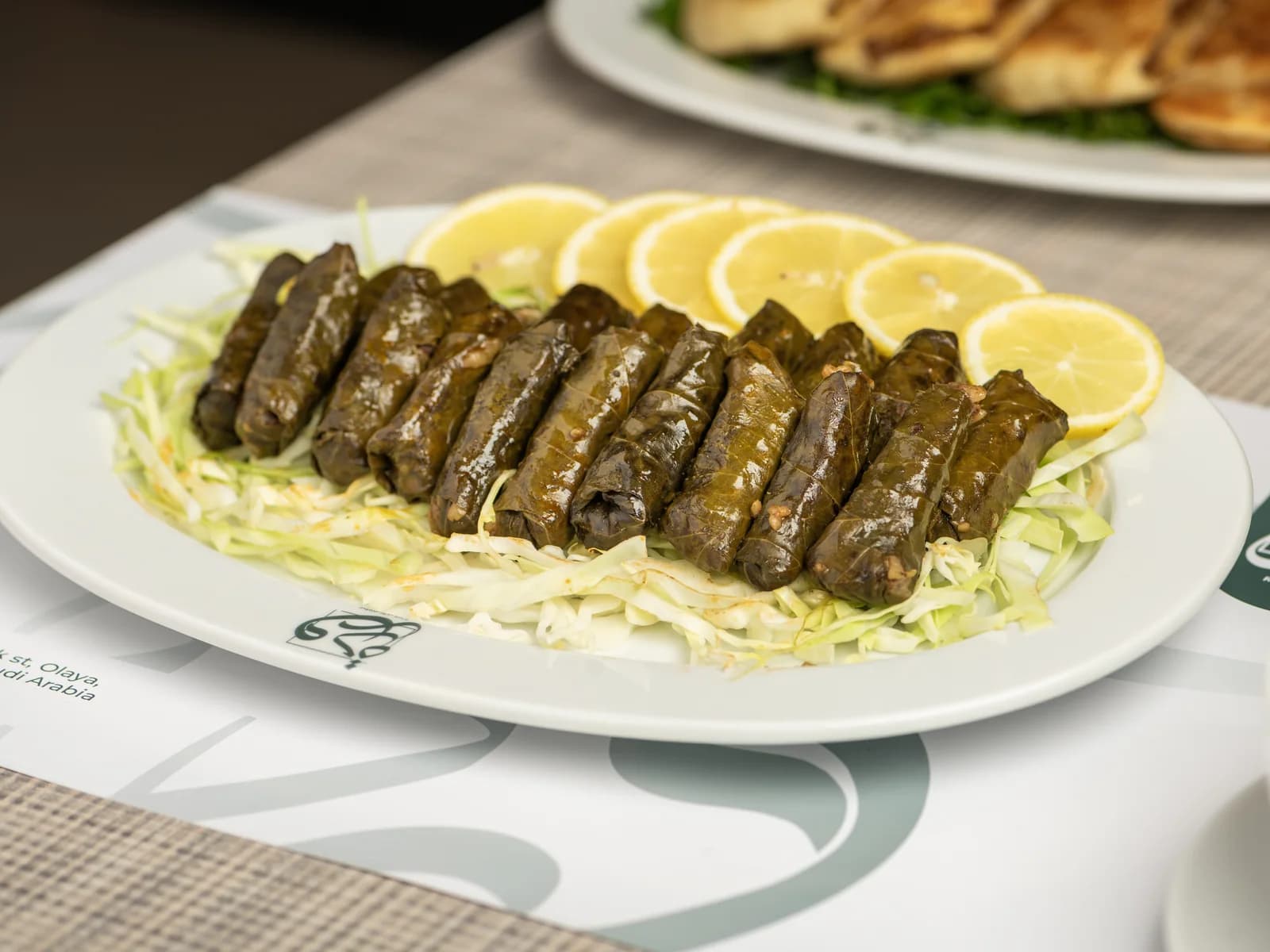
Grape leaves are small, tangy fingers, easy to eat beside soup or as a starter before the main dish. That is why in many homes they go on the table right at maghrib.
Cabbage: the smell of winter
Cabbage (called «malfouf» in Saudi Arabia, «kromb» in Egypt) has a gentler taste, and many homes cook it with cumin. Ramadan 1448 is expected to begin around early-to-mid February 2027 by astronomical calculation, with the official start set by the moon sighting. So the month falls in winter, which is cabbage season in Egypt.
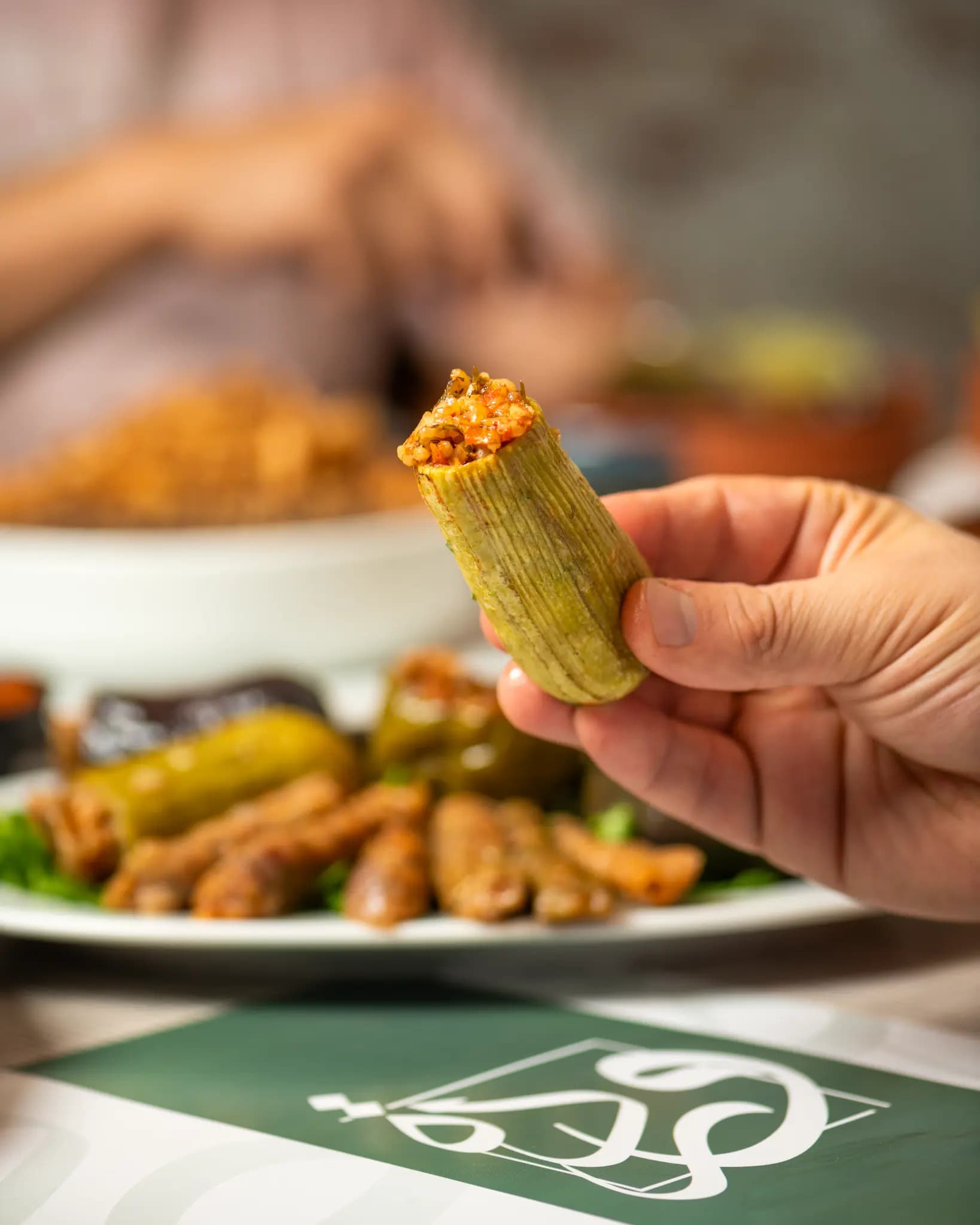
Zucchini, peppers and aubergine
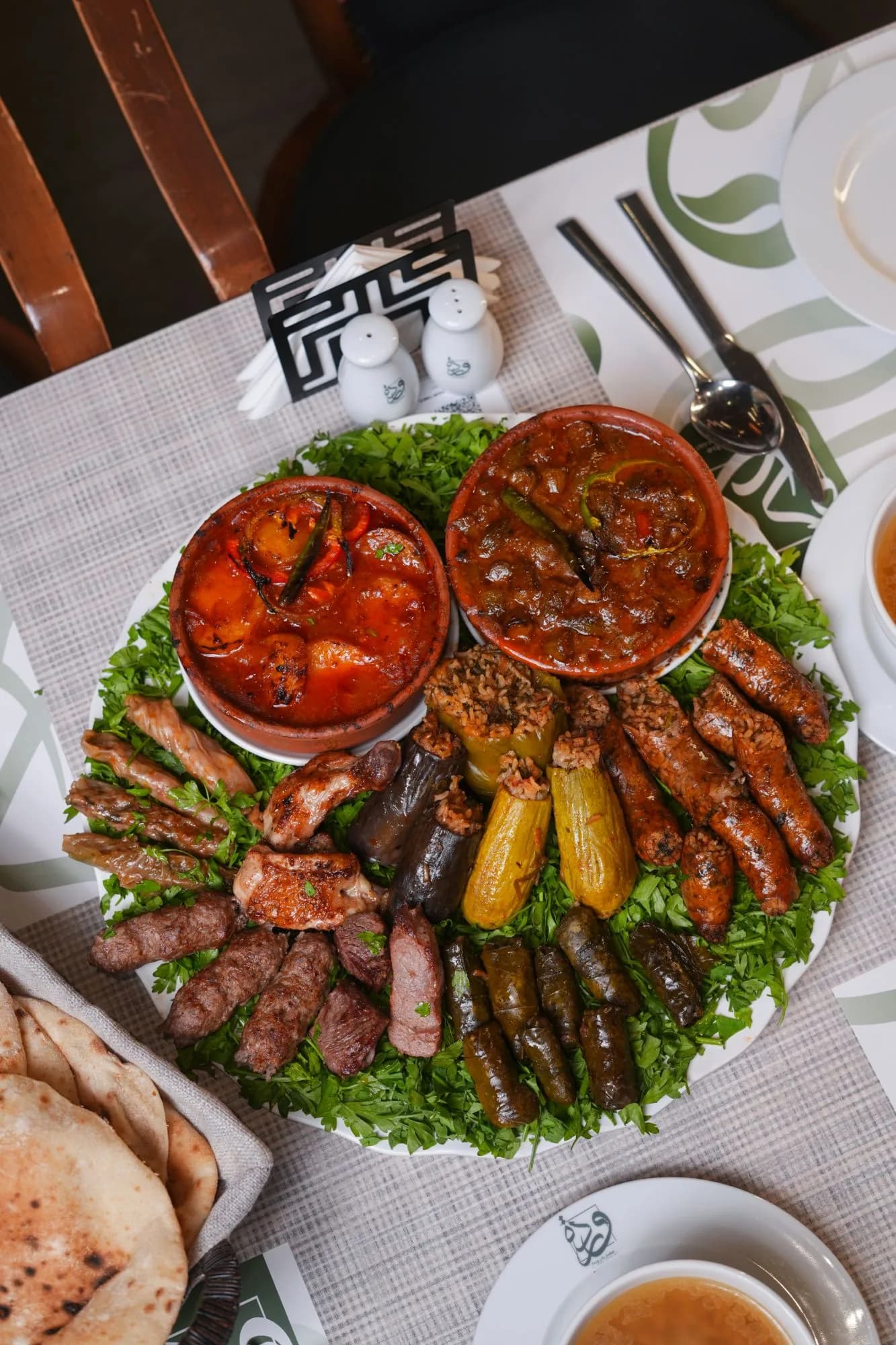
Mixed mahshi brings all the vegetables together in one tray, which is ideal for gatherings because everyone picks what they like.
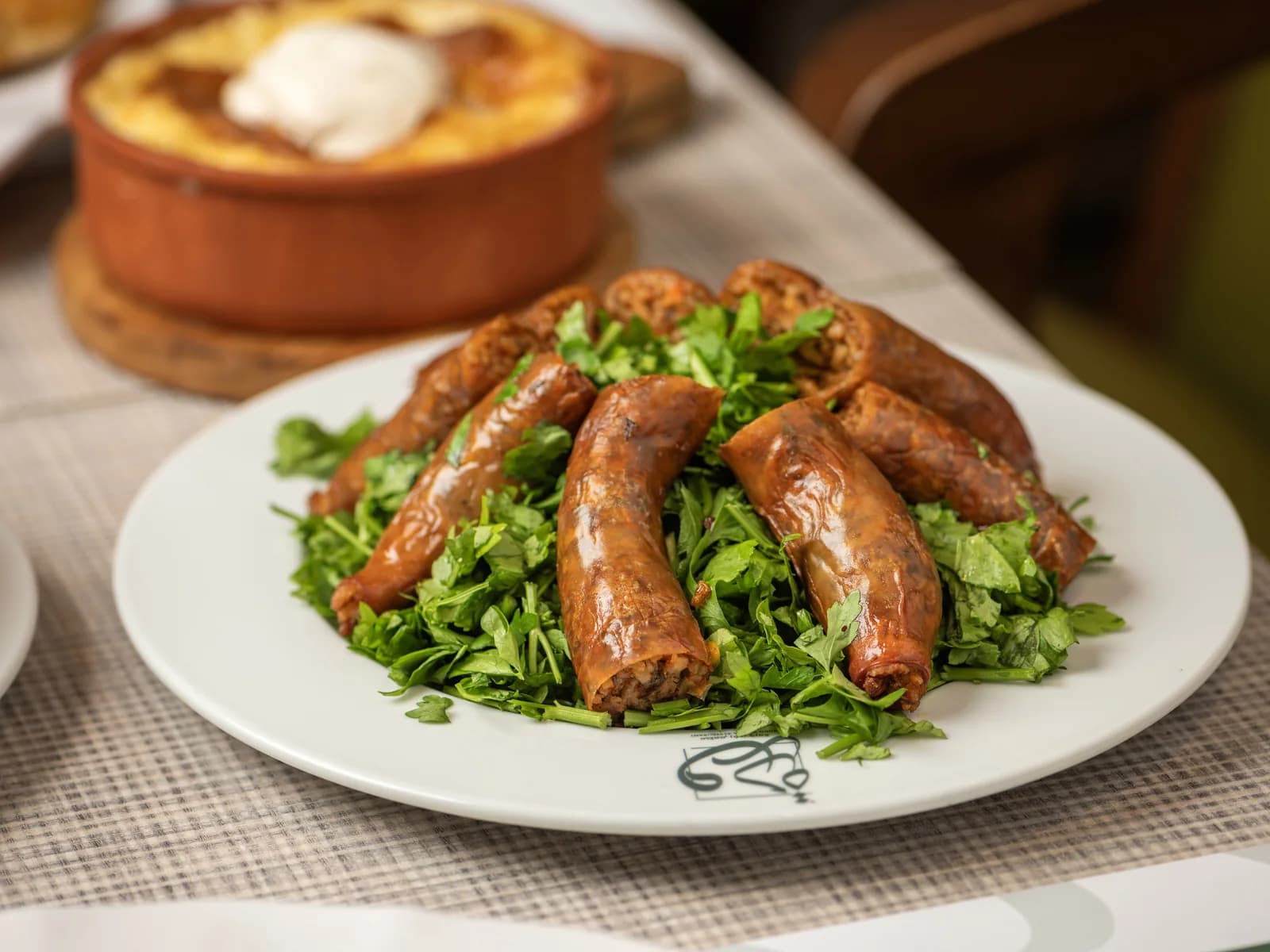
Mombar: the rich one
Mombar is stuffed with rice and herbs and fried, and it is heavier than the other kinds. So it is best placed on the table in a small amount as a special extra, not as a main portion for everyone. Details in Egyptian mombar.
A quick comparison of Ramadan mahshi
| Kind | Feel | When to serve | Who it suits |
|---|---|---|---|
| Grape leaves | Light and tangy | From the start of the meal | Almost everyone |
| Cabbage | Gentle and spiced | With the main dish | Lovers of home taste |
| Mixed | Varied | In the middle for gatherings | Big families |
| Mombar | Rich and crisp | As a small side | Lovers of rich food |
Secrets of a proper mahshi table
Mahshi beside a protein
On its own, mahshi is not a full iftar in most homes. It usually sits beside:
- Fried or boiled chicken, which is home cooking.
- Stuffed pigeon, discussed in stuffed pigeon in Ramadan.
- Grills such as kofta or lamb chops; read the best grills for Ramadan iftar.
Yogurt and salad
In many homes a bowl of yogurt or a green salad beside the mahshi is a must; it cuts the richness and makes the meal lighter.
Lemon
A squeeze of lemon over grape leaves is a common habit in many homes, and it brings out the sour taste.
Hot or warm?
Mahshi is eaten hot or warm, and in many homes grape leaves are also eaten cold. If you prepare it well before maghrib, keep it covered in the pot until the call to prayer so it does not dry out.
Do not overfill the plate
Mahshi is more filling than you think because of the rice. Start with a small amount beside the main dish and go back if you want more.
A common mistake: a table that is all rice
Mahshi is built on rice, and so are fatteh, macaroni béchamel and plain rice itself. If you put mahshi, fatteh, macaroni and rice on the same table, the meal becomes very heavy and people are full after a few spoonfuls. Better:
- If mahshi is on the table, skip the plain rice or serve less of it.
- Put one protein dish and a salad beside it, not more than one heavy starchy dish.
- If you want fatteh at the same feast, make a smaller tray of mahshi, or serve only grape leaves.
A balanced table lets guests taste everything without feeling heavy before taraweeh.
Mahshi that brings two things together
Some Egyptian dishes combine mahshi and meat in one, which suits a table with fewer dishes:
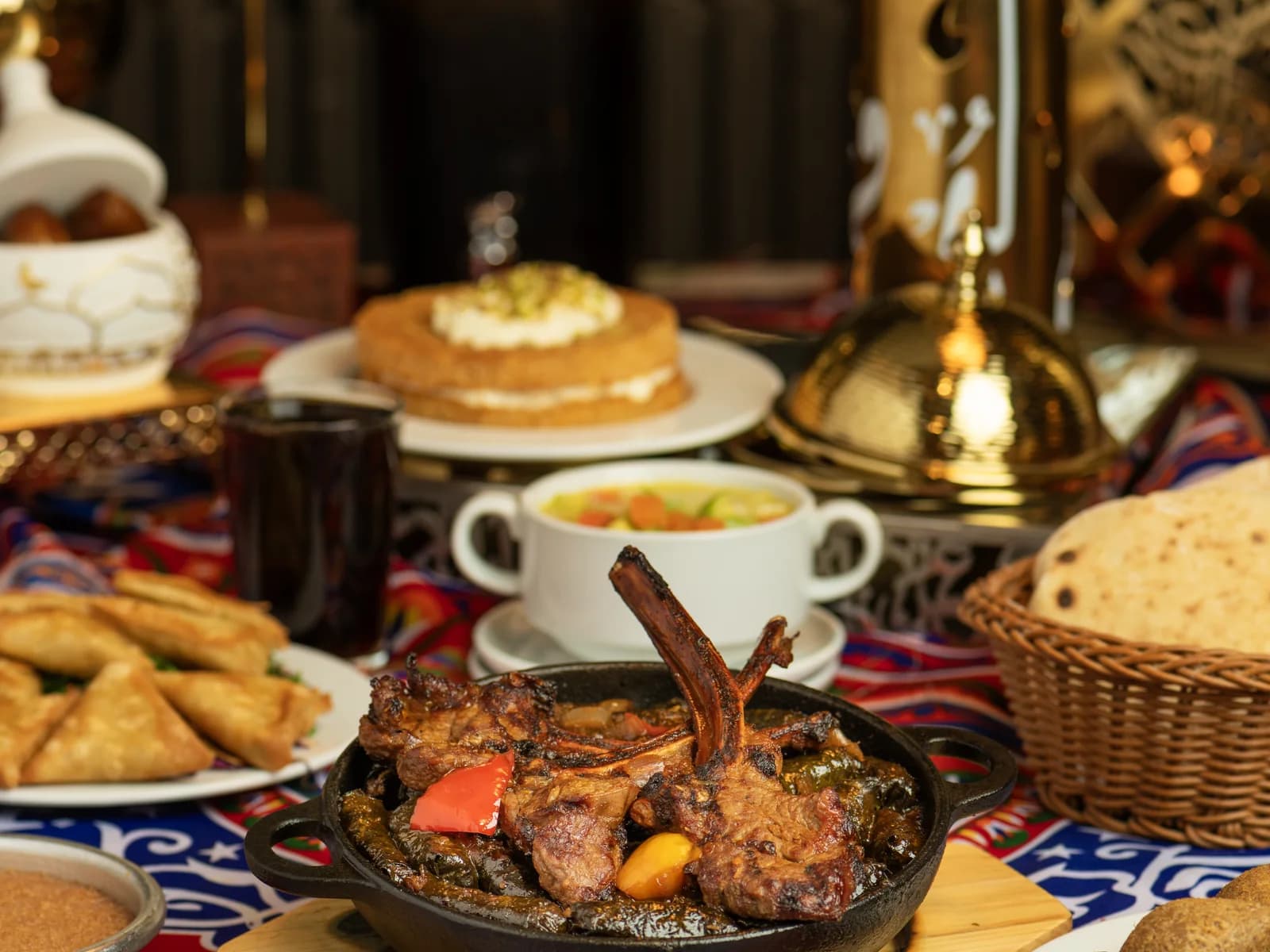
- Grape leaves with lamb chops: grape leaves in pomegranate molasses with tender lamb chops.
- Grape leaves and trotters casserole: for lovers of rich food.
For how mahshi is made at home in detail, read mahshi the Egyptian way.
Ramadan mahshi from Rokn Warda
At Rokn Warda in Al Khobar, the mahshi on the menu is:
- Mixed mahshi: stuffed cabbage, grape leaves, peppers, zucchini and aubergine, the Egyptian way.
- Stuffed grape leaves: grape leaves filled with seasoned Egyptian rice and herbs.
- Mombar: stuffed with rice, herbs and vegetables and fried golden.
- Grape leaves with lamb chops and the grape leaves and trotters casserole.
Note that cabbage comes as part of the mixed mahshi, not as a dish on its own.
You can order for delivery in Al Khobar and Dammam from the menu, or book your table and break your fast with us in Al Khobar. If you are planning a full table, see a complete Egyptian Ramadan iftar menu. How to order for a time you choose before maghrib, and everything new for Ramadan, is on Ramadan with Rokn Warda.