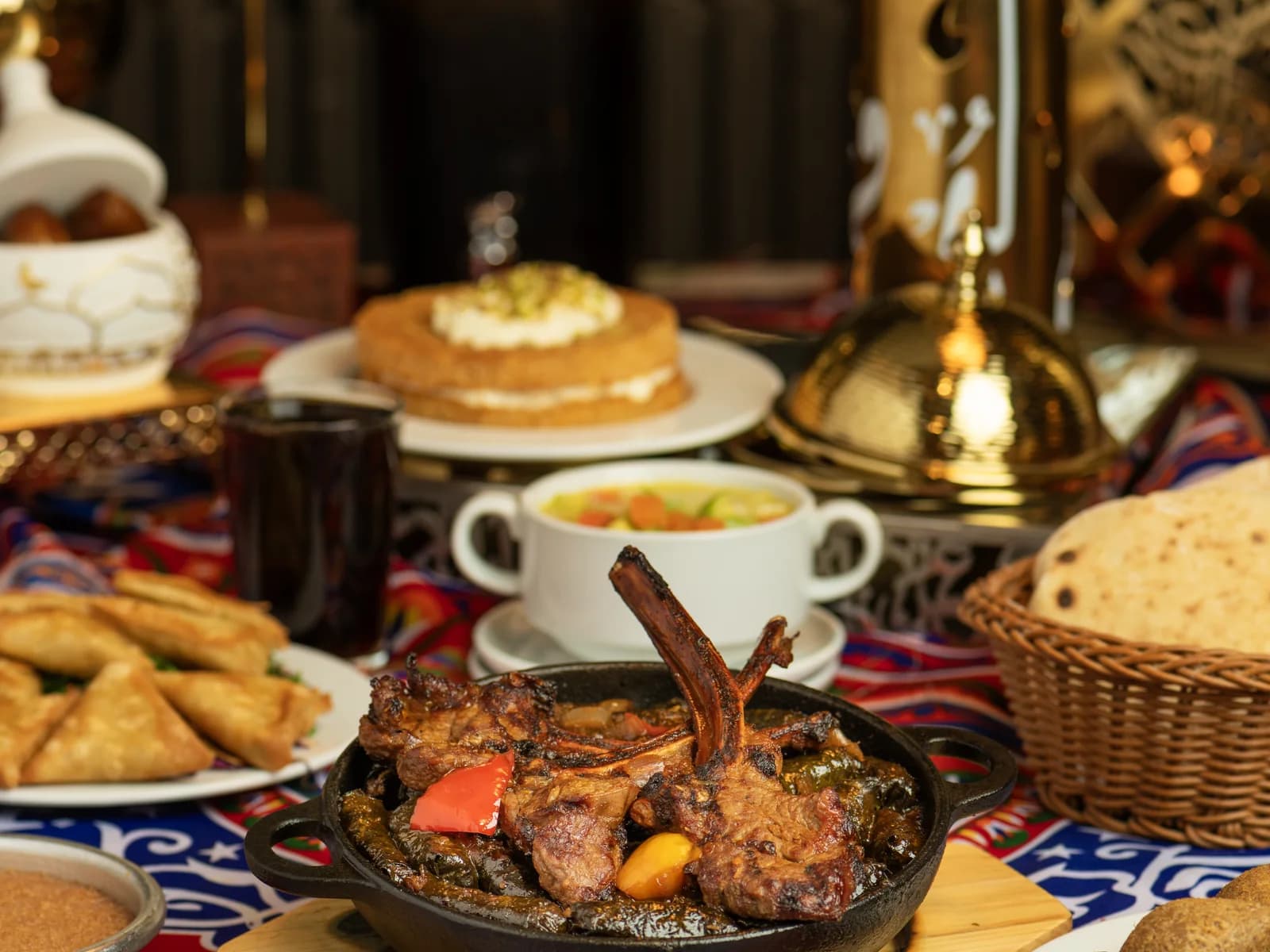
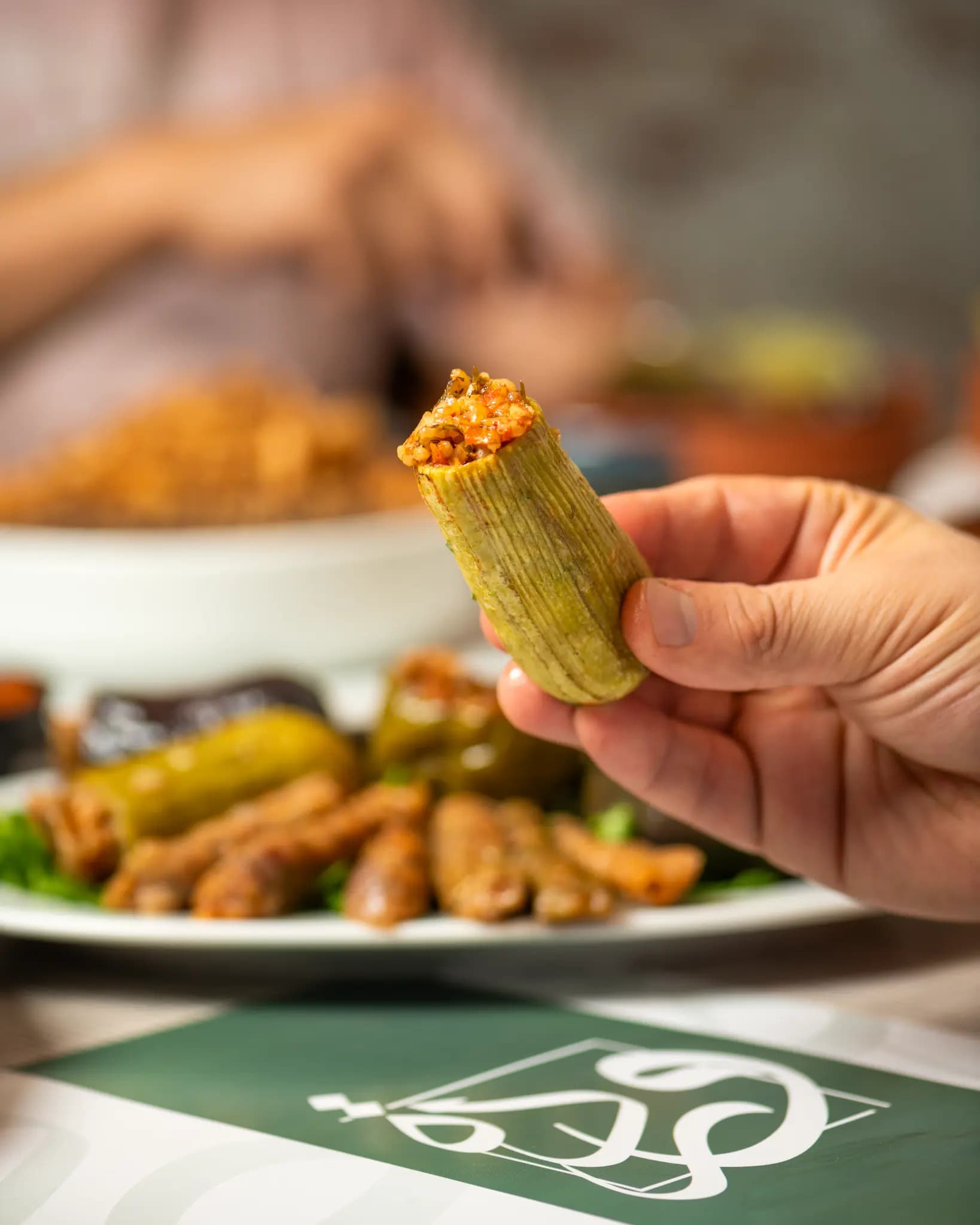
Open the menu of an Egyptian restaurant, or sit at an Egyptian family feast, and you will find that mahshi is a whole family: grape leaves, cabbage, zucchini and mombar, with peppers and aubergines beside them. They are all «mahshi», but each has its own wrap, taste, texture and way of cooking. So if you are unsure which to order, or you are asking «what is the difference anyway?», this article is for you.
We will not explain rolling step by step or the history of mahshi here; those have their own articles: mahshi the Egyptian way and mahshi in Egyptian cuisine. This is a comparison of the four best-known kinds, so you can recognise each and choose to taste.
In this article
First: the names
- Kromb (cabbage) in Egypt is malfouf in Saudi Arabia and the Levant. If you see «malfouf» on a menu, that is it.
- Zucchini is written «kousa» either way; it is the same vegetable.
- Grape leaves go by that name in most Arab countries, and in some places they have other names depending on how they are cooked.
- Mombar is not a vegetable at all, and that is the first big difference.
The difference between grape leaves, cabbage, zucchini and mombar in a table
| Grape leaves | Cabbage (malfouf) | Zucchini | Mombar | |
|---|---|---|---|---|
| Vegetable / wrap | Vine leaves, rolled into thin fingers | Softened cabbage leaves, rolled into thicker fingers | Zucchini hollowed out | Casings cleaned very well, not a vegetable |
| Filling | Egyptian rice, herbs and tomato, in many homes with extra sourness from lemon | Usually the same filling, and some like cumin or garlic with it | The same filling, and the zucchini flavours it from inside | Rice, herbs, tomato and spices, close to the mahshi filling |
| Taste | Tangy and light | Mild, with the sweetness of cabbage | Soft, with a clear vegetable taste | Rich and hearty |
| How it is cooked | Packed tightly in a pot with broth on a low heat | Like grape leaves; the cabbage is blanched first to soften | Packed in the pot with tomato broth on a low heat | Boiled in broth, then cut into rings and fried |
| Who it suits | Almost everyone, and first-timers | Lovers of a mild homely taste | Children and those who like light food | Lovers of rich, crisp food |
This is what is common in Egyptian homes, and every home has its own touch: some add minced meat to the filling, some make it meatless for fasting, some add more herbs or tomato.
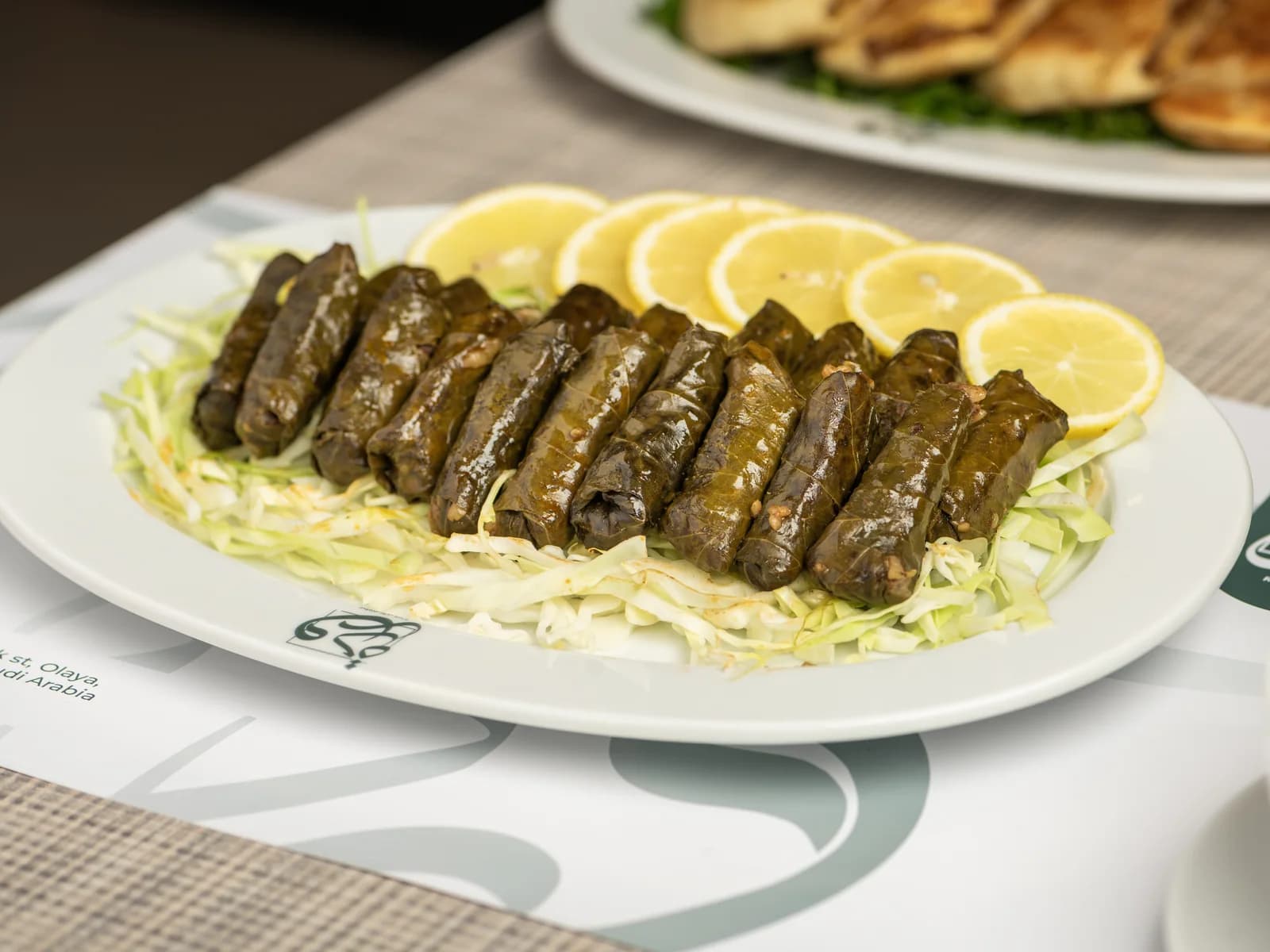
Grape leaves: small and tangy
Grape leaves are the smallest and thinnest of the mahshi. The leaf gives a gentle sourness that sets them apart, and in many homes lemon is squeezed over them or added to the broth. Being small, they are eaten in one bite, which is why they are the mahshi most often served as a starter or alongside any dish.
Rolling them thin and tight is an art of its own in Egyptian homes; a well-rolled finger does not come apart while cooking. Grape leaves are eaten hot or warm, and in many homes cold too.
Cabbage: mild, with a home taste
Cabbage mahshi comes in thicker fingers than grape leaves, with a softer leaf and a milder taste with a slight sweetness. The cabbage has to be blanched first so it rolls without breaking. In many homes it is made with the aroma of cumin or garlic, which gives it its homely taste. Many people link it with winter, the cabbage season in Egypt.
Zucchini: soft and light
Zucchini is a different story: not a leaf that is rolled but a vegetable hollowed out and filled. The result is a soft texture, with the zucchini's own taste clear alongside the rice. The key is not to fill it to the top, because the rice swells. In the same pot you will usually find aubergines and peppers, hollowed out on the same idea.
Mombar: the odd one in the family
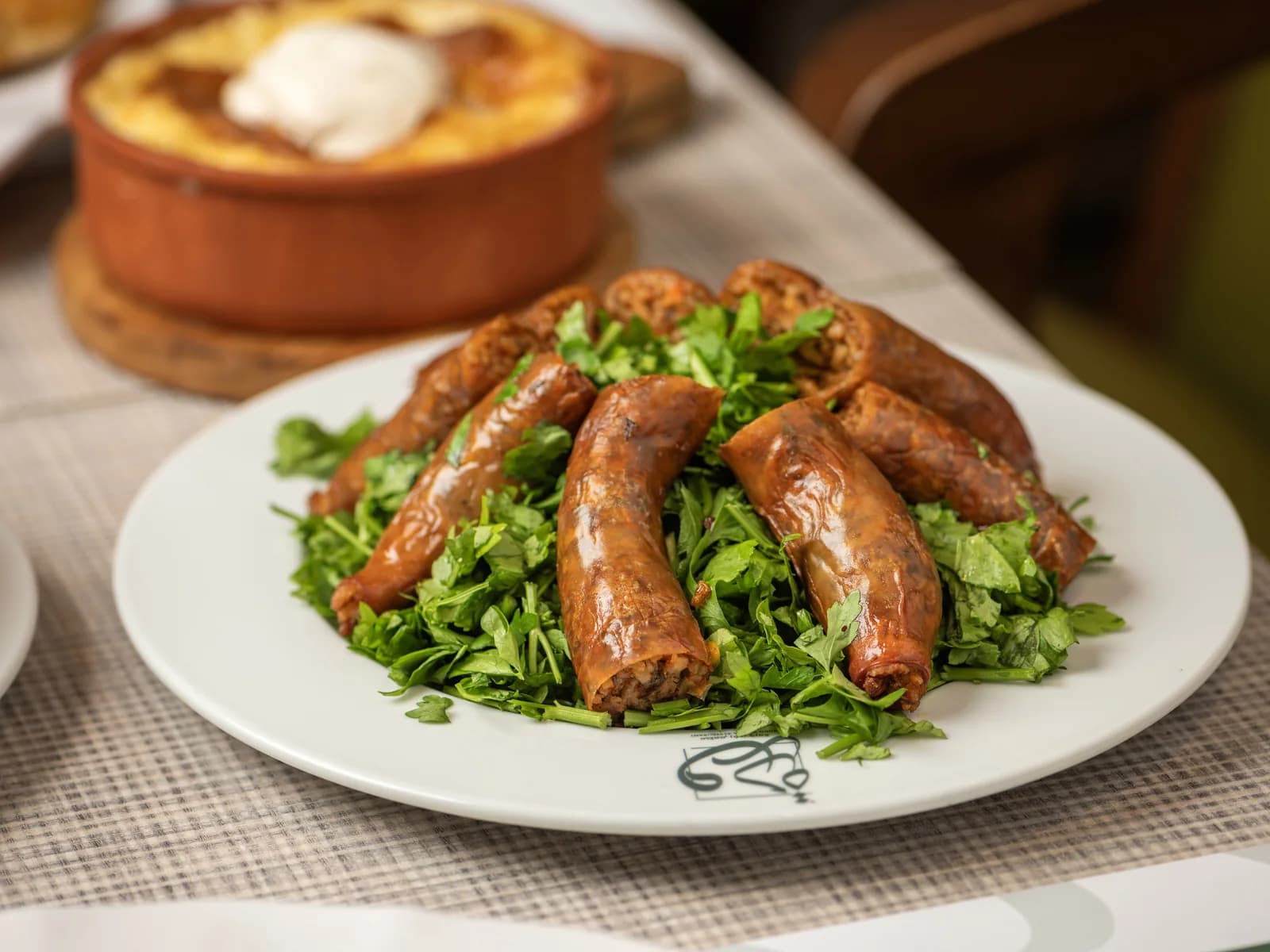
Mombar is the only one whose wrap is not a vegetable: casings cleaned very thoroughly and stuffed with rice, herbs and spices. The biggest difference is in the cooking: it is boiled in broth, then cut into rings and fried until golden and crisp outside. That is why it tastes rich and has a crunch, and it is usually served as a side or starter rather than a plate for each person. The full story is in Egyptian mombar.
Which should you choose?
| If you want | Try |
|---|---|
| Something light and tangy | Grape leaves |
| A mild home taste | Cabbage |
| Something soft for children | Zucchini |
| Something rich and crisp | Mombar |
| A taste of everything | Mixed mahshi |
If it is your first time with Egyptian mahshi, mixed is the best start, because you taste several kinds on one plate and find out which you like. If the mahshi will sit beside a big meat dish at a family feast, see also lamb shank with freekeh and fatteh.
Mahshi on the Rokn Warda menu
At Rokn Warda in Al Khobar, the mahshi on the menu, in its own words:
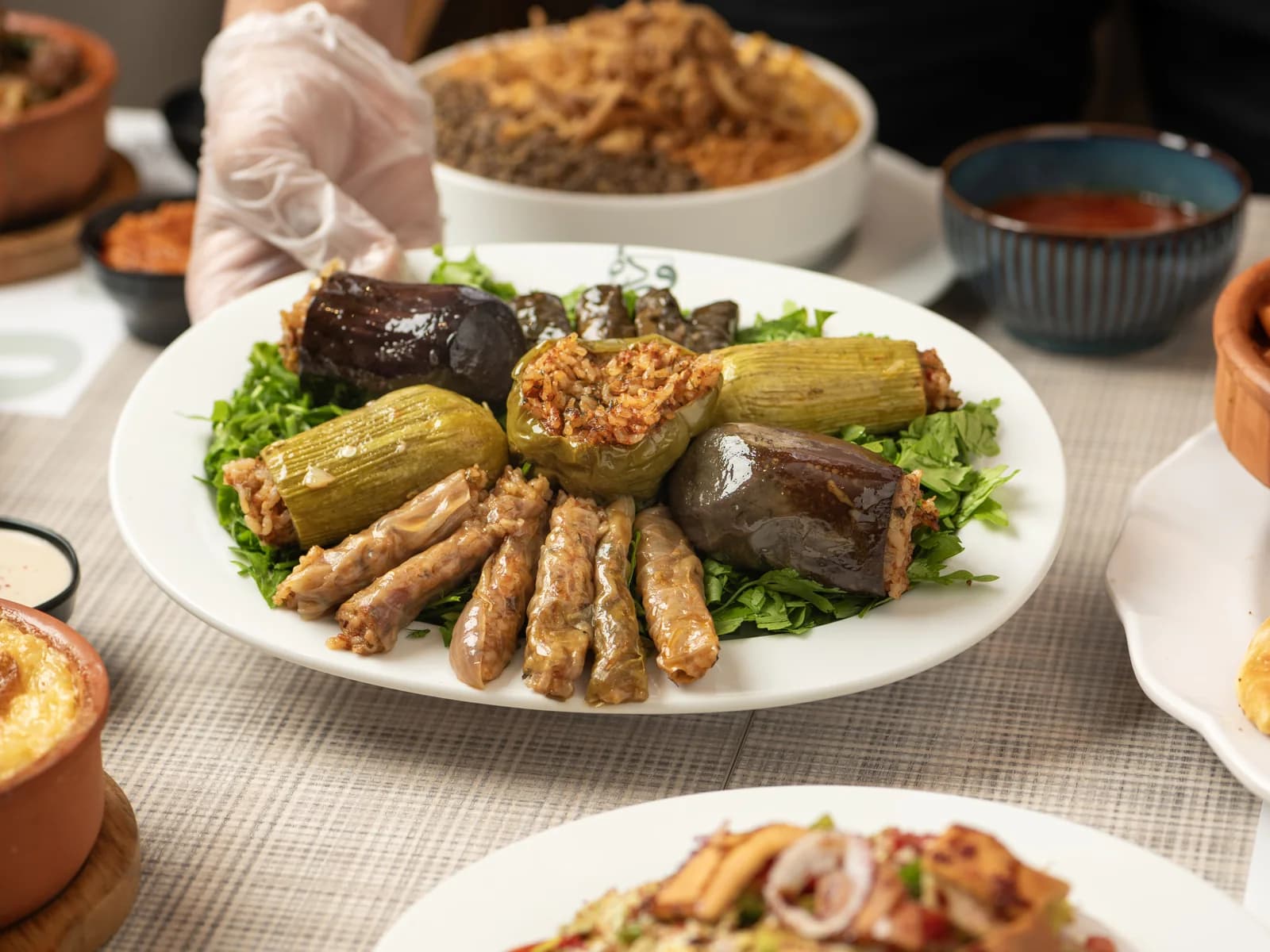
- Mixed mahshi: cabbage, grape leaves, peppers, zucchini and aubergine stuffed the Egyptian way.
- Stuffed grape leaves: grape leaves stuffed with seasoned Egyptian rice and herbs.
- Mombar: mombar stuffed with rice, herbs and vegetables, fried to a golden finish.
- Grape leaves with lamb chops: grape leaves with pomegranate molasses and tender lamb chops.
- Grape leaves and trotters casserole: stuffed grape leaves cooked with trotters, with an authentic Egyptian flavour.
Note: cabbage (malfouf) and zucchini come within the mixed mahshi, not as dishes on their own. Order from the menu for delivery in Al Khobar and Dammam, or come and eat them hot in the dining room. If you are looking for mahshi in Al Khobar specifically, read mahshi in Al Khobar worth trying, and for the Ramadan table, Egyptian Ramadan mahshi.
Frequently asked questions
Are kromb and malfouf the same thing? Yes. Kromb is the Egyptian name for cabbage, and malfouf is the name in Saudi Arabia and the Levant.
Which mahshi is lightest? Usually grape leaves and zucchini are lighter, and mombar is the richest because it is fried.
Does mombar count as mahshi? Yes, it is stuffed with rice like the others and comes to the table with them, but its wrap is casing, not a vegetable, and it is fried at the end.
Can I order cabbage on its own at your restaurant? No, cabbage is part of our mixed mahshi. The ones that come on their own are stuffed grape leaves and mombar.
In the end, the best way to learn the difference is to taste. See the menu and order a plate of mixed mahshi, or come to Al Khobar and book your table; the table will be waiting.