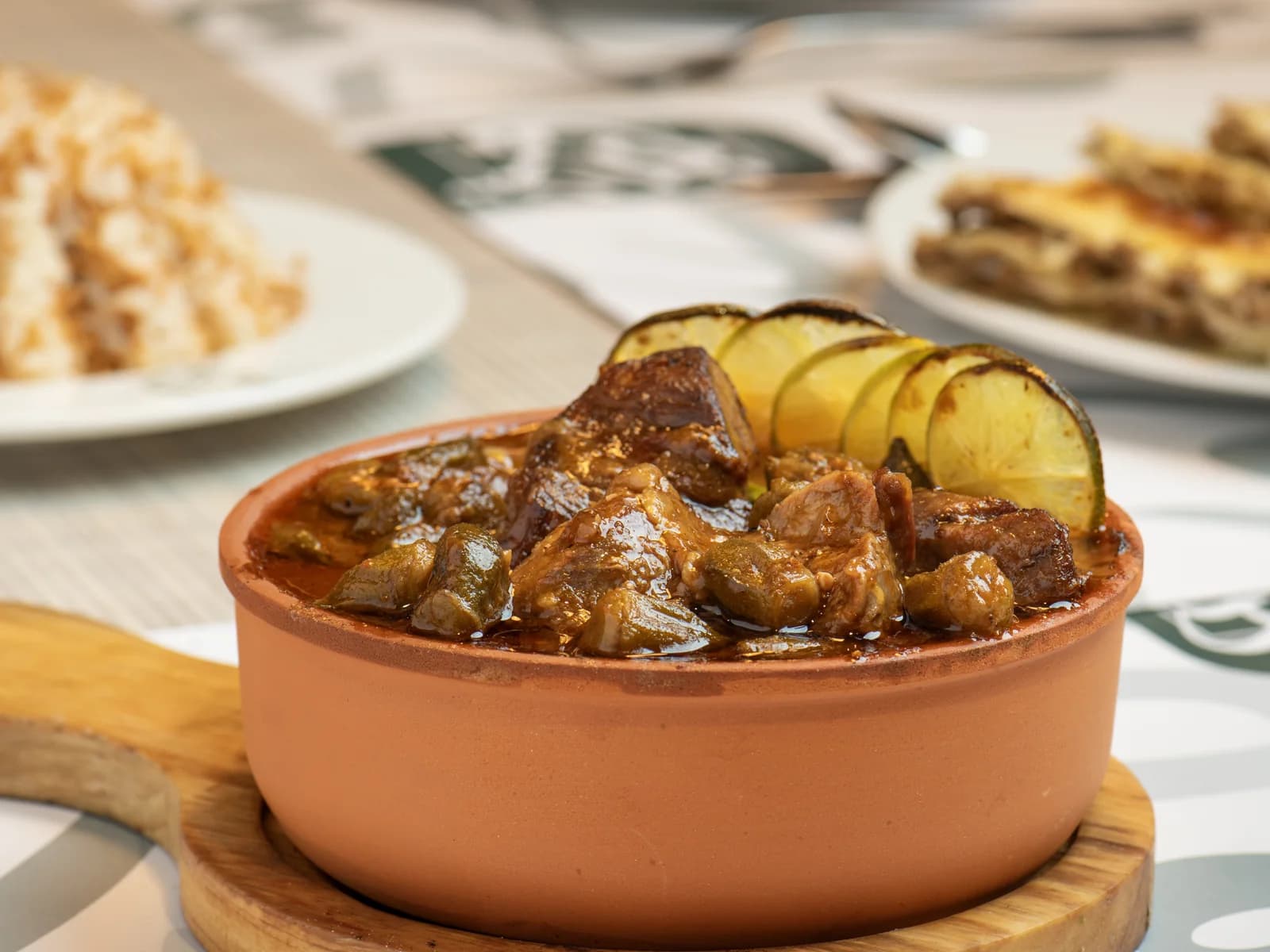
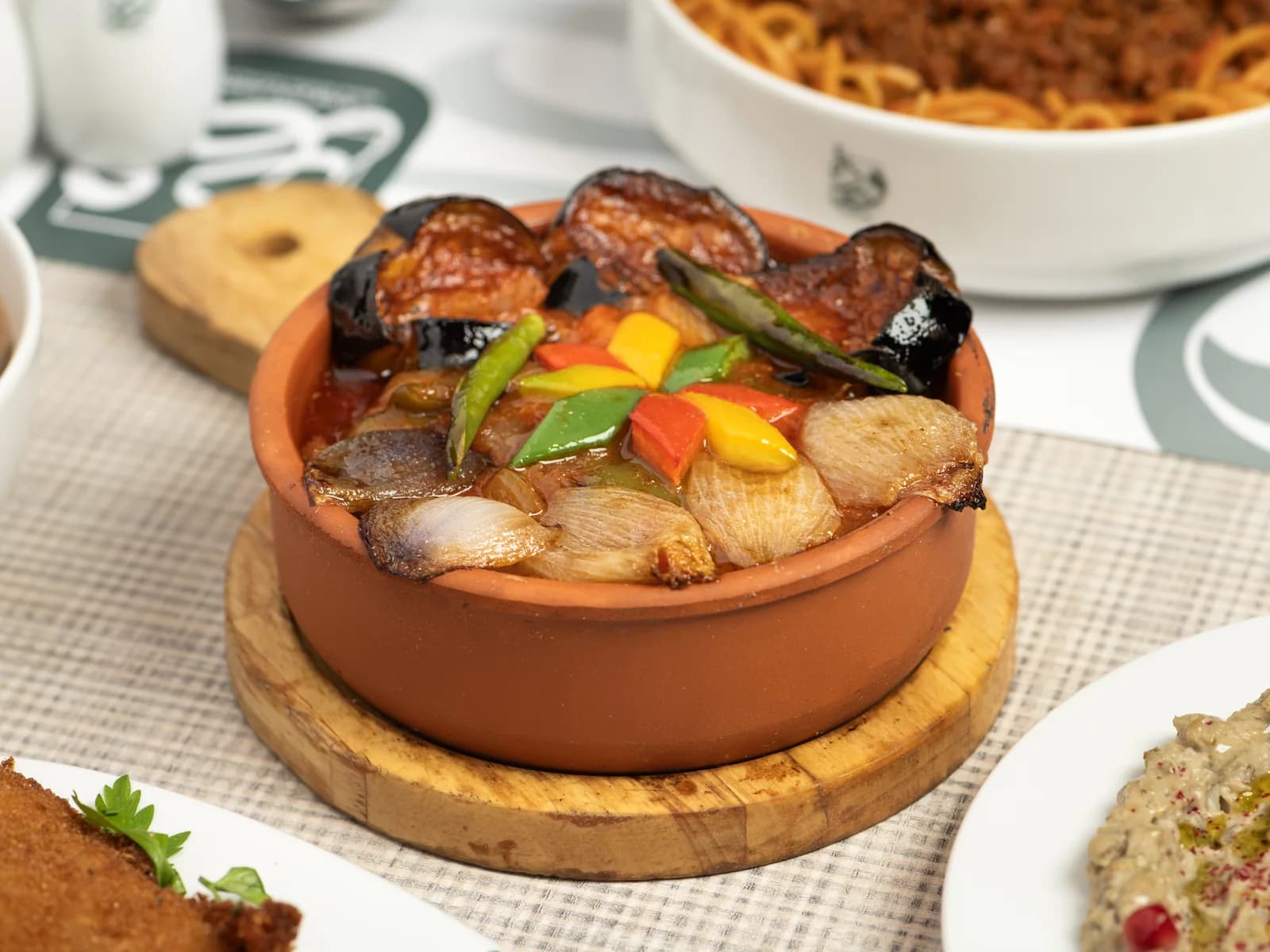
Egyptian moussaka is a simple home dish, but it has secrets that separate a heavy, oily plate from a balanced, tasty one. Here is the Egyptian way as homes make it, with or without minced meat.
Ingredients
| Ingredient | Notes |
|---|---|
| Eggplant | The large round kind is the classic for moussaka; some use the long kind |
| Green peppers | Cut into rings or strips |
| Onion and garlic | The base of the sauce |
| Tomatoes | Tomato juice, paste or both |
| Minced meat | Optional, for the meat version |
| Spices | Salt and black pepper; some homes add cumin or chilli |
| Vinegar | Many homes add a small spoon to the sauce |
Step one: preparing the eggplant
The eggplant is peeled fully or in stripes, then cut into rounds or lengthwise slices.
An important secret: many cooks sprinkle the eggplant with salt, leave it a while, then pat it dry. This draws out some water — some say it also reduces bitterness — and helps the eggplant absorb less oil when fried.
Step two: frying or roasting
Traditionally the eggplant is fried in hot oil until golden and soft, then laid on paper towels to drain.
For a lighter version, many now brush the eggplant with a little oil and roast it in the oven or an air fryer. The taste changes slightly, but the result is much lighter.
The green peppers are also sautéed or lightly fried.
Step three: the meat (if using)
- Soften the onion.
- Add the minced meat and stir until it breaks up and changes colour.
- Season with salt and pepper.
As with macaroni béchamel, the meat should be dry before it goes into the layers.

Step four: the sauce
- Sauté chopped onion, then the garlic.
- Add the tomato juice or paste with salt and pepper.
- Simmer on low heat until the sauce thickens a little.
- Some homes add a spoon of vinegar at the end, for a tang that cuts the richness of fried eggplant.
Step five: the layers
In a tray or clay casserole:
- A layer of eggplant on the bottom.
- A layer of minced meat (if using).
- The green peppers.
- Another layer of eggplant.
- Pour the sauce over everything until covered.
Then into the oven until the sauce is absorbed and thick and the top takes colour.
Secrets of good moussaka
- Drain the eggplant well of oil: the biggest difference between light and heavy moussaka.
- The sauce must not be thin, or the dish turns into soup.
- Do not drown the eggplant in sauce; it binds, it does not float.
- Let it rest: moussaka improves once it settles, and some say it is better the next day.
- A little chilli or hot pepper for those who like heat.
Common mistakes
| Mistake | Result |
|---|---|
| Eggplant fried in oil that is not hot enough | Soaks up too much oil |
| Not drained on paper | An oily dish |
| Eggplant half cooked | Tough texture, raw taste |
| Thin sauce | A runny dish |
How it is served
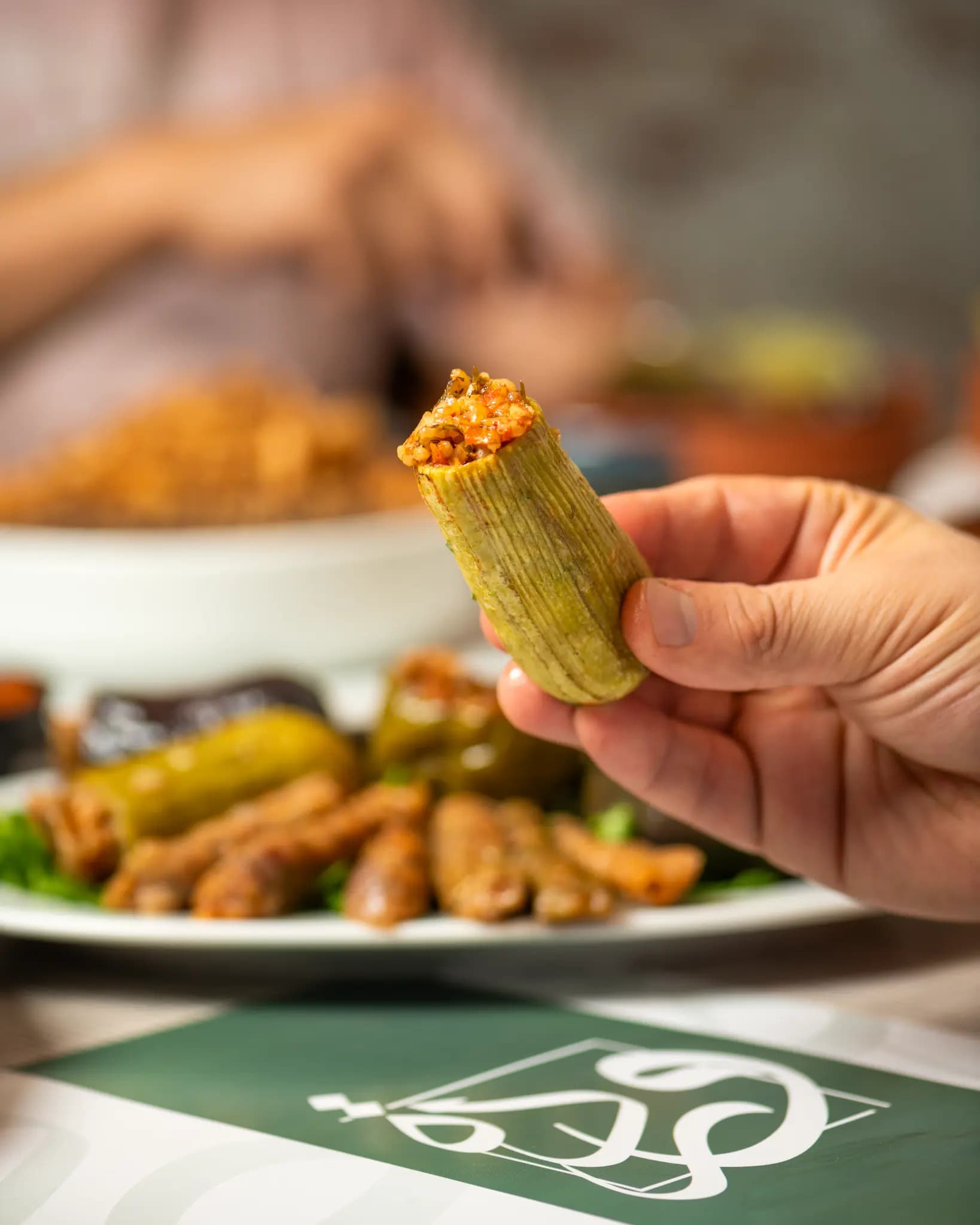
Moussaka can be served hot from the oven, or left to cool and eaten at room temperature, which is very common in Egyptian homes. Beside it go white rice or baladi bread, and a green salad or pickles. Since it keeps well in the fridge, many cook a big batch and eat it over two days.
Meatless moussaka
The meatless version is exactly the same steps without step three, and it is the version many homes make as a fasting dish. Some make up for the meat with extra peppers or onion.
For the story of the name and how Egyptian and Greek moussaka differ, read the story of Egyptian moussaka.
Want it ready?
At Rokn Warda in Al Khobar you will find a moussaka casserole with minced meat: eggplant, minced meat, peppers and onions in a rich tomato sauce. Order it from the menu for delivery in Al Khobar and Dammam, or try it in our dining room. For what to order with it, read moussaka in Al Khobar. For more on clay-pot cooking read Egyptian tawagen: the secret of slow cooking.