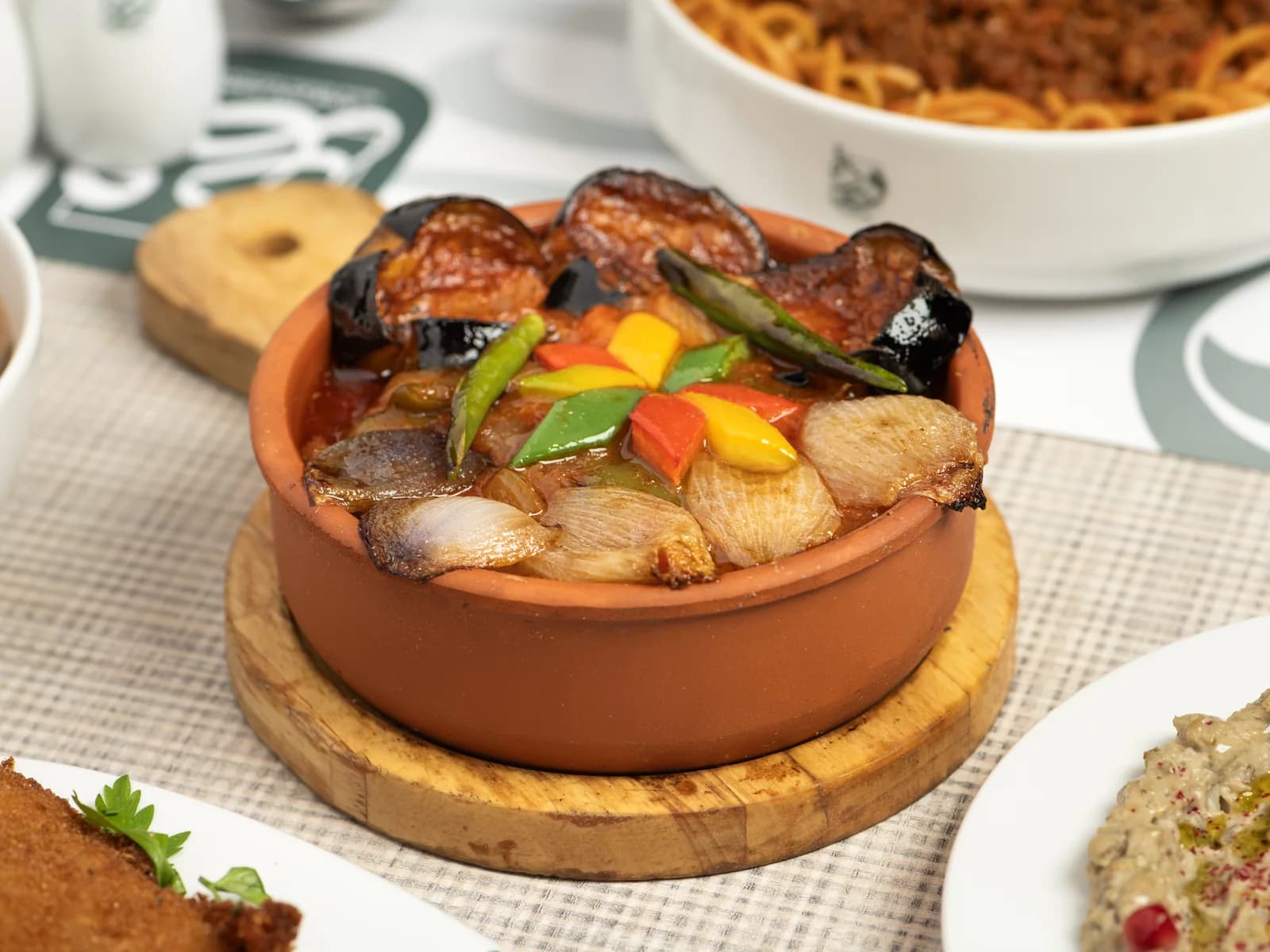
When someone outside the region hears «moussaka», they probably picture the famous Greek dish with a béchamel top. Say it to an Egyptian and they will picture something quite different: fried eggplant in a tomato sauce with garlic and peppers, sometimes with minced meat. Almost the same name, different dishes. What is the story?
Where does the name come from?
A well-known explanation is that «moussaka» is Arabic in origin, from «musaqqa‘a», meaning chilled or eaten cold, and that the word passed into Turkish as «musakka» and from there into Greek. Many etymologists cite this, but as with most old food names, no single document settles exactly when and how it happened.
Fittingly, the name suits Egyptian moussaka well, since in many homes it is eaten cold or at room temperature with bread, not only hot.
Moussaka's relatives around the Mediterranean
| Country | Usual form of the dish |
|---|---|
| Greece | Layers of eggplant and minced meat with a béchamel top, baked |
| Turkey | Eggplant and minced meat in tomato sauce, usually without béchamel, eaten with rice |
| The Levant | In many homes eggplant, tomato and chickpeas, meatless, eaten cold |
| Egypt | Fried eggplant, tomato sauce, green peppers and garlic, with or without minced meat |
The Greek moussaka the world knows today, with its béchamel top, is usually credited to the Greek chef Nikolaos Tselementes in the twentieth century, who was influenced by French cooking. So béchamel on moussaka is a relatively recent addition, not the dish's origin.
Eggplant and tomato: well-travelled ingredients
Moussaka's own ingredients have travelled far. Eggplant comes from Asia, and is said to have spread around the Mediterranean through trade and Arab cooking centuries ago, becoming one of the region's best-known vegetables. Tomatoes come from the Americas and reached the region's kitchens only in recent centuries, spreading widely in Egyptian cooking after that.
So Egyptian moussaka as we know it, with tomato sauce, is much newer than eggplant itself in Egyptian cooking. It shows how «traditional» dishes change over time, each generation adding something.
Egyptian moussaka: what sets it apart
- Eggplant is the star, fried or browned until soft and golden.
- Tomato sauce with garlic ties the whole dish together.
- Green peppers and onion give the familiar Egyptian taste.
- Usually no béchamel, the biggest difference from the Greek one.
- It can be made with minced meat or with no meat at all.
Its place in the Egyptian home
Moussaka is a true home dish in Egypt, not tied to an occasion the way fatteh or macaroni béchamel are. It is an everyday favourite:
- Meatless moussaka: thrifty and filling, and in many homes made as a fasting dish during the fasting periods of Egyptian Christians.
- Moussaka with minced meat: a richer version, made when there is meat in the house or for a simple gathering.
- Eaten with? Baladi bread or white rice, with salad or pickles.
There is a popular Egyptian saying that moussaka tastes better the next day, once the sauce has soaked into the eggplant. It is a home cook's observation rather than a rule, but many swear by it.
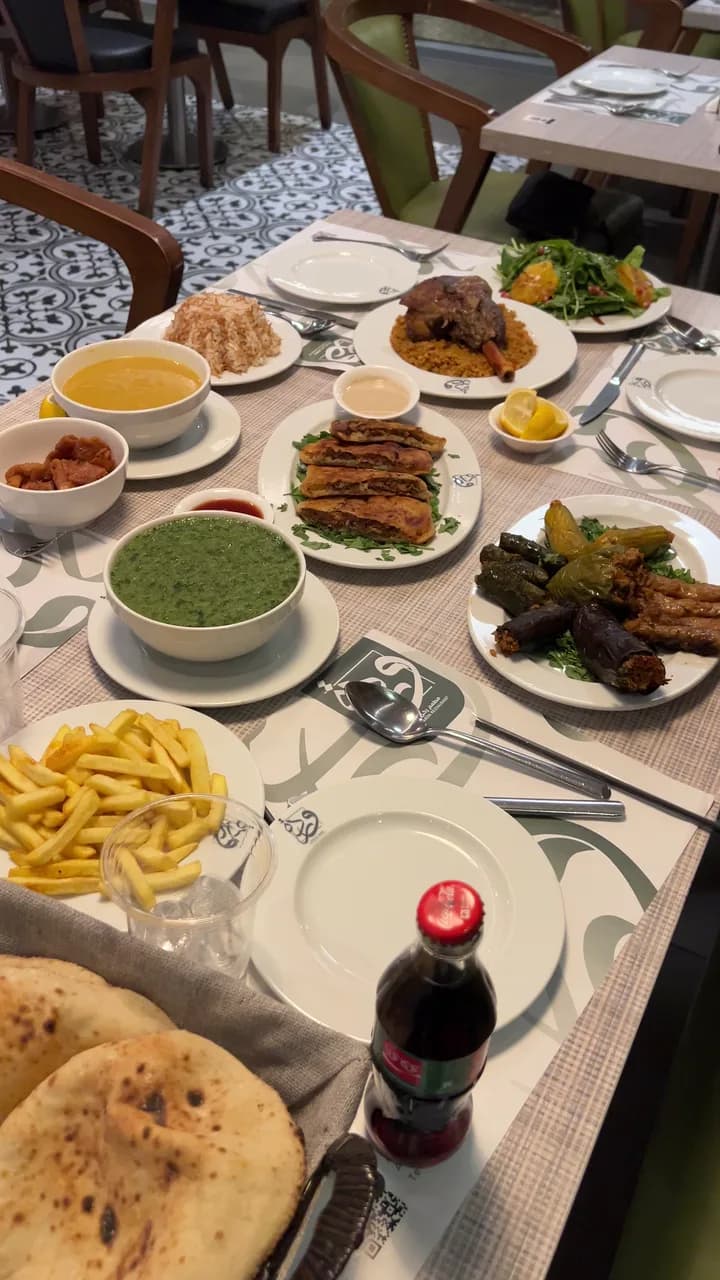
Eggplant in Egyptian cooking
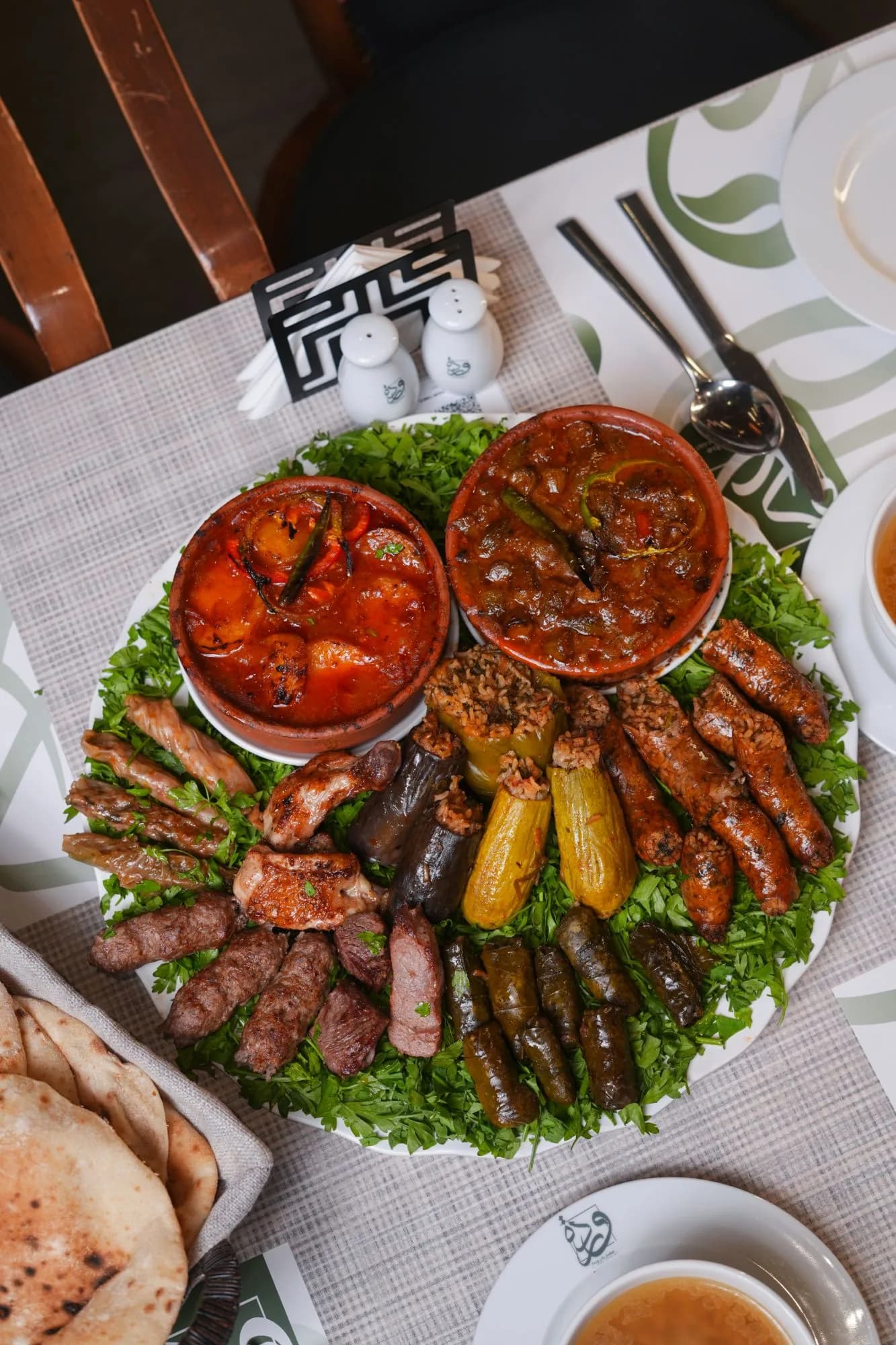
Moussaka is part of Egyptian cooking's long relationship with eggplant: it is stuffed, fried and eaten with garlic and vinegar (pickled eggplant or baba ghanoush), and in moussaka it becomes a main dish. To see how eggplant is stuffed, read mahshi the Egyptian way.
For the steps and secrets themselves, read moussaka the Egyptian way.
Moussaka at Rokn Warda
At Rokn Warda in Al Khobar you will find a moussaka casserole with minced meat: eggplant, minced meat, peppers and onions in a rich tomato sauce — the Egyptian version, without béchamel. Order it from the menu for delivery in Al Khobar and Dammam, or try it in our dining room. For what to order with it, read moussaka in Al Khobar. For more on casseroles read Egyptian casseroles in Al Khobar.