
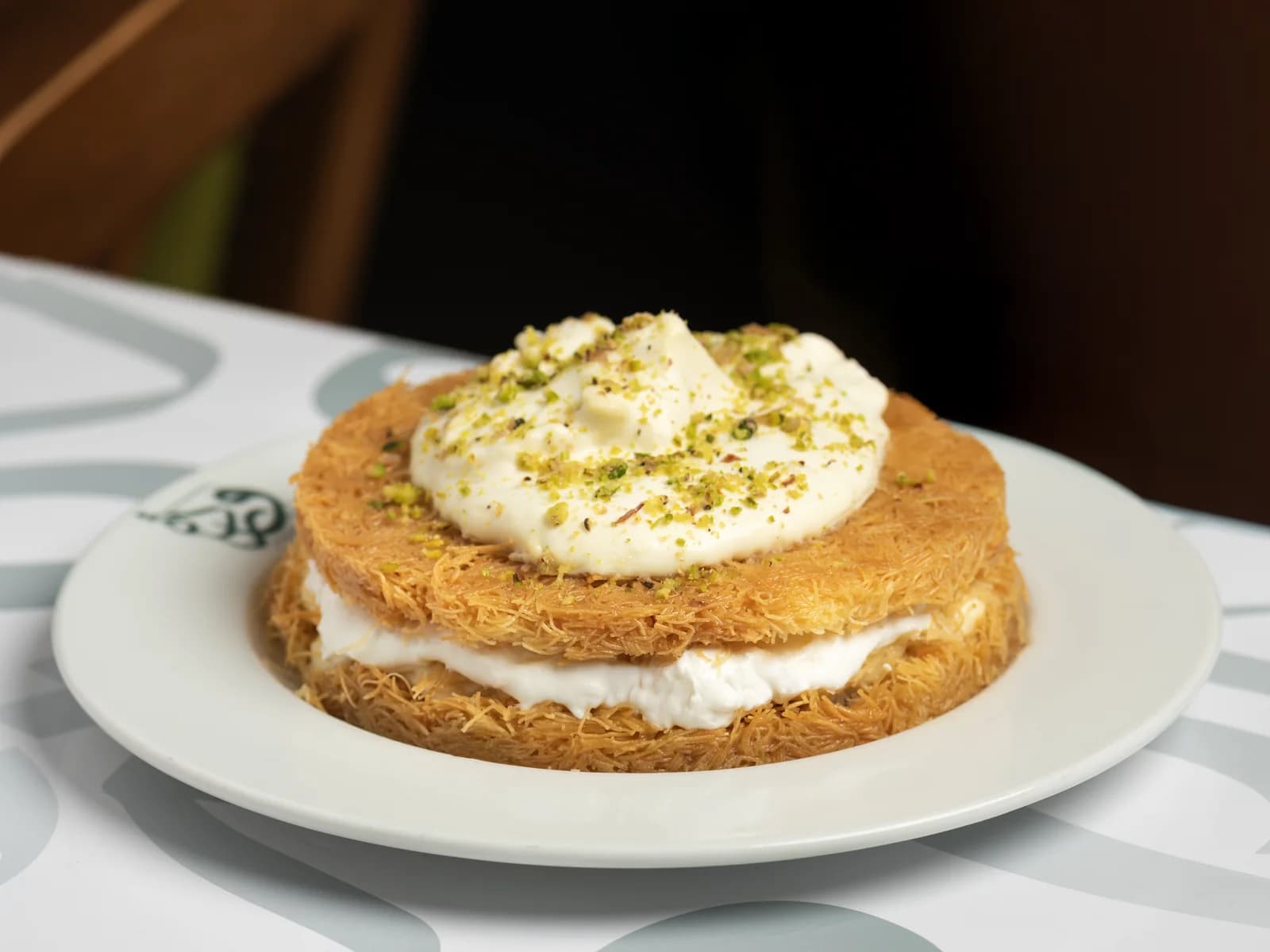
A little after iftar, once everyone has prayed and rested, the usual question comes up in every Egyptian home: «What is for dessert?». Egyptian Ramadan desserts are part of the month like the lantern and the mesaharati: a tray of om ali out of the oven, kunafa with cream, and a bowl of chilled rice pudding.
This article is not about the history of these sweets; if you love the stories, there is an article on food in Fatimid and Mamluk Cairo. Here we talk about how to choose a Ramadan dessert and serve it after iftar.
When do we eat dessert in Ramadan?
In many Egyptian homes dessert is not eaten at the iftar table itself. The common order is:
- Iftar: dates, water and soup, then the meal.
- A pause: prayer, tea and sitting together.
- Dessert: after taraweeh or later in the evening.
The reason is simple: after a big meal the stomach needs time. When dessert comes a little later, it is enjoyed more, and in a smaller amount. It is a habit, not a rule, and every home has its own way.
The stars of Egyptian Ramadan desserts
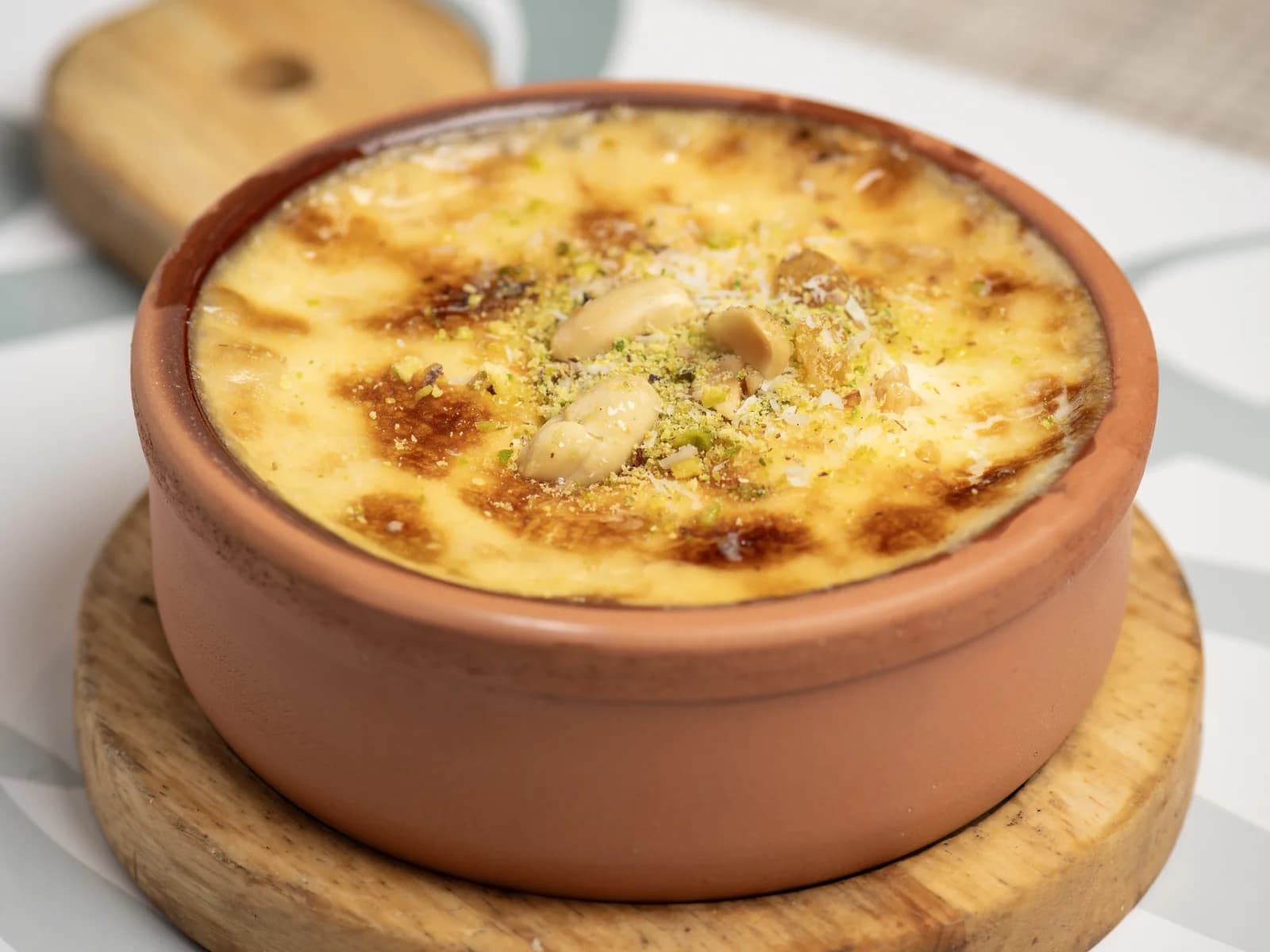
Om ali: the warm dessert
Om ali is baked pastry with milk, cream and nuts, eaten warm. Ramadan 1448 is expected to begin around early-to-mid February 2027 by astronomical calculation, with the official start set by the moon sighting, so the month's evenings will still be cool, which makes om ali one of the best desserts for the evening. It is a dish young and old love.
Kunafa: the queen of Ramadan
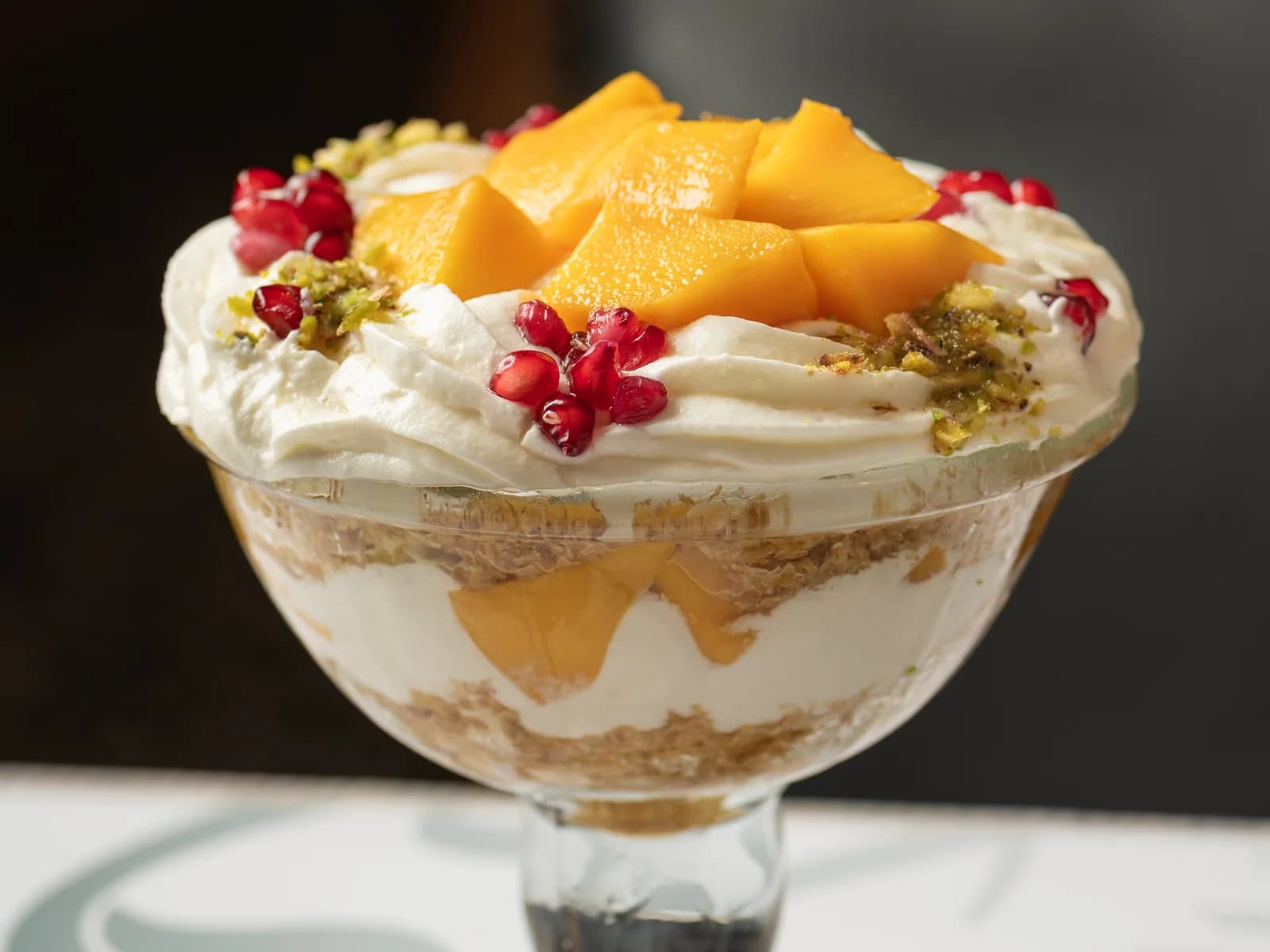
Kunafa has long been tied to Ramadan in Egypt. At home it is made with cream or with nuts, and recent years have brought many new kinds such as mango kunafa. If you are torn between the two famous ones, read mango kunafa or cream kunafa?.
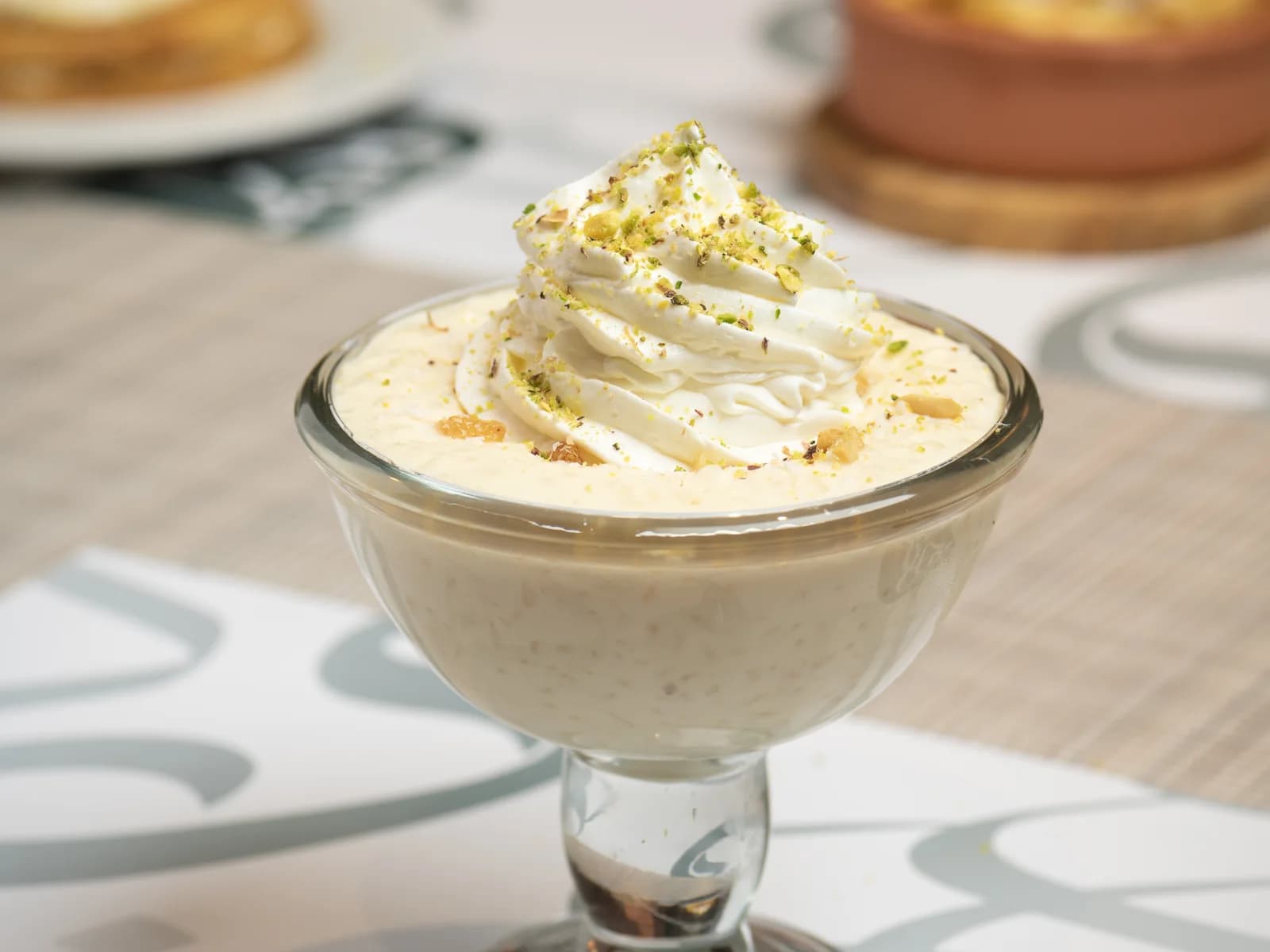
Rice pudding: the light dessert
Rice pudding is eaten cold, its taste is gentle, and many homes make a batch and keep it in the fridge for a few days. It is eaten after iftar or even at suhoor.
Qatayef: the home sweet of Ramadan
Qatayef are among the best-known Ramadan sweets in Egypt: small round pancakes filled with nuts or cream, fried or baked and soaked in syrup. They are made at home and sold by sweet shops in Ramadan, and they are not on Rokn Warda's menu.
Choose your Ramadan dessert for the occasion
| Occasion | Good choice | Why |
|---|---|---|
| A cold night | Om ali | It is eaten warm |
| After a heavy iftar | Rice pudding | Light and cold |
| Hosting guests | Cream kunafa | Looks lovely in the middle of the table |
| Fruit lovers | Mango kunafa | Fruit with cream |
| An evening with children | Rice pudding or om ali | Gentle flavours they love |
| At suhoor | Rice pudding | Cold and light |
Tips for serving Ramadan desserts
- Om ali hot: if it arrived a while earlier, warm it briefly in the oven before serving.
- Rice pudding cold: keep it in the fridge until serving time.
- Kunafa crisp: it is best eaten soon after it arrives, for the crunch.
- Small plates: instead of one big tray everyone digs into, serve a small plate each.
- Tea beside dessert: an Egyptian evening habit; read about it in tea and coffee in Egypt.
Prepare ahead or at the last minute?
In Ramadan the time before maghrib is busy, so it helps to know what can be made beforehand:
- Rice pudding: one of the easiest desserts to make the day before, and it is even nicer cold.
- Om ali: many homes assemble the tray early and put it in the oven close to serving time so it is eaten hot.
- Kunafa: best baked and soaked in syrup close to eating time, because it loses its crunch if it waits too long.
- Homemade qatayef: they are filled ahead, then fried or baked just before serving.
If you have guests, prepare two desserts at most: one warm and one cold is plenty alongside tea.
A word about portions
Ramadan desserts are rich in sugar and cream, and many people try to eat a small amount and not have dessert every night. This is general advice; if you have a health condition such as diabetes, ask your doctor.
Ramadan desserts from Rokn Warda
At Rokn Warda in Al Khobar, the desserts on the menu are:
- Om ali: baked pastry with milk, cream and nuts, served warm.
- Cream kunafa: crisp kunafa layered with cream and finished with pistachios.
- Mango kunafa: kunafa layered with cream, mango and pomegranate seeds.
- Rice pudding: creamy and topped with whipped cream and pistachios.
You can order them with your iftar from the menu for delivery in Al Khobar and Dammam, or enjoy them in our dining room after you book your table. For Egyptian sweets in Saudi Arabia in general, read the Egyptian desserts loved in Saudi Arabia. For the full table from soup to dessert, see the best Egyptian dishes for Ramadan iftar, and for a suhoor evening with family, family suhoor in Ramadan. Everything new for Ramadan is on Ramadan with Rokn Warda.