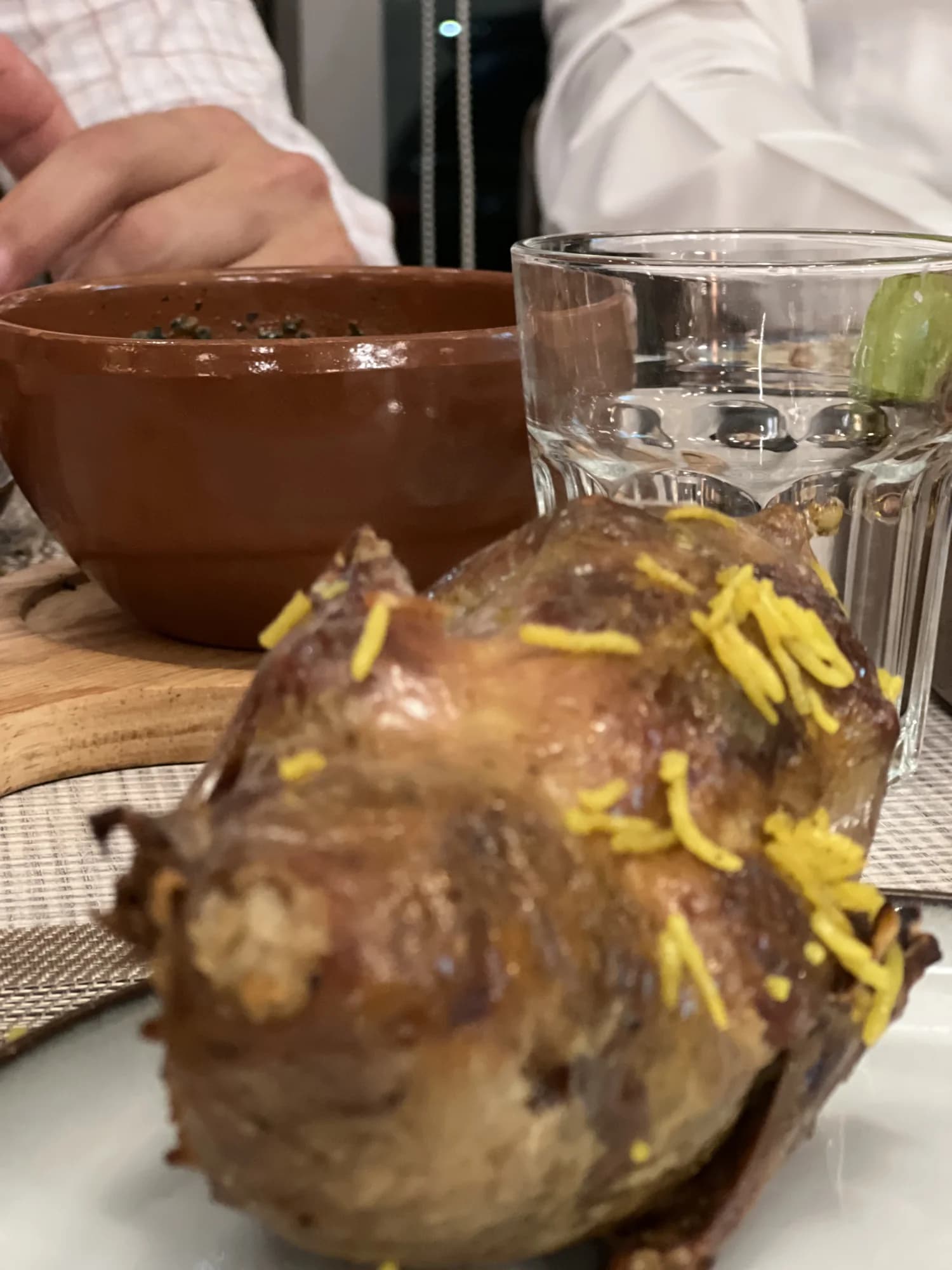
Walk along a farm road in the Egyptian countryside and you will probably spot, from a distance, a tall building with an unusual shape: made of mud, pierced with many small openings, with pigeons flying in and out all day. This is the pigeon tower, one of the best-known sights of the Egyptian village. And it is exactly here that the story of one of Egypt's most loved dishes begins: stuffed pigeon (hamam mahshi), which travels from the fields to the table on happy days and at family feasts.
In this article we tell the story of the pigeon towers: what they look like, why farmers raised pigeons in them, how stuffed pigeon became the dish of weddings and hospitality, and the freekeh-or-rice question, a stuffing that changes from one home to the next.
In this article
- 1The pigeon tower: the village home of the pigeon
- 2Why did Egyptian farmers raise pigeons?
- 3Stuffed pigeon: the dish of feasts and joy
- 4Freekeh or rice? A stuffing that changes from home to home
- 5Stuffed pigeon at home: the well-known steps
- 6Frequently asked questions
- 7This story on your table in Al Khobar
The pigeon tower: the village home of the pigeon
In the Egyptian countryside, a pigeon tower is traditionally built of mud brick and clay, and many have clay pots set side by side inside the walls, each one a nest for a pair of pigeons. The shape changes from region to region: some towers are tall domes or cones, others are small structures on house rooftops, and from the outside you see wooden sticks jutting from the wall where the pigeons perch before going in.
Why is the tower built this way?
- Mud keeps the inside of the tower cooler in summer and warmer in winter.
- Small openings let the pigeons in and out, and make it hard for cats and larger birds to reach the nests.
- Height gives the pigeons safety and makes the tower a landmark among the fields.
Pigeon towers stand in many villages of the Delta, Upper Egypt and Fayoum, and some have become sights people love to photograph because they belong to the look of the old countryside. If you would like to know the food of each Egyptian region, read A journey through Egypt's regional food.
Why did Egyptian farmers raise pigeons?
Pigeon keeping in Egypt is very old, and it is often said to go back to the days of the ancient Egyptians; birds in general had a large place in their food (read more in Food of the ancient Egyptians). What is certain is that pigeons remained part of village life for centuries, for very practical reasons:
- Food for the household: pigeons breed quickly, so the tower was a source of meat close to home.
- Fertiliser for the land: farmers have long known pigeon droppings as good fertiliser for the fields, one of the best-known reasons towers were built.
- Extra income: surplus birds were sold at the market, and squabs (young pigeons, zaghaleel) always had buyers.
- A hobby and companionship: many people love pigeons for their own sake, know their breeds and colours, and keep them out of affection for the bird.
The pigeons fly out to find food in the fields around the village and return to their nests at the end of the day, which made tower keeping relatively easy for the farmer.
The tower also had a place in the household itself: its owner knows his birds, goes out in the morning to scatter grain, checks the nests and knows when the squabs will hatch. In village tales, a tower full of pigeons was a sign of a thriving, well-provided home.
Stuffed pigeon: the dish of feasts and joy
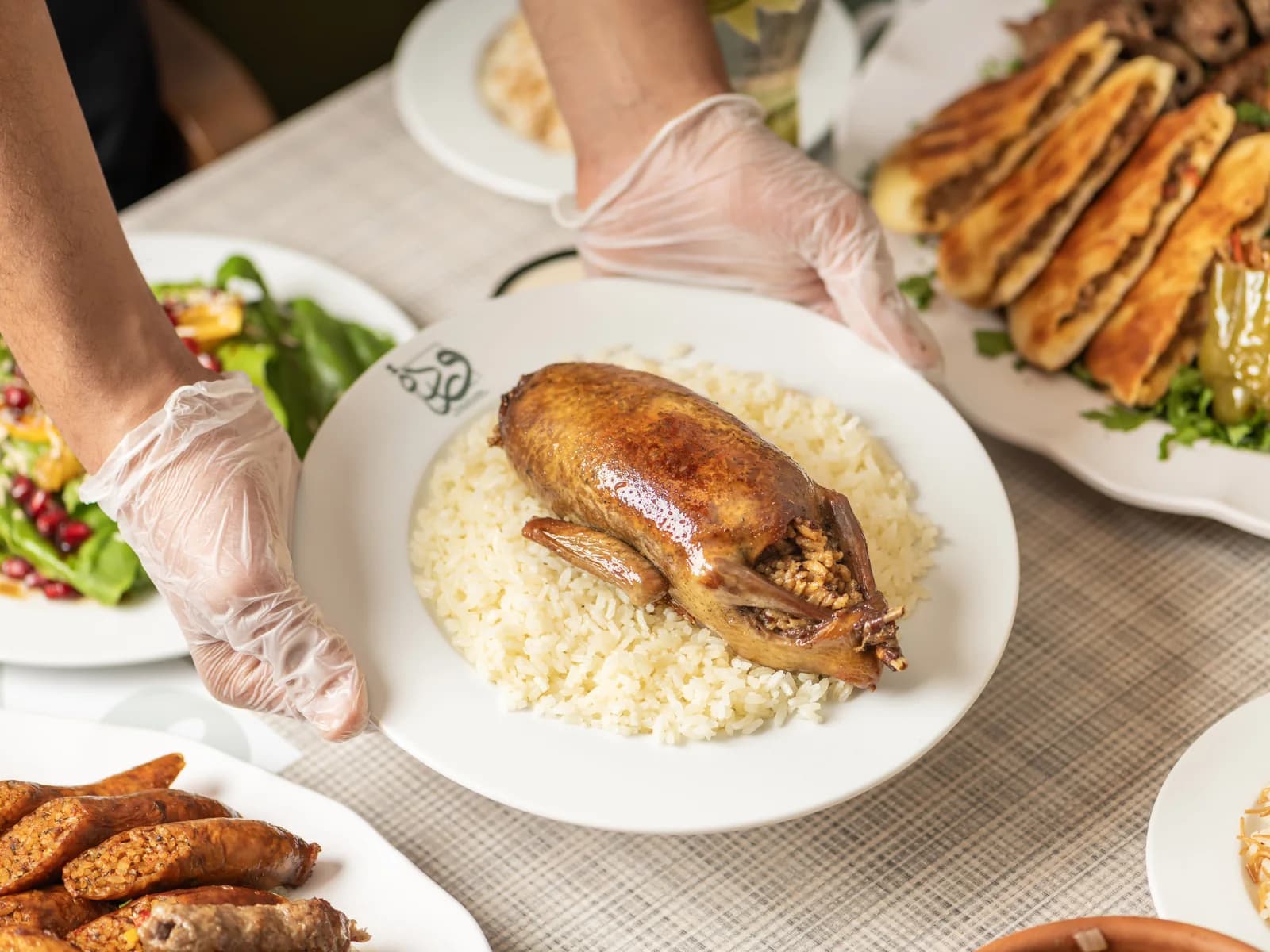
In Egypt pigeon is not everyday food. Stuffed pigeon belongs to occasions: a dear guest arriving, a wedding, someone coming home from a trip, or a Friday when the family gathers. When the lady of the house says "we're making pigeon today", the day is different.
The groom's pigeon
A well-known custom in many Egyptian homes is that the groom gets his share of stuffed pigeon during the wedding days, and families send a tray of pigeons to the newlyweds. The story is told with humour and affection, and its details vary from family to family and town to town, but it shows how closely pigeon is tied to joy and generosity. For wedding and sebou food in general, read Egyptian wedding and sebou food.
A dish of hospitality
Serving pigeon to a guest means the household went to trouble for them: the birds are cleaned, stuffed, simmered and browned, work that takes time and care. That is why it counts among the most generous dishes on the Egyptian table, alongside others we write about in The Egyptian table and hospitality.
Freekeh or rice? A stuffing that changes from home to home
Here begins the endless debate among Egyptians: is stuffed pigeon better with freekeh or with rice?
Freekeh stuffing
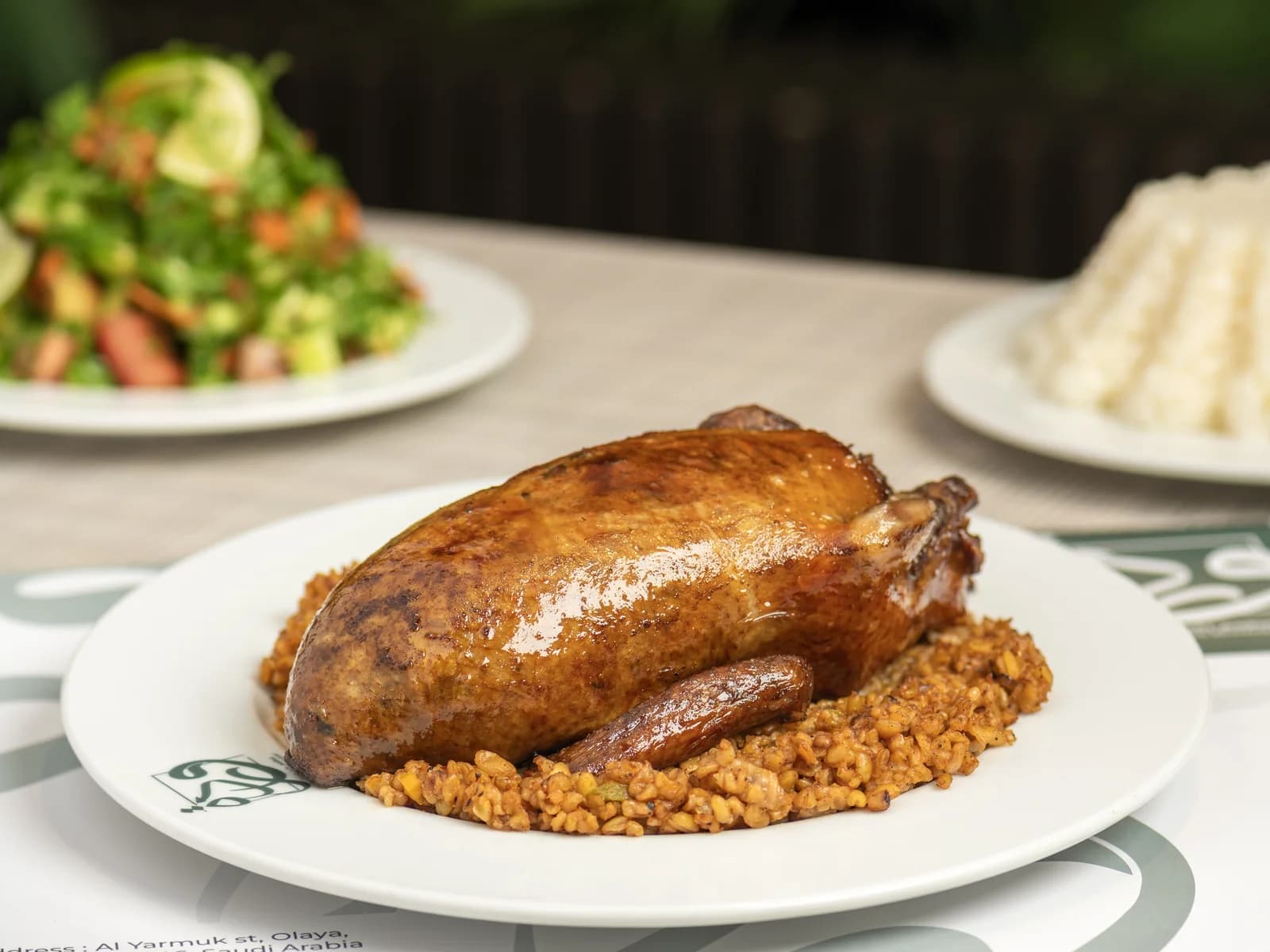
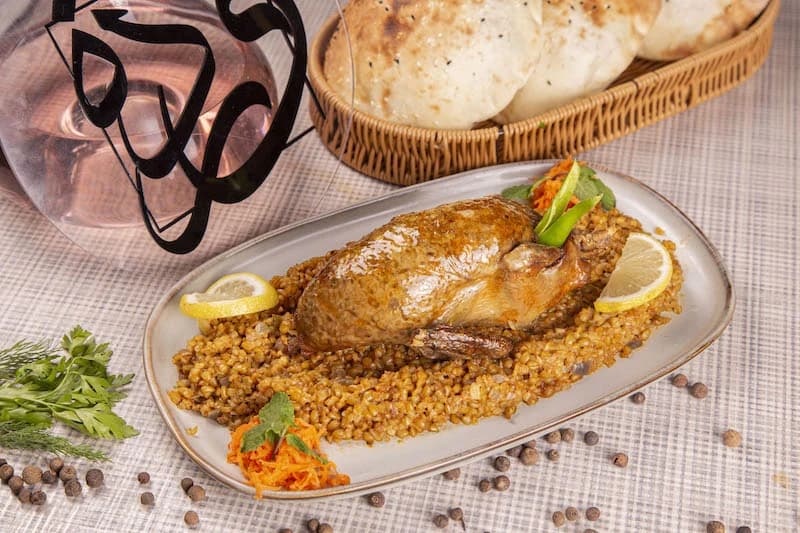
Freekeh is wheat harvested while still green and then roasted, which gives it a light smoky taste and a slightly firm bite. For many people freekeh stuffing is tied to the countryside and the taste of old homes, and many village families consider it the original. Freekeh soaks up the pigeon broth and its flavour comes out deeper.
Rice stuffing
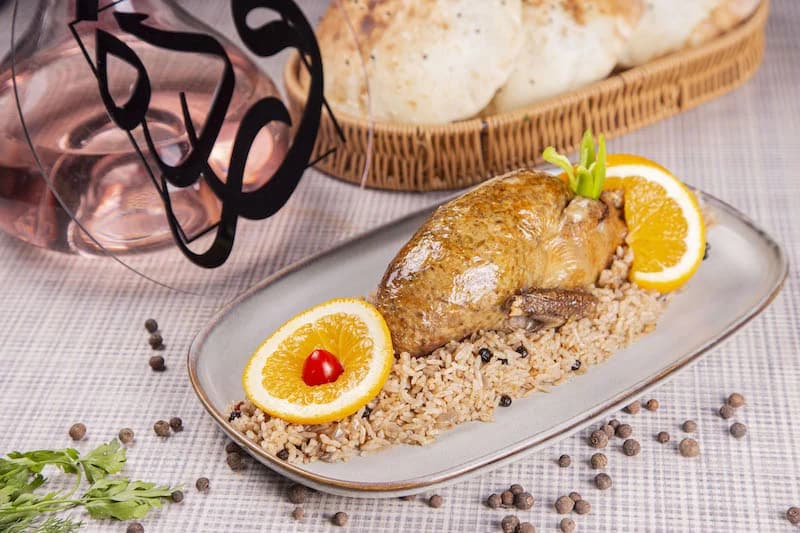
Rice with broth, ghee, onion and spices is a lighter, softer stuffing, very widespread in cities and in the many homes that prefer its gentle taste. Some households add minced liver and gizzards to the rice, or a spice blend of their own.
So who is right?
There is no right or wrong. It is a family habit more than a rule: one home makes both on the same day to please everyone, another says pigeon without freekeh has no taste, and another has only ever known rice. The best thing is to taste both and decide for yourself.
Stuffed pigeon at home: the well-known steps
The method changes from cook to cook, but these steps recur in many homes:
- Cleaning the birds well and seasoning them.
- Stuffing with freekeh or rice without overfilling, because the stuffing swells as it cooks.
- Simmering in a broth with onion, cardamom and bay leaves.
- Browning in ghee or in the oven until the skin turns golden.
The broth the pigeons simmered in is often served alongside in a soup bowl, which is part of the pleasure of the feast.
Frequently asked questions
Why are pigeon towers built of mud? Because mud and mud brick are materials readily available in the countryside, they keep a moderate climate inside the tower, and openings and nests are easy to make in them.
What is the difference between pigeons and squabs? Squabs (zaghaleel) are young pigeons, and many people prefer them for stuffing because their meat is more tender.
Is stuffed pigeon only a country dish? Its roots are tied to the countryside and its towers, but it has become an Egyptian dish in every home, in cities and villages, and in Egyptian restaurants outside Egypt too.
Why is stuffed pigeon linked to feasts? Because it takes time and effort to clean, stuff, simmer and brown, serving it to a guest became a sign of generosity and care in Egyptian homes.
Are freekeh and jareesh the same thing? No. Freekeh is roasted green wheat, while jareesh is cracked wheat, and each has its own taste and dishes.
This story on your table in Al Khobar
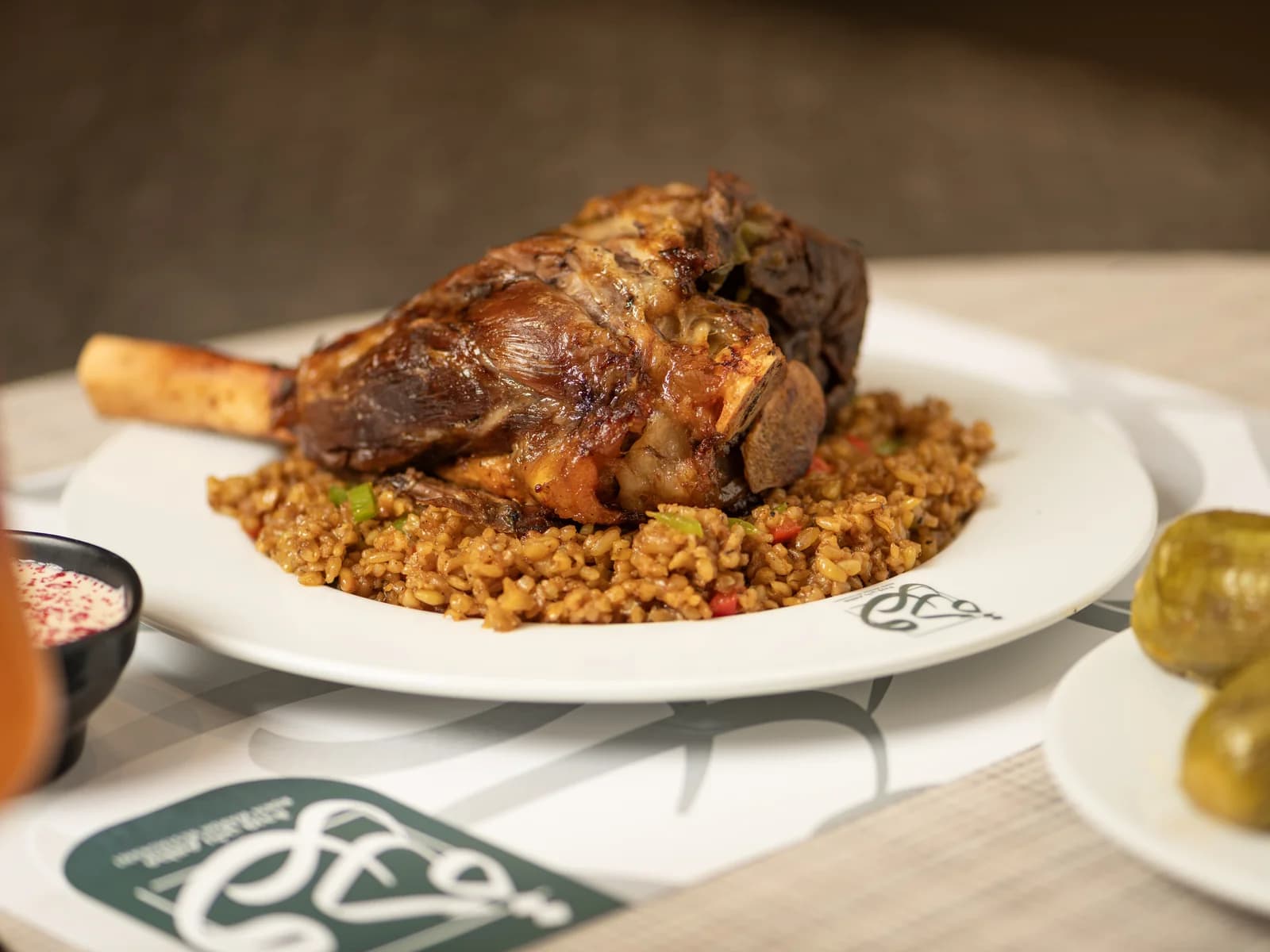
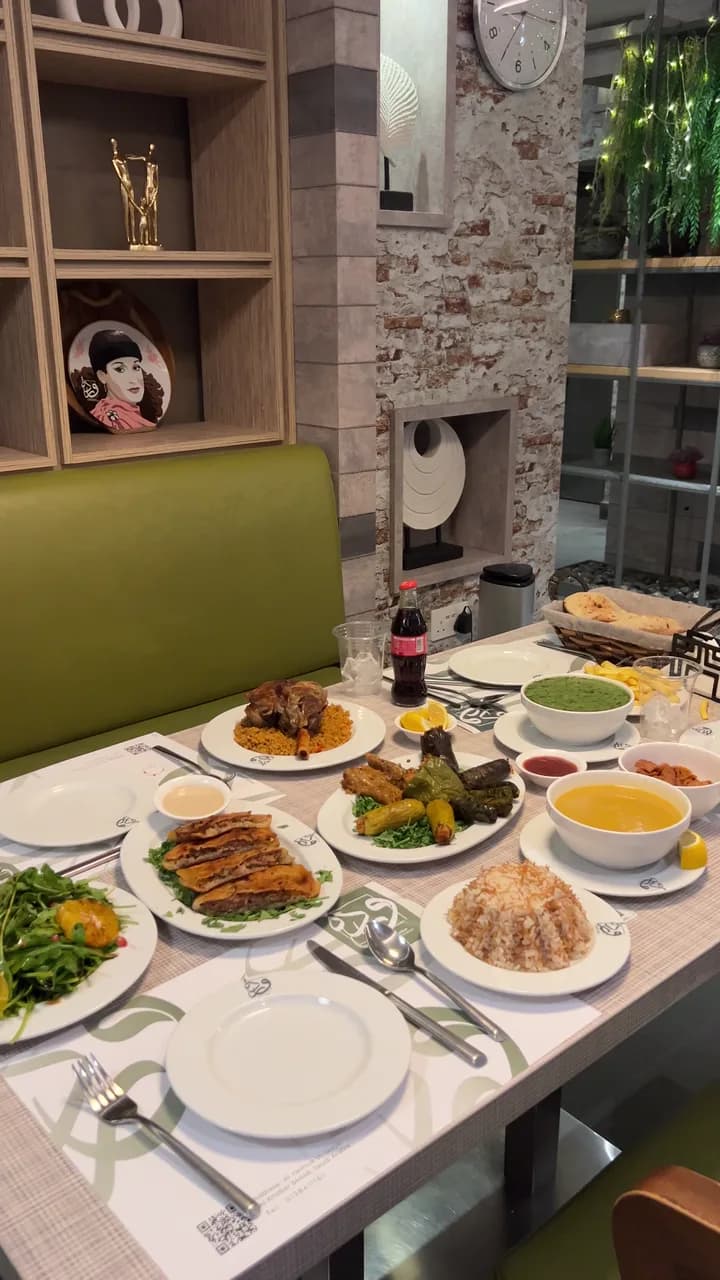
The pigeon's story began in a mud tower beside the fields, and it still continues today on Egyptian tables everywhere. If you would like to taste this dish in Al Khobar, at Rokn Warda on Al Yarmouk Street we have stuffed pigeon with freekeh and stuffed pigeon with rice, so you can settle the "freekeh or rice" debate yourself. And if you love the taste of freekeh, also try lamb shank with freekeh. Browse the full menu, read Stuffed pigeon in Al Khobar, and if you are coming with family, book your table.