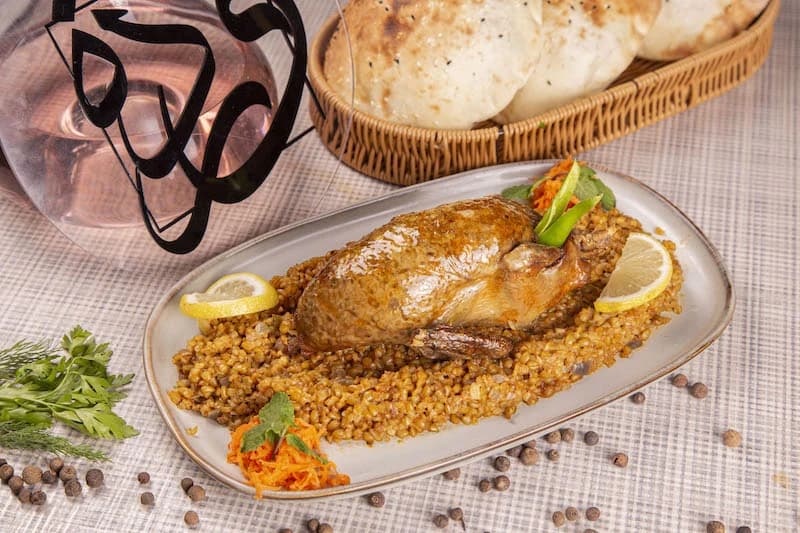
If you love jareesh and you see the word "freekeh" on an Egyptian menu, you will probably ask: "Is that the same thing?" The answer: no, but they are relatives. Both are wheat, both are cooked slowly in broth, and both are home and feast food. But the taste, texture and way of serving differ. This article is not a contest over which is better; each dish has its own people and history. It is simply an introduction between two neighbouring dishes.
In this article
- 1Jareesh: crushed wheat cooked until soft
- 2Freekeh: green wheat, roasted
- 3The difference in a table
- 4What they share
- 5If you love jareesh… why try freekeh?
- 6How freekeh is served in Egypt
- 7If it is your first time eating freekeh
- 8Freekeh at Rokn Warda
- 9Frequently asked questions
- 10Try what is close to your taste
Jareesh: crushed wheat cooked until soft
Jareesh is a well-known dish in Saudi Arabia, linked in many people's minds with Najd, but found in many parts of the Kingdom and the Gulf. The basic idea: dried wheat is crushed (coarsely broken), then cooked for a long time in broth with meat or chicken, onion and spices, until it becomes soft and cohesive.
The details vary from home to home and region to region: in many homes laban goes in so it turns out smoother, in some it is served topped with fried onion or ghee, and its texture can be softer or thicker depending on the cook. It often appears on the Ramadan table and at gatherings. We describe it here in general terms; those who know it from their own home know its details best.
Freekeh: green wheat, roasted
Freekeh has a different story from the start. The wheat is harvested early while still green, then roasted over fire so the husk burns while the grain inside stays green, then rubbed to remove the husk. The name most likely comes from that: "farak", to rub.
The result is a grain with a light smoky aroma, a slight nutty taste and a grainy texture: the grains stay somewhat separate even after cooking rather than melting together. Freekeh is known in other kitchens of the region, such as the Levant, but in Egypt it holds a special place on the feast table.
The difference in a table
| Freekeh (in Egypt) | Jareesh (in Saudi Arabia) | |
|---|---|---|
| The wheat | Green wheat harvested early and roasted | Usually dried wheat, crushed |
| Taste | Lightly smoky with a nutty note | Gentle and warm, taking the taste of the broth and of laban if used |
| Texture | Separate, grainy kernels | Soft and cohesive, smoother in some homes |
| Cooked in | Usually meat or pigeon broth | Broth with meat or chicken, with laban in some homes |
| Served as | A pigeon stuffing, or under a lamb shank | In a bowl as a main dish, topped with fried onion in many homes |
| Occasions | Feasts, Eid and honoured guests | Ramadan and gatherings in many homes |
What they share
- Wheat itself: an ancient food across the whole region, which each people shaped to its own taste.
- Broth: both absorb the flavour of the meat or bird they cook with.
- Patience: neither jareesh nor freekeh is a "quick" dish.
- Togetherness: both sit in the middle of the table, and the guest gets the best piece.
If you love jareesh… why try freekeh?
Because you will find familiar things in it: warm wheat cooked in broth, with meat beside or on top. At the same time you will find new things:
- The smoky aroma: the first thing you will notice, and what defines freekeh.
- The texture: instead of smoothness, you feel the grain between your teeth.
- The serving: in Egypt freekeh is rarely eaten on its own as a dish; it is usually a companion to a bird or meat.
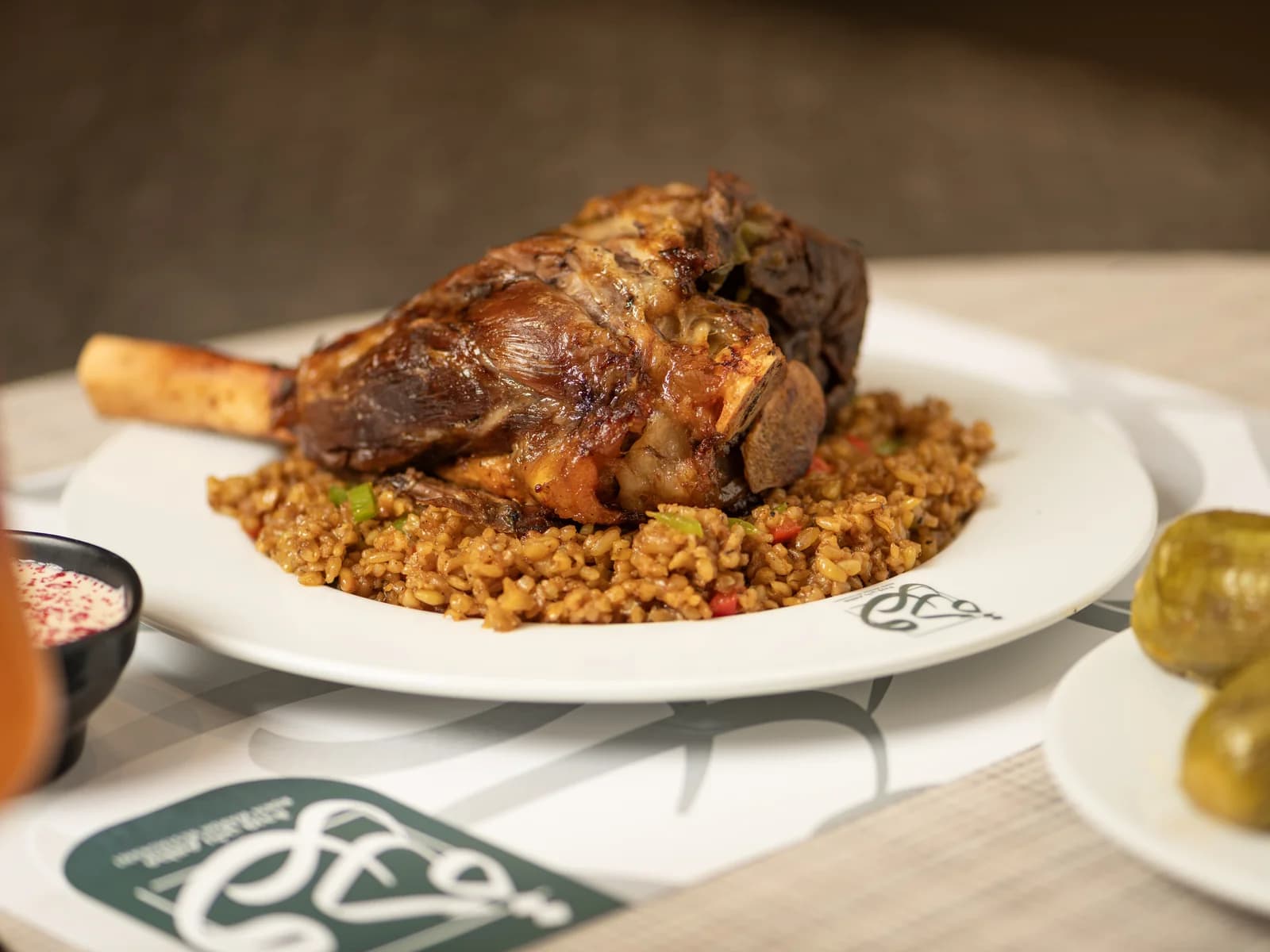
Our advice: if you love meat and broth, start with lamb shank with freekeh. If you want the Egyptian feast dish in the full sense, try pigeon stuffed with freekeh.
How freekeh is served in Egypt
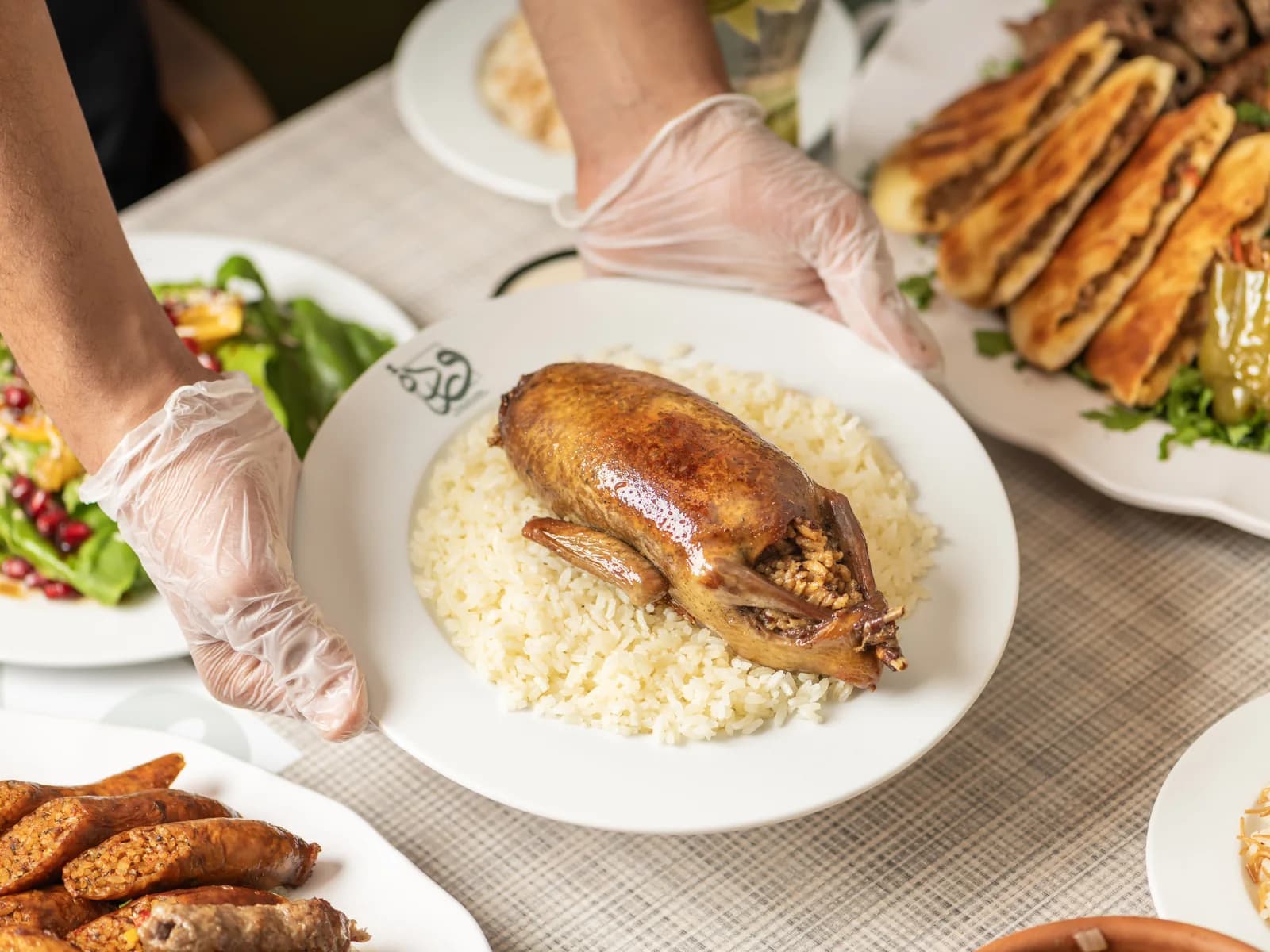
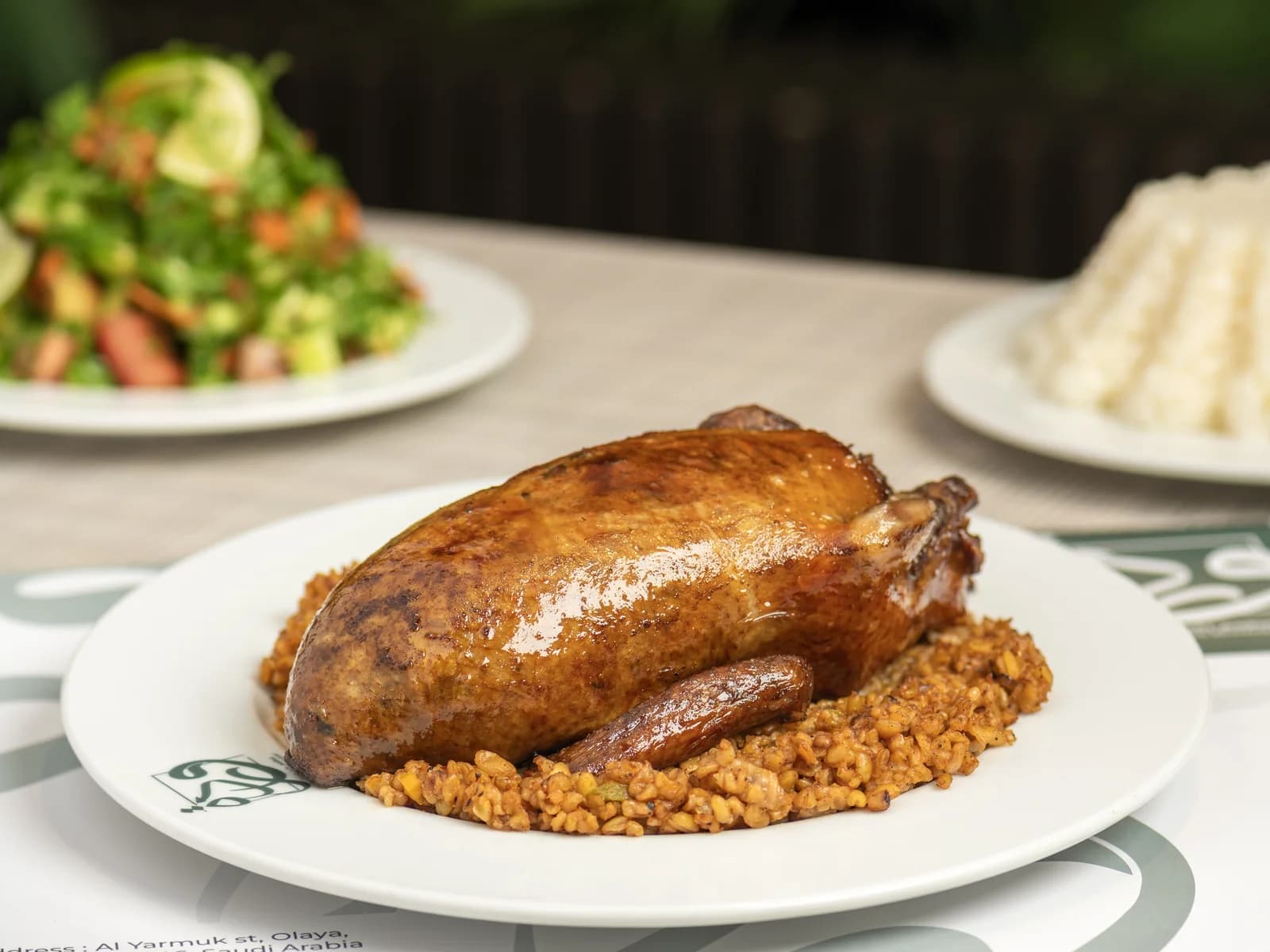
Pigeon stuffed with freekeh
The best-known use of freekeh in Egypt. The pigeon is stuffed with seasoned freekeh, simmered and then browned, and the freekeh inside absorbs the bird's flavour. The difference between it and pigeon with rice is explained in Stuffed pigeon in Al Khobar.
Lamb shank with freekeh
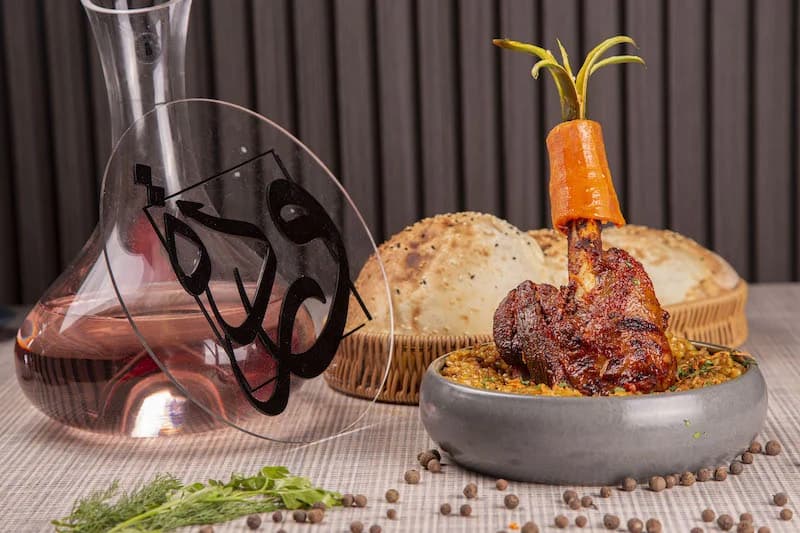
The freekeh is cooked in the shank's broth so it absorbs its flavour, and the shank is placed on top as a whole piece. Other ways of serving moza are in Lamb shank with freekeh and fatteh.
And in other homes
In many Egyptian homes freekeh is also made as an oven tray with meat or chicken, and in some regions as a freekeh soup in winter. These are home ways, and every home has its own.
If it is your first time eating freekeh
- Taste the freekeh on its own first: a small spoonful without meat, to get to know the smoky aroma.
- Then eat it with the meat: freekeh is made to be eaten with the bird or the shank, and the two flavours complete each other.
- Add something with acidity beside it: a salad or lemon balances the richness, as it does with wheat-and-meat dishes in general.
- Do not judge too fast: some people love the smoky taste from the first bite, others from the second time.
Freekeh at Rokn Warda
At Rokn Warda in Al Khobar we have freekeh in two dishes:
- Stuffed Pigeon with Freekeh: pigeon stuffed with seasoned freekeh, tender inside and browned outside.
- Lamb Shank with Freekeh: slow-cooked lamb shank served with seasoned freekeh.
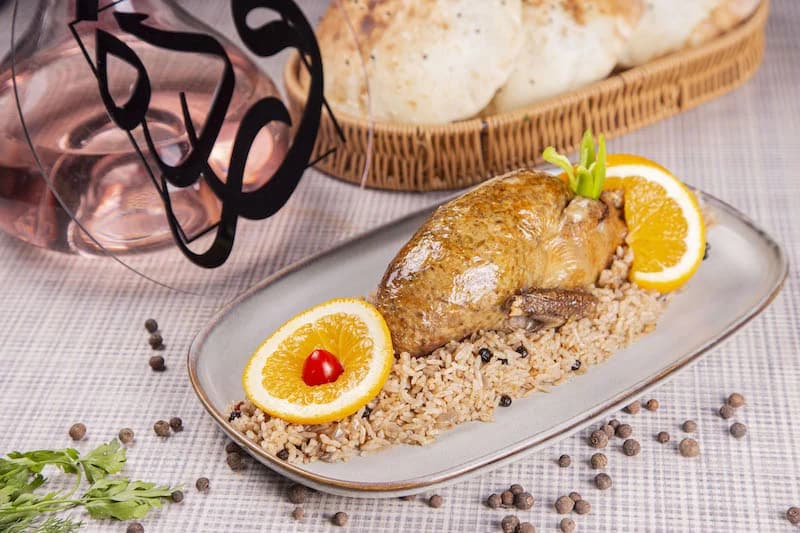
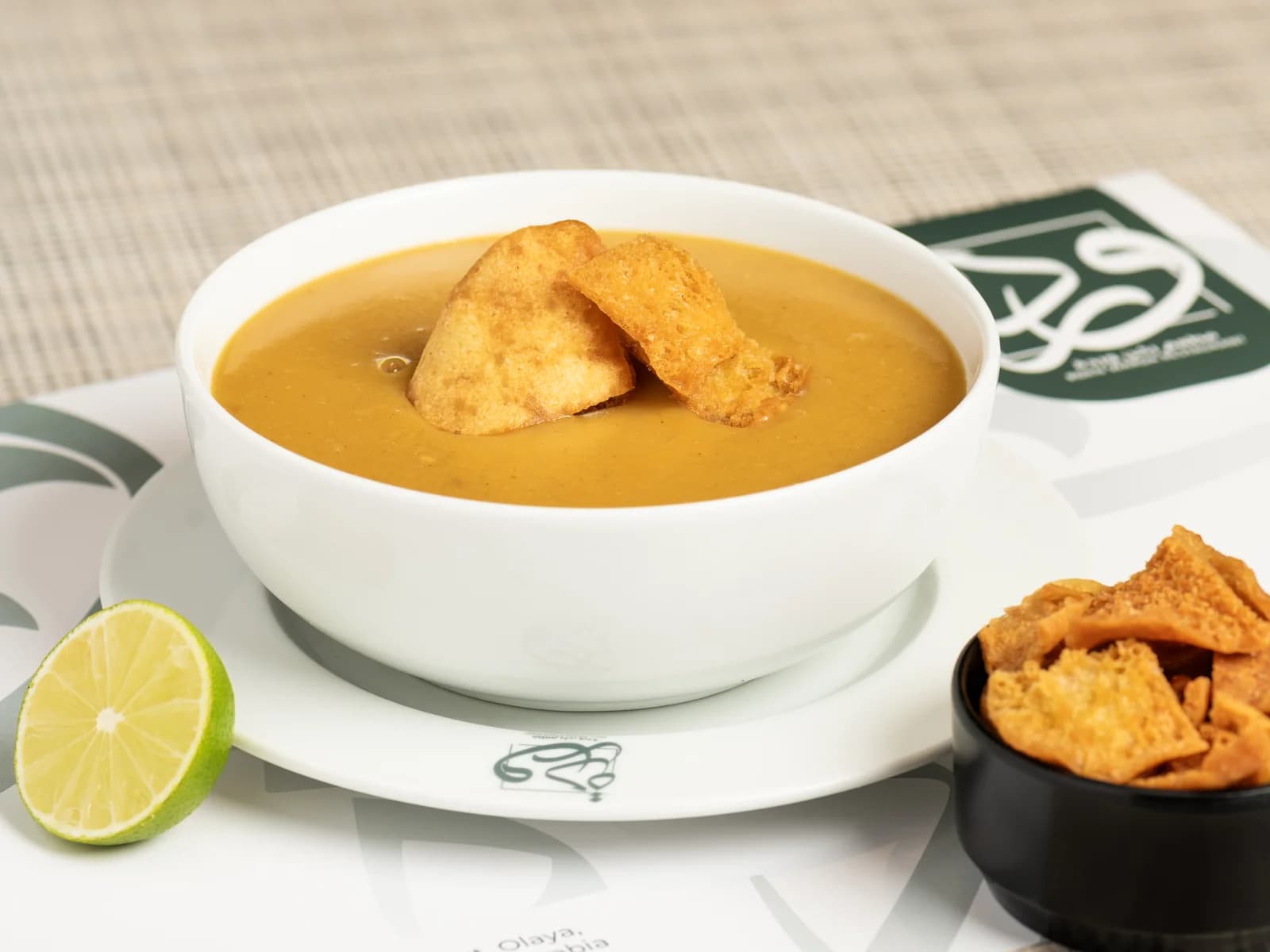
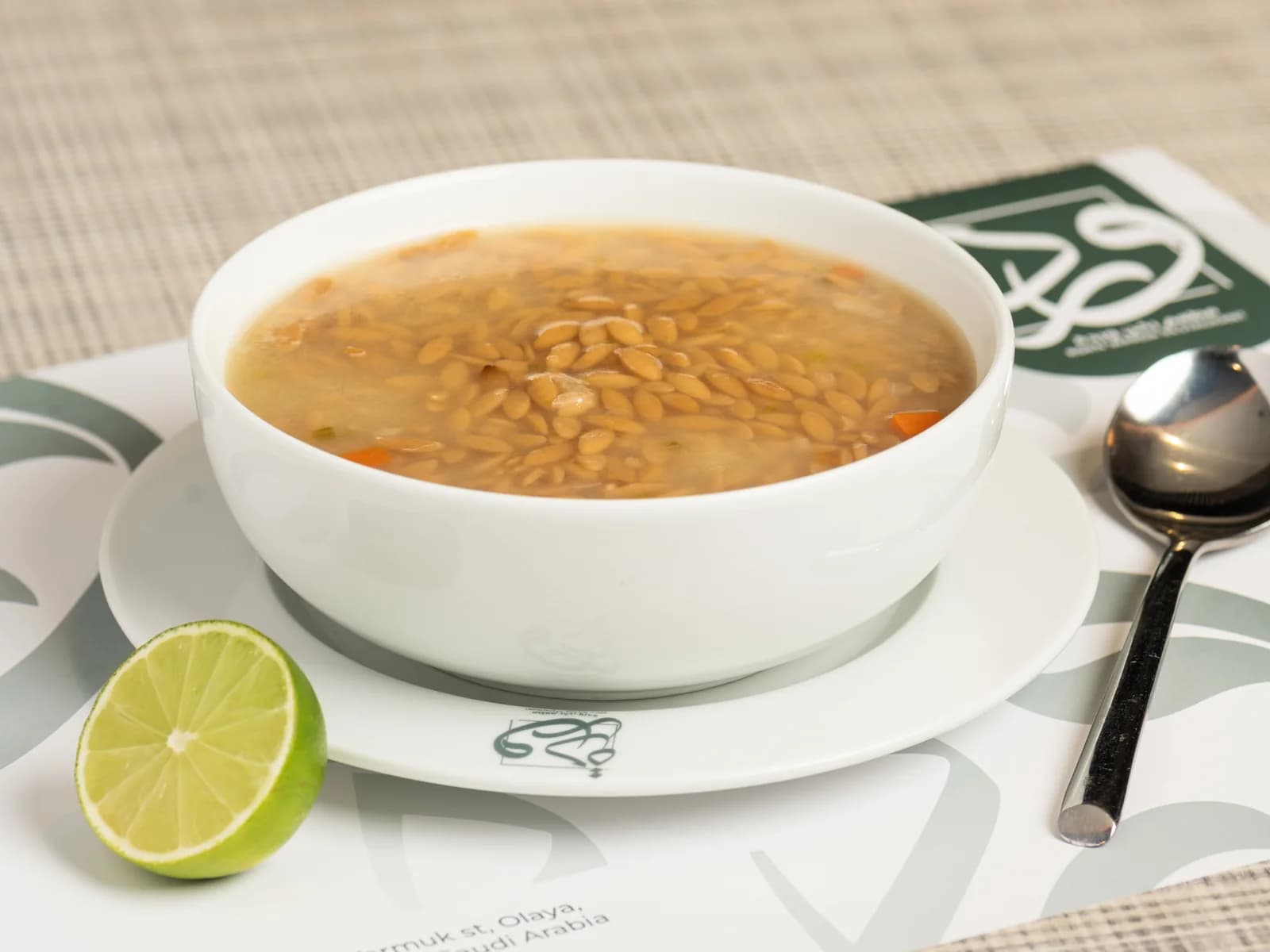
If someone with you prefers rice, there is Stuffed Pigeon with Rice. Alongside them you can start with Orzo Soup or a plate from the Salad Buffet. Jareesh, however, is not on our menu; we mention it to introduce the two dishes, not to serve it.
Frequently asked questions
Are freekeh and jareesh the same thing? No. Both are wheat, but freekeh is roasted green wheat with a smoky taste, while jareesh is usually crushed dried wheat cooked until soft.
Is freekeh hot? No, its taste is smoky, not fiery, and neither of our freekeh dishes is marked spicy. If you have an allergy or a particular diet, ask the staff.
Do you have jareesh at Rokn Warda? No, our menu is Egyptian. What we have from the freekeh family is pigeon stuffed with freekeh and lamb shank with freekeh.
Should I order pigeon with freekeh or with rice? If you like a stronger, different taste, choose freekeh; if you want a gentle, classic taste, choose rice. Ask about quantity when you order.
Try what is close to your taste
If jareesh is one of your favourite dishes, freekeh can be the first door into Egyptian cooking. For a wider comparison of the two tables read Egyptian and Saudi cuisine, and if you love rice and meat see From kabsa to fatteh. Order from the menu for delivery in Al Khobar and Dammam, or come and eat it hot on Al Yarmouk Street in Al Khobar and book your table.