Walk down any street in Cairo or Alexandria from morning to night and you will notice that food is everywhere: a ful cart on the corner, a crowded koshari shop, a taameya stall whose smell reaches the end of the street, a liver cart lighting up at night. Egyptian street food is not just fast food; it is part of people's day, and every dish has a story.
In this article
What makes street food Egyptian?
Most Egyptian street foods share a few things:
- Cheap and filling: made for the worker, the student and the office employee, to keep them going all day.
- Baladi bread: most street food is eaten in bread or with bread, and the sandwich is the most common form.
- Pulses: fava beans, lentils and chickpeas play a big part, which is why much Egyptian street food is meatless to begin with.
- Seasonings and sauces: tahini, tomato sauce, daqqa (vinegar and garlic), and chilli for those who like it.
- The specialist shop: the ful shop makes ful and taameya, the koshari shop makes koshari, and each has its regulars.
Koshari: a dish gathered from several kitchens
Koshari may be Egypt's best-known street food, and many consider it the country's favourite popular dish. One plate holds rice, brown lentils and pasta, sometimes chickpeas, topped with tomato sauce, daqqa of vinegar and garlic, and crisp fried onions.
Its origin has more than one version. A common account links the idea of rice with lentils to an Indian dish called «khichdi», said to have reached Egypt in the nineteenth century; Egyptians then added pasta, which spread with Italian cooking, and the sauce and daqqa to their own taste. Others say rice with lentils was already an old dish in Egypt itself. What everyone agrees on is that koshari as it is today is entirely Egyptian: a dish whose parts came from several kitchens and became something new.
Ful and taameya: Egypt's breakfast
Ful medames is breakfast for a great many homes and streets in Egypt. Fava beans are cooked over a low fire for long hours in a qidra pot until soft, then ladled out and dressed with oil, cumin and lemon, or tahini, or ghee, each to their taste.
A popular story says the word «medames» comes from burying in embers and ash, and that ful was once cooked overnight on the fires of public bath furnaces. The fava bean itself is a very old crop in Egypt.
Taameya is the Egyptian take on falafel. The well-known difference is that in Egypt it is made from split fava beans, not chickpeas, with coriander, dill, parsley and leeks, so it is green inside. A common view ties it to the fasting food of Egypt's Copts, but there is no certain date for its beginnings.
Alexandrian liver: the star of the night
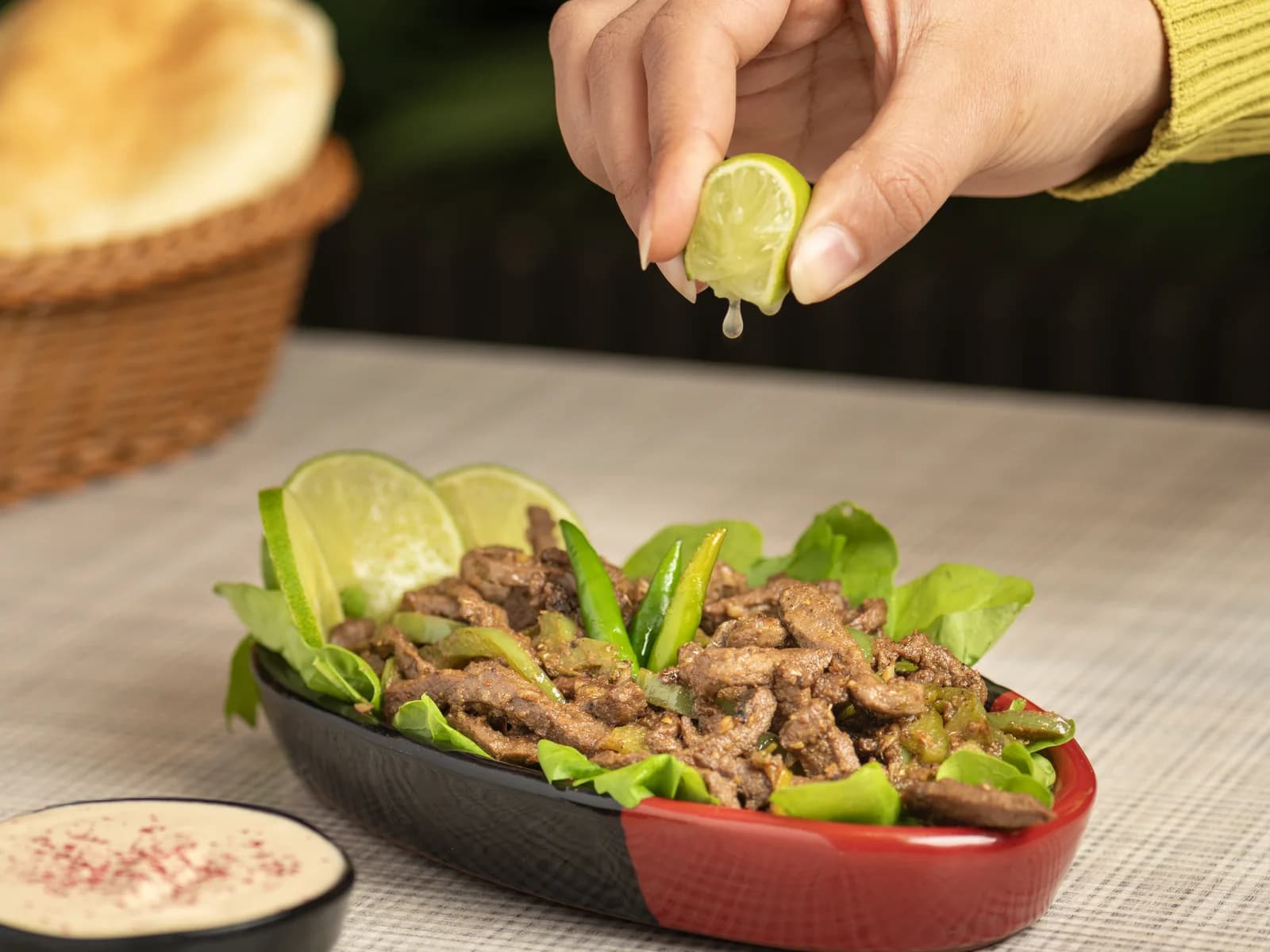
In Alexandria especially, the liver cart is part of an evening by the sea. Thin strips of liver are seared quickly over high heat with garlic, hot pepper and cumin and tucked into fino or baladi bread. We wrote about it in detail in Alexandrian liver.
Hawawshi: meat inside the bread
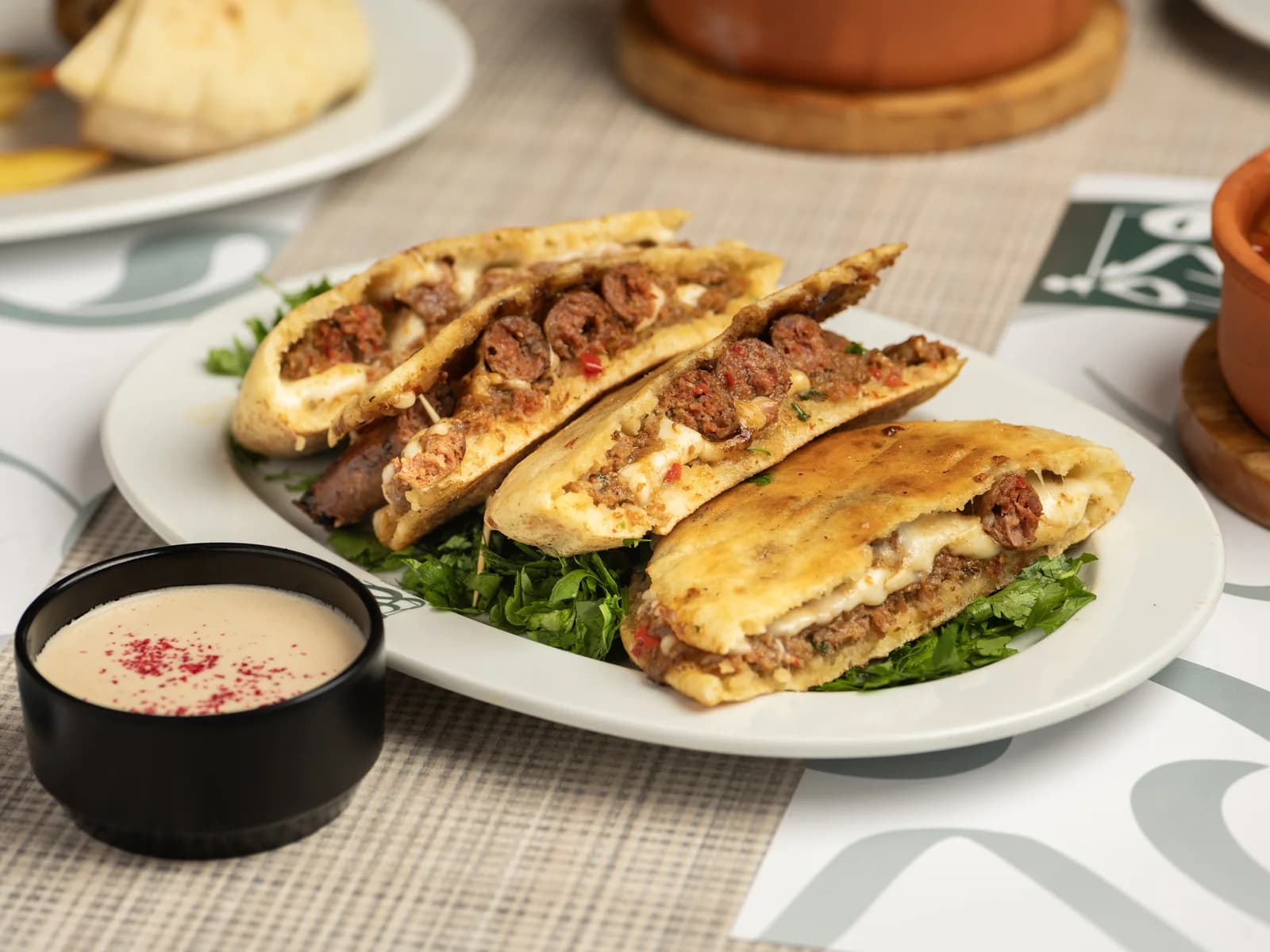
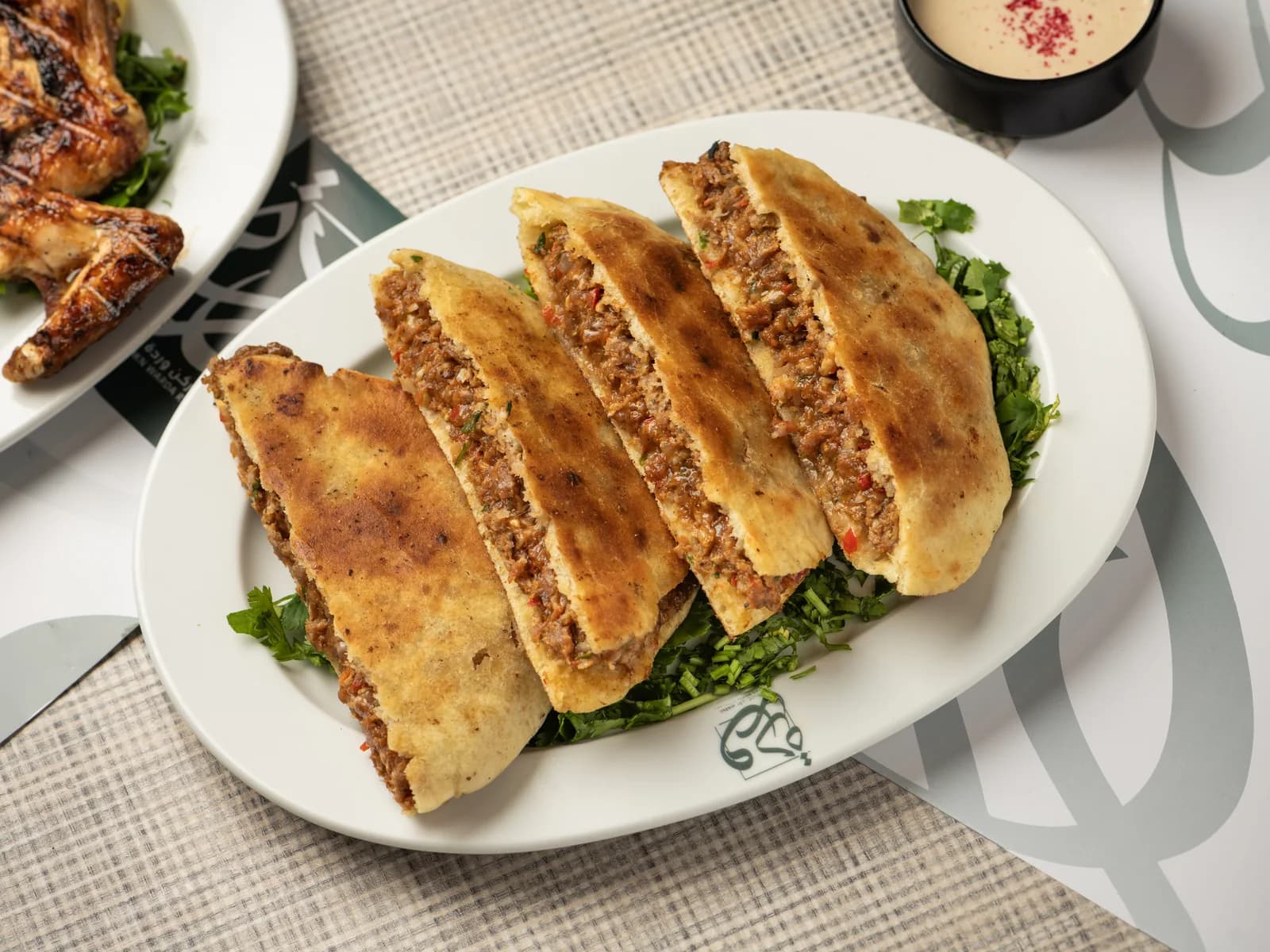
Hawawshi is baladi bread stuffed with minced meat seasoned with onion and pepper, baked in the oven or on a griddle until the bread is crisp and soaks up the fat of the meat. A widely told story says its name comes from a Cairo butcher who first made it, but that is a popular tale, not documented history. We have a full article on it: Egyptian hawawshi in Al Khobar.
And more on the street
| Food | What it is |
|---|---|
| Roasted sweet potato | Baked in a small oven on a cart, a winter favourite |
| Hummus el sham | Hot chickpeas in their broth with lemon and chilli, in a cup |
| Belila | Boiled wheat with milk and sugar, a warm breakfast |
| Sugar cane juice | Cold juice pressed in front of you at juice shops |
Street food and baladi bread
As you may have noticed, baladi bread is the thread that ties most of these together: it carries the ful, the taameya, the liver and the hawawshi. To learn its story, read the history of baladi bread.
From the Egyptian street to your table in Al Khobar
At Rokn Warda in Al Khobar you will find two dishes with the spirit of Egyptian street food: Alexandrian liver (strips of liver with garlic, hot pepper and Alexandrian spices) and hawawshi in two kinds, meat hawawshi and sausage hawawshi. Koshari, ful and taameya are not on our menu, but they are part of the story of the kitchen we come from. Order from the menu for delivery in Al Khobar and Dammam. For more on the food of Egypt's regions, read from Upper Egypt to Alexandria.