When the month of Rabi' al-Awwal arrives in Egypt, the streets change their look: colourful stalls suddenly appear on street corners, the smell of sugar and toasted sesame fills the air, and cardboard boxes are stacked high with Mawlid sweets (halawet el-mawlid) of every kind, next to the Mawlid doll in her colourful dress and the Mawlid horse with its rider. It is a season young and old look forward to, tied in Egyptians' memory to home, family and visits.
This article is about that story: what the Mawlid sweets are, the tale of the doll and the horse, the stories told about their origin, and how the season became part of Egypt's social customs. Let us say clearly from the start: we are describing a social custom and folk heritage, not discussing religious rulings.
What are Mawlid sweets?
Mawlid sweets is an umbrella name for a group of popular sweets made and sold in Egypt during the season of the Prophet's birthday (al-Mawlid al-Nabawi). Most are made of sugar or honey with toasted nuts and pulses, shaped into discs, fingers or squares, and wrapped in clear paper or packed into boxes.
Among the best-known kinds you will find in almost any box:
- Simsimiya: toasted sesame bound with sugar or honey, crunchy, with the unmistakable smell of roasted sesame.
- Hummusiya: toasted chickpeas bound with sugar, one of the kinds people remember from childhood.
- Fuliya: peanuts toasted in sugar, a big favourite with children.
- Gawziya: made with coconut, softer and more tender than the others.
- Malban: soft, chewy pieces, sometimes with nuts and sometimes in different colours, and it always has a place in the box.
Beside these are other kinds that vary from shop to shop and year to year, such as nougat, basima and nut-filled rolls. The box itself has become part of the ritual: a big box for the house, small boxes for gifts and visits.
The story of the Mawlid doll and the Mawlid horse
If the Mawlid sweets are the taste of the season, the Mawlid doll (arousat el-mawlid) is its picture. The traditional doll was made of sugar poured into moulds and decorated with coloured paper shaped into a wide dress with a fan behind it, finished with shiny trimmings. Beside her stands the horse, or the horseman riding it with his sword raised, also made of sugar and decorated with coloured paper.
A doll for the girls, a horse for the boys
In many homes the custom was that a girl gets a doll and a boy gets a horse. Children kept them for days, admiring them and playing with them carefully before eating them piece by piece. Over time plastic dolls in colourful fabric dresses also appeared, sold next to the sugar ones, and they are kept at home as a keepsake from one year to the next.
The doll as an engagement gift
One well-known Egyptian custom is that the groom-to-be or his family send the fiancée a box of sweets together with a Mawlid doll during the season. The gift means something to both families: that the groom remembers the seasons and shares in his fiancée's family's joy. In many places the custom is still alive, even if its form has changed.
Where did the Mawlid doll come from? The popular tales
Here we must be honest: there is no confirmed origin for the Mawlid doll or the Mawlid sweets. Many stories circulate, and the most famous link the tradition to the Fatimid era in Egypt.
- The best-known tale says that one of the Fatimid caliphs went out in a procession on the day of the Mawlid with his wife, who wore a white dress and a crown, so the confectioners made a sugar doll in her likeness, and the horse and rider in the likeness of the caliph on his horse.
- Another story says that weddings were often held in this season, so the doll became a symbol of joy and marriage.
- Much is also said about the Fatimids loving to celebrate occasions in the streets and hand out sweets, which is how the sweets came to be tied to the occasion.
These stories are told and passed down from generation to generation, but nothing proves any single one of them. What is certain is that the custom is old, and that Egyptians have kept it for a long time, changing its shape and materials without letting it go. If you would like to know more about the food of Cairo in that period, read the food of Fatimid and Mamluk Cairo.
The Mawlid stalls: the street, the home and the memories
Much of the magic of Mawlid sweets is not only in the taste but in the street. Days before the occasion, sweet shops set up stalls in front of their doors, dressed in colourful khayamiya tent fabric and lights, with the sweets arranged on trays under clear paper. People stroll and look before they buy, and children point at the doll they like.
At home, opening the box is a moment with its own rituals:
- Everyone gathers around the box, and each person knows the kind they love.
- There is always someone hunting for the malban first, and someone else waiting for the simsimiya.
- Grandmothers tell stories of the old days, of simpler dolls and of coloured paper cut by hand.
- And part of the box is set aside for guests and neighbours.
One well-known folk proverb tied to the word mawlid is «tele' men el-mawlid bala hummus», "he came out of the mawlid without chickpeas", said of someone who went into something and came out of it with nothing gained. The proverb itself shows how much chickpeas and sweets were part of the popular mawlid festivals of old.
Mawlid sweets then and now
In the old days the sweets were sold by weight from the trays, and each household chose the kinds it liked and had them wrapped in paper. Today ready-made boxes are the most common, in different sizes, colours and designs, and new kinds appear every season beside the old ones. But however the look changes, simsimiya, hummusiya and malban are still at the heart of the box, and people still treat buying it as a yearly ritual without which the season is not complete. In many families the elders buy boxes for the grandchildren and for married daughters, so the sweets make the rounds of the whole family's homes within a few days. And many Egyptians living abroad look for them in their season, because to them their taste is the taste of home and family.
Frequently asked questions
What are the most famous kinds of Mawlid sweets? Simsimiya, hummusiya, fuliya, gawziya and malban are the best known, alongside other kinds such as nougat and basima that vary from place to place.
Is the Mawlid doll really Fatimid in origin? That is the most famous account, but it is a popular tale, not a proven fact. What is agreed is that the custom is old and has long been tied to the season.
Why does the groom bring his fiancée a Mawlid doll? It is a well-known social custom in Egypt meaning that the groom shares the seasons and celebrations with his fiancée's family; the box and the doll are a symbolic gift more than an expensive one.
Does Rokn Warda serve Mawlid sweets? No, Mawlid sweets and the Mawlid doll are not on Rokn Warda's menu. We tell their story here as part of Egyptian sweets culture.
Another kind of Egyptian sweet at the table
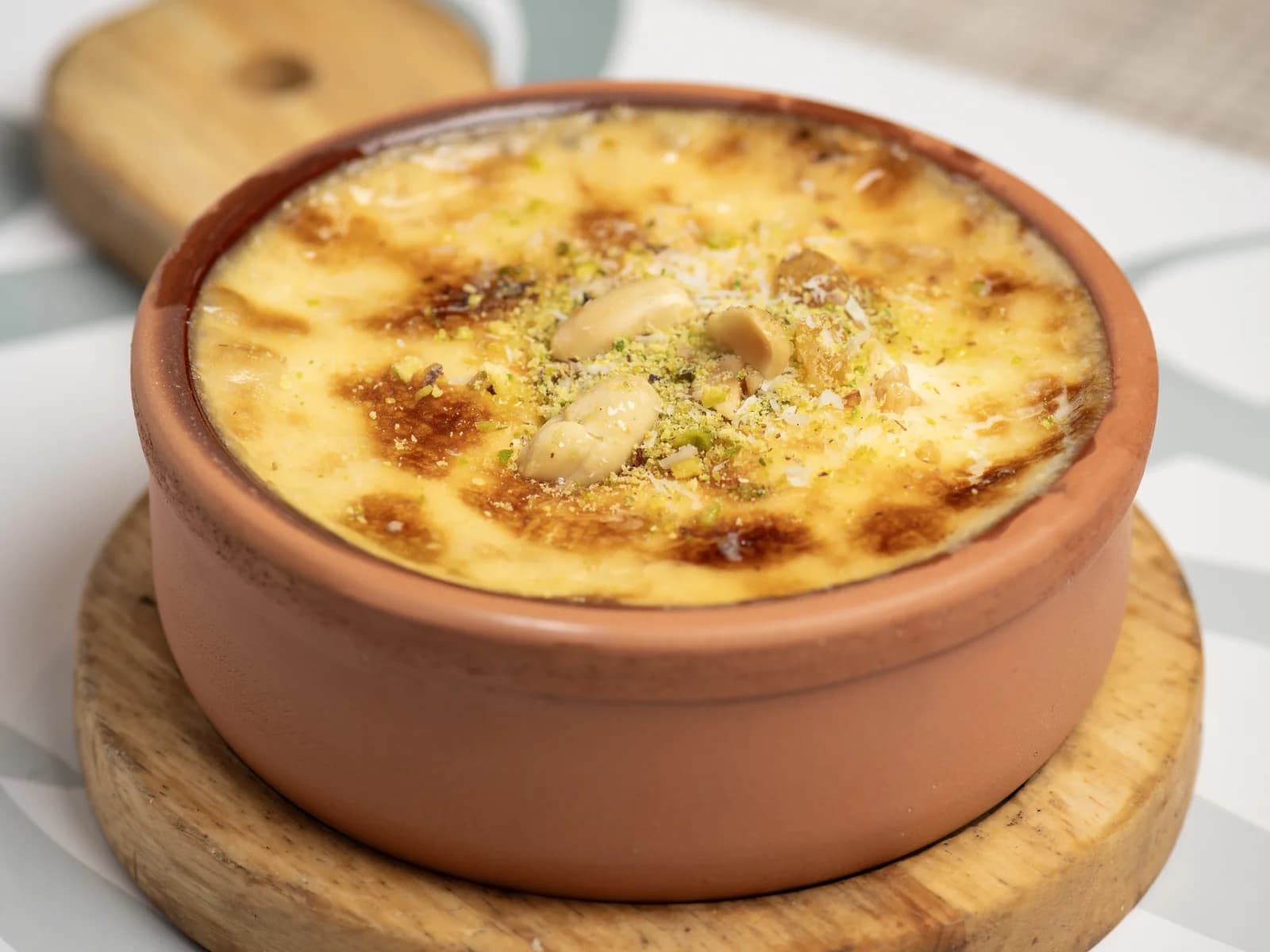
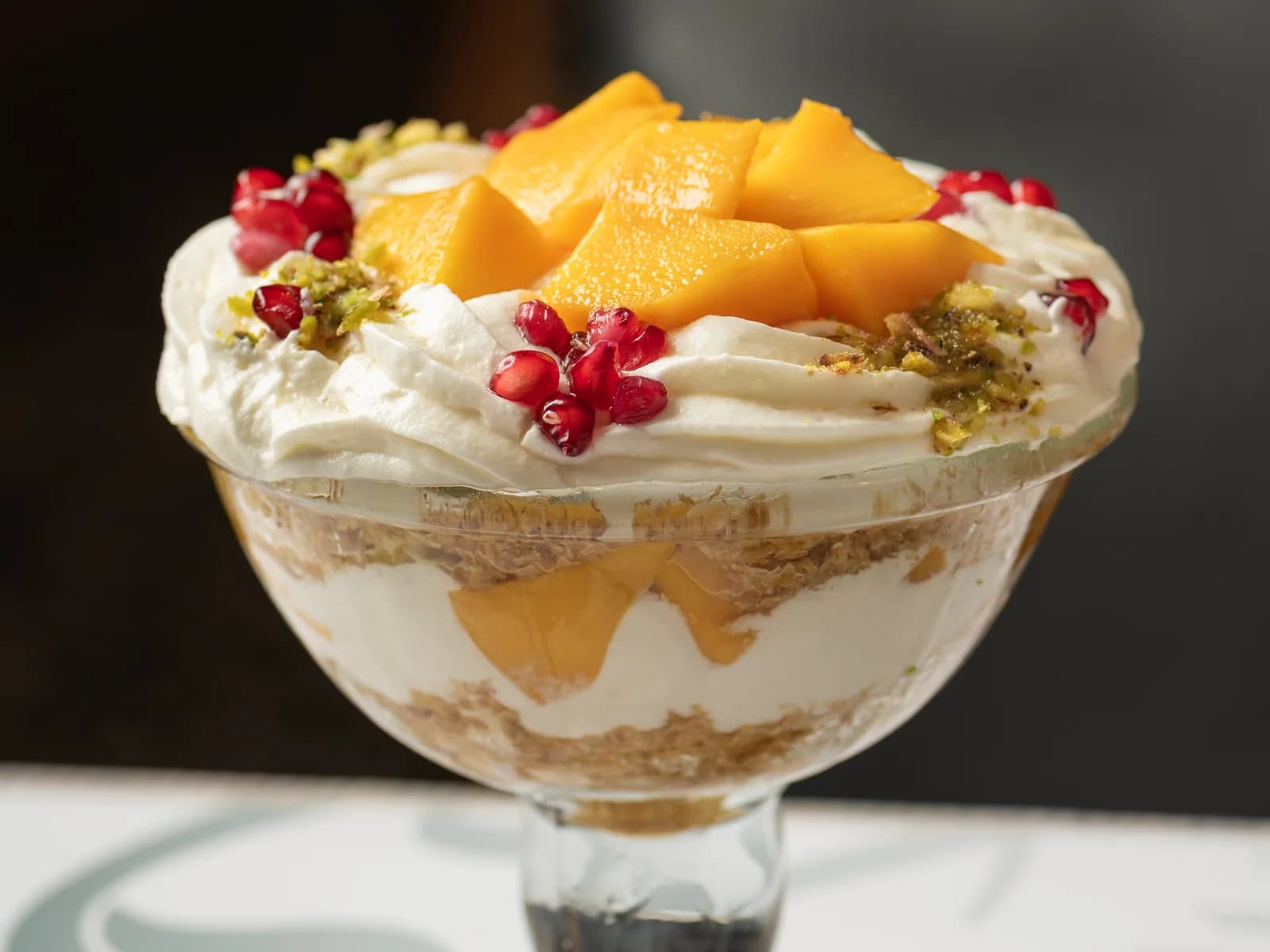
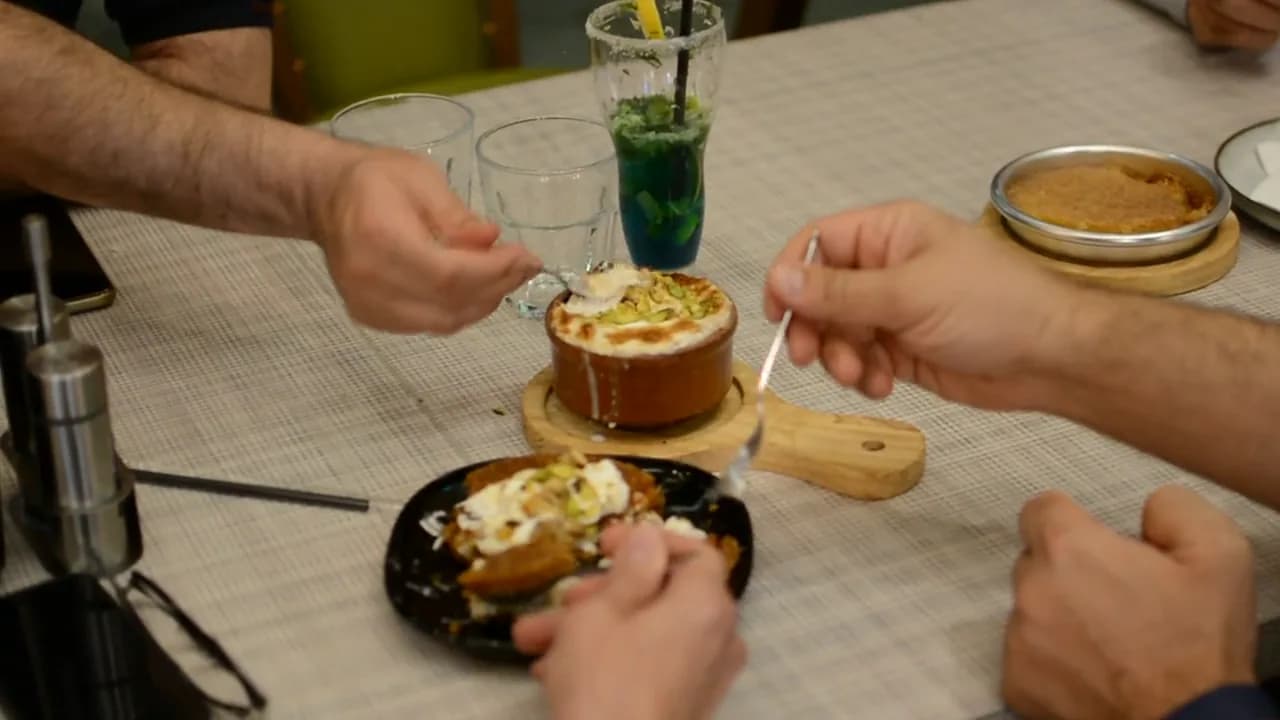
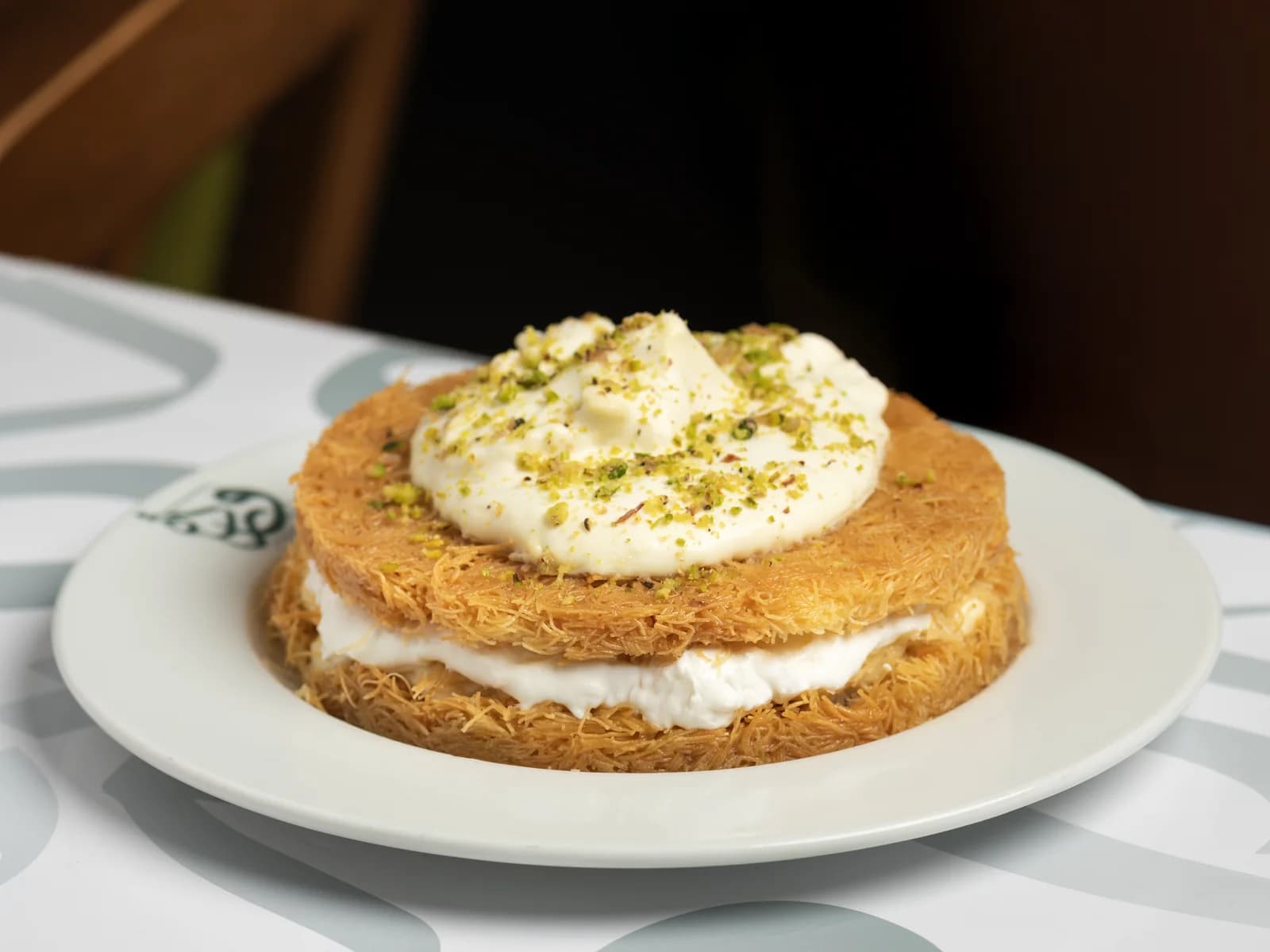
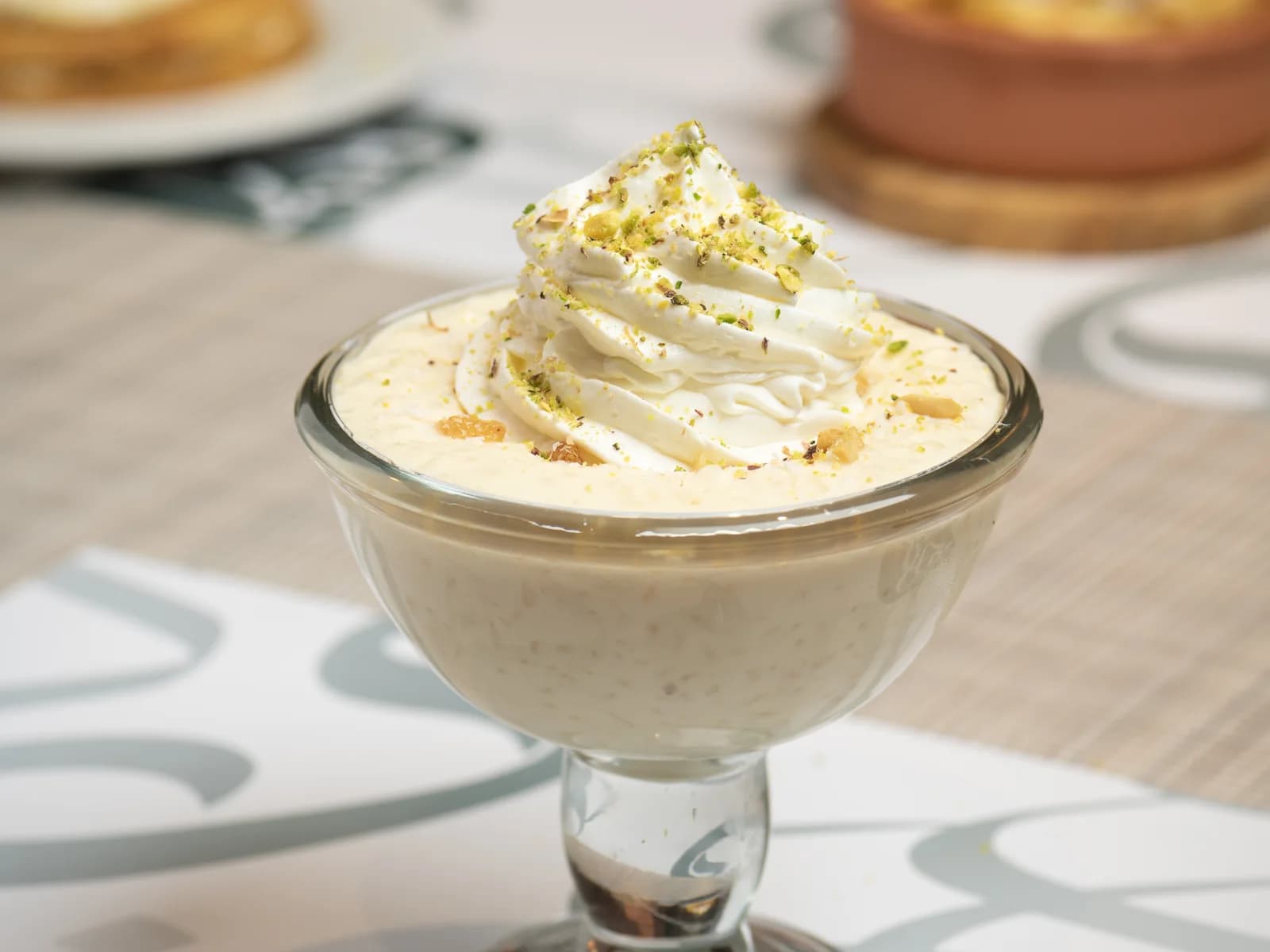
Mawlid sweets have their season and their stalls, but Egyptian cuisine is full of other desserts eaten at the table all year round. At Rokn Warda in Al Khobar you will find Egyptian desserts of a completely different kind: Om Ali, which has a story of its own in the story of Om Ali, rice pudding, kunafa with cream and mango kunafa. For Egyptian desserts in Saudi Arabia in general, read Egyptian desserts in Saudi Arabia, and for the other food seasons, Ramadan and Eid food in Egypt.
And if you would like to end a family gathering on a sweet note, open the menu and choose, or book your table and visit us on Al Yarmouk Street in Al Khobar.