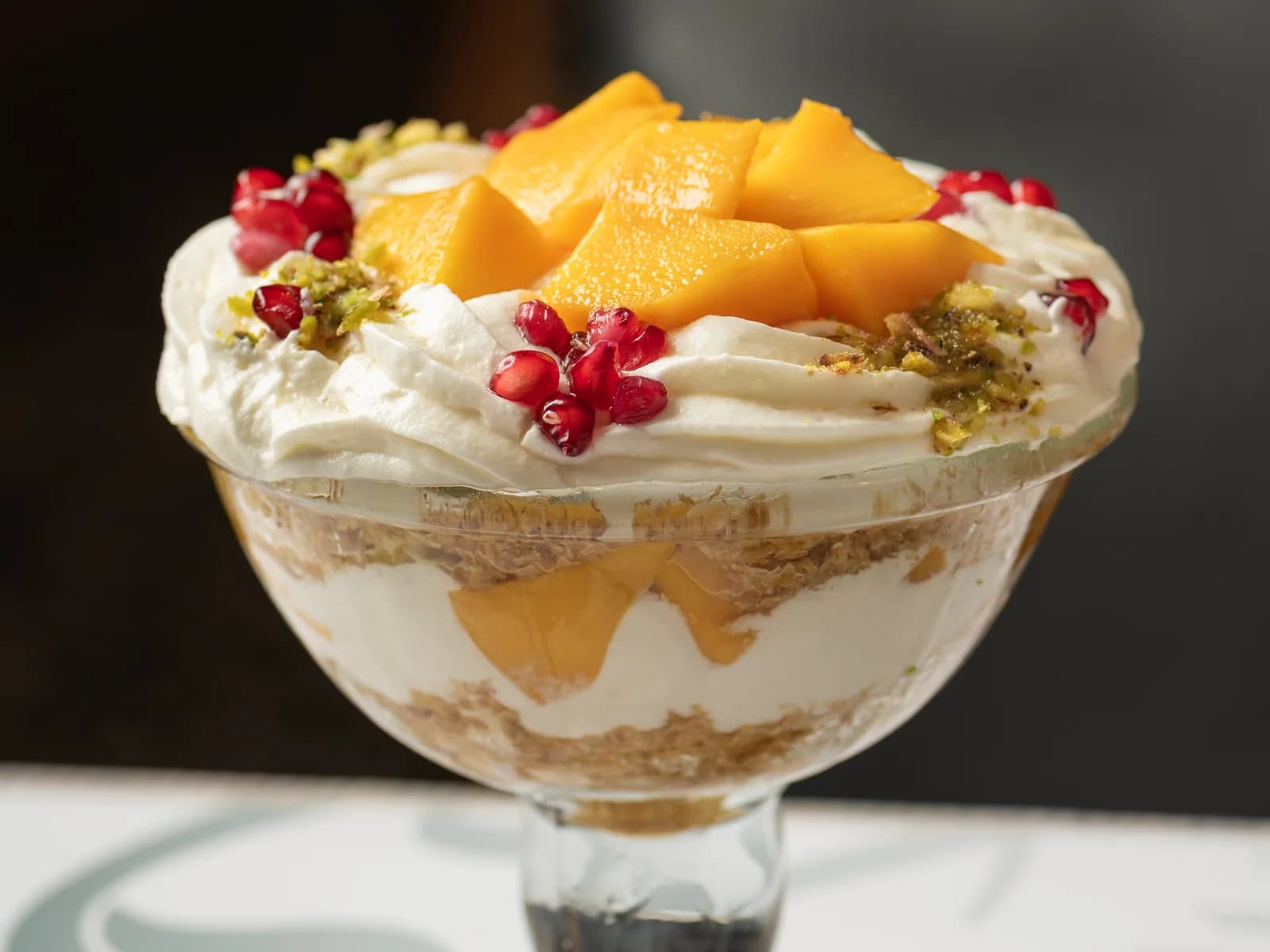
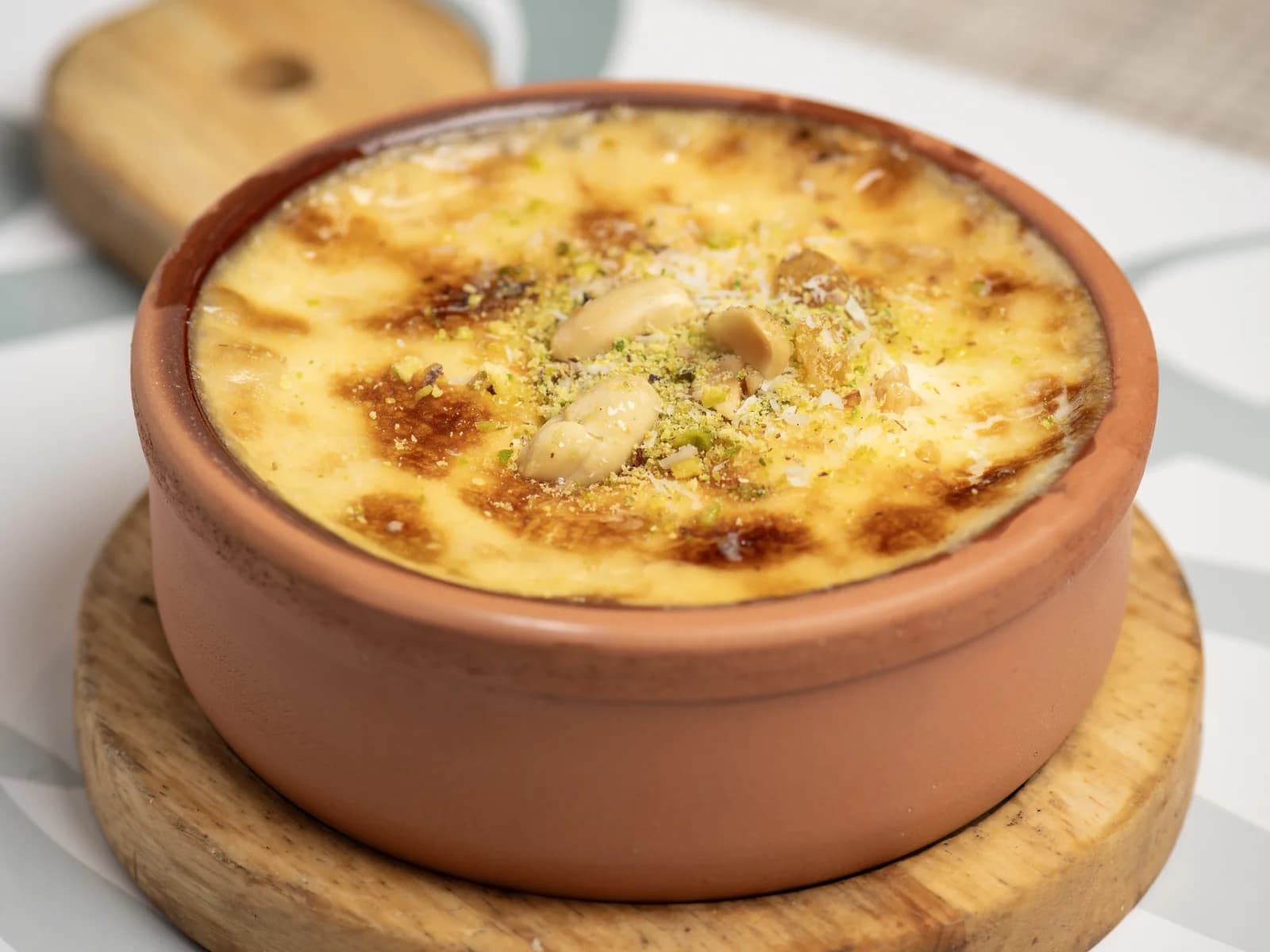
If there is one Egyptian dessert eaten with a spoon while still hot, its smell filling the house, it is Om Ali: baked pastry soaked in hot milk, topped with cream and nuts, with a golden top fresh from the oven. Simple ingredients, but a story that has been told for a long time, and a way of serving that makes all the difference when it is done right.
This article is about Egyptian Om Ali alone: the well-known tale behind the name, what goes into it, its layers, and how Egyptian homes serve it. If you want all the Egyptian desserts together, read the Egyptian desserts loved in Saudi Arabia.
Why is it called «Om Ali»? The well-known tale
It is said that the name goes back to the Mamluk era in Egypt. The popular tale says that Sultan Izz al-Din Aybak was married to a woman known as «Om Ali» and also to Shajar al-Durr, and that the rivalry between the two women ended with Shajar al-Durr's downfall. Afterwards, so the tale goes, Om Ali celebrated by ordering her cooks to make a sweet of bread, sugar, milk and nuts, which was handed out to the people, and the dish has carried her name ever since.
Note the words «it is said»: this is a popular folk tale, and no firm historical source confirms that the dessert was made on that occasion or that its name comes from it. Other stories about the name are told too, and none of them is confirmed. What we can say with confidence is that Om Ali has become one of the best-known Egyptian desserts, and that the tale itself is part of the pleasure. If you enjoy food stories from that period, read food in Fatimid and Mamluk Cairo.
What is Om Ali made of?
At heart Om Ali is four things, and every home plays with them to taste:
| Component | Its role | How homes vary it |
|---|---|---|
| Pastry or baked dough | The base, soaks up the milk | Thin ruqaq sheets, puff pastry, or torn fino bread or croissants |
| Milk | Makes the dish soft and warm | Sweetened with sugar, sometimes vanilla |
| Nuts | Crunch and flavour | Almonds, hazelnuts, pistachios, coconut, and raisins in many homes |
| Cream | The rich top that browns | Egyptian qishta or cream |
These are general Egyptian home practice, not one fixed recipe. Some like it swimming in milk, others a little drier; some load it with nuts, others are happy with a few almonds and raisins.
The layers: the secret of the dish
Om Ali is not a dessert simply «mixed together»; it is layers:
- Baked pastry broken into pieces at the bottom of the tray or bowl.
- Nuts and raisins scattered between the pieces.
- Hot sweetened milk poured over everything until it is covered or nearly so.
- Cream on top.
- Then the oven, until the top turns golden with browned patches.
The result everyone is after: a crisp, browned top, a soft heart full of milk, and a piece of nut in every spoonful.
How is Om Ali served the authentic way?
Hot, straight from the oven
Om Ali is a warm dessert. Egyptian homes serve it hot or warm, still steaming. Once it goes completely cold it loses much of its charm, and many homes warm it in the oven for a few minutes before serving.
In clay bowls or a tray
The best-known way is a small clay bowl for each person, or a large tray in the middle of the table for everyone to scoop from. The individual bowl keeps the heat and gives everyone their own browned top.
A little after the meal, with tea
Om Ali is filling, so in many homes it comes a while after the meal, during the sitting with tea. Read about that habit in tea and coffee in Egypt.
Winter and occasions
Because it is hot, Om Ali is a winter dessert for many people, and it appears at invitations, evenings together and occasions. In Ramadan it has its place in the evening after iftar, covered in Egyptian Ramadan desserts.
Old and new Om Ali
Over time modern versions have appeared in dessert shops and cafés: Om Ali with lots of cream, with pistachios only, or with additions such as chocolate and fruit. These are modern takes that many people enjoy, but the taste people call «the original» is the simple one: pastry, milk, cream and nuts.
Mistakes that spoil Om Ali
| Mistake | Result |
|---|---|
| Too little milk | Dry and over-crisp |
| Far too much milk | The top never browns and it turns into soup |
| Served cold | It loses its soul |
| Left too long after the oven | The pastry drinks all the milk and turns to paste |
Om Ali at Rokn Warda
At Rokn Warda in Al Khobar, Om Ali is on the menu as: baked pastry with milk, cream and nuts, served warm. End your meal with it in the dining room, or order it with your food from the menu for delivery in Al Khobar and Dammam. If it reaches you and you want it hotter, warm it for a few minutes in the oven.
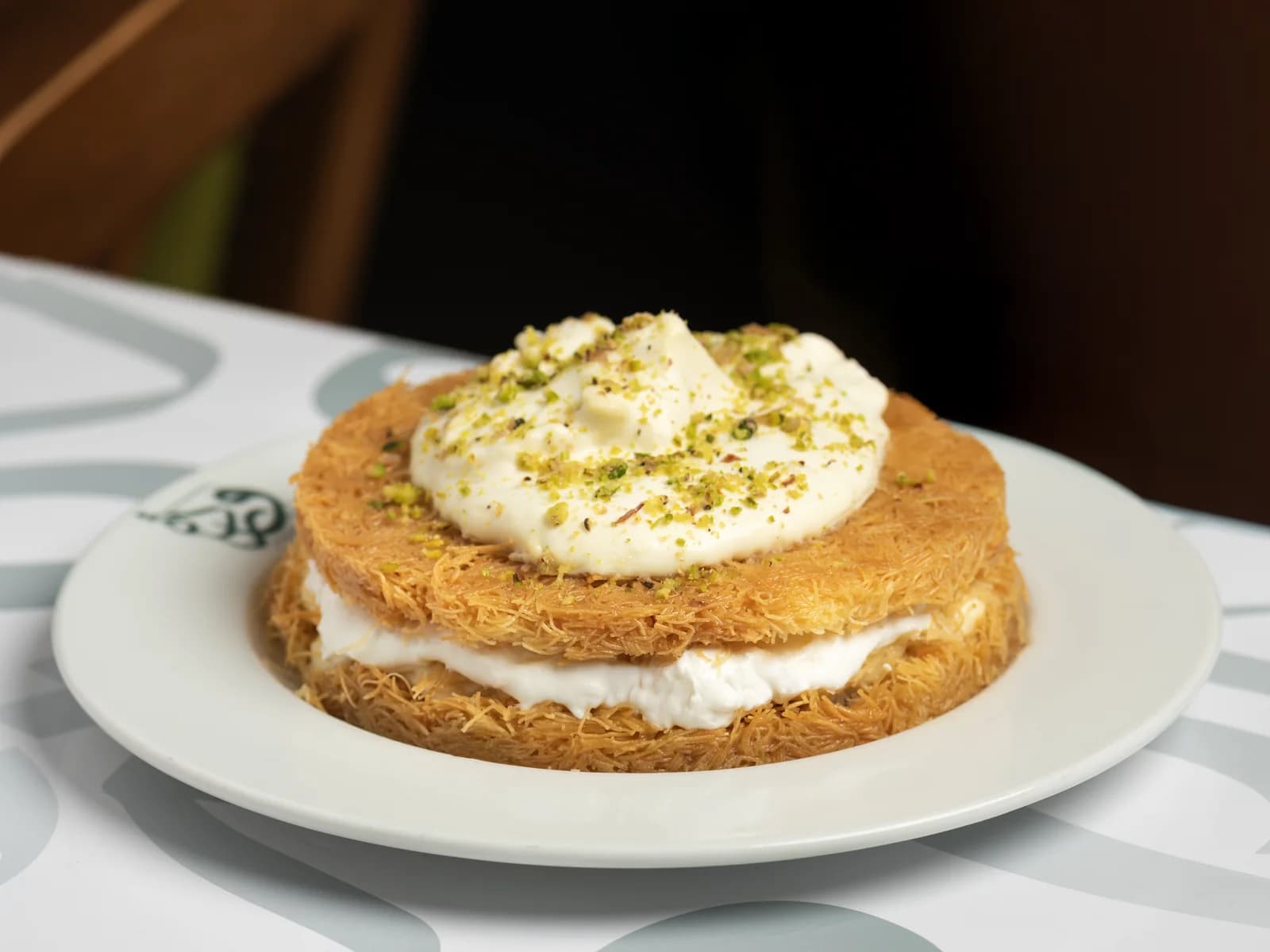
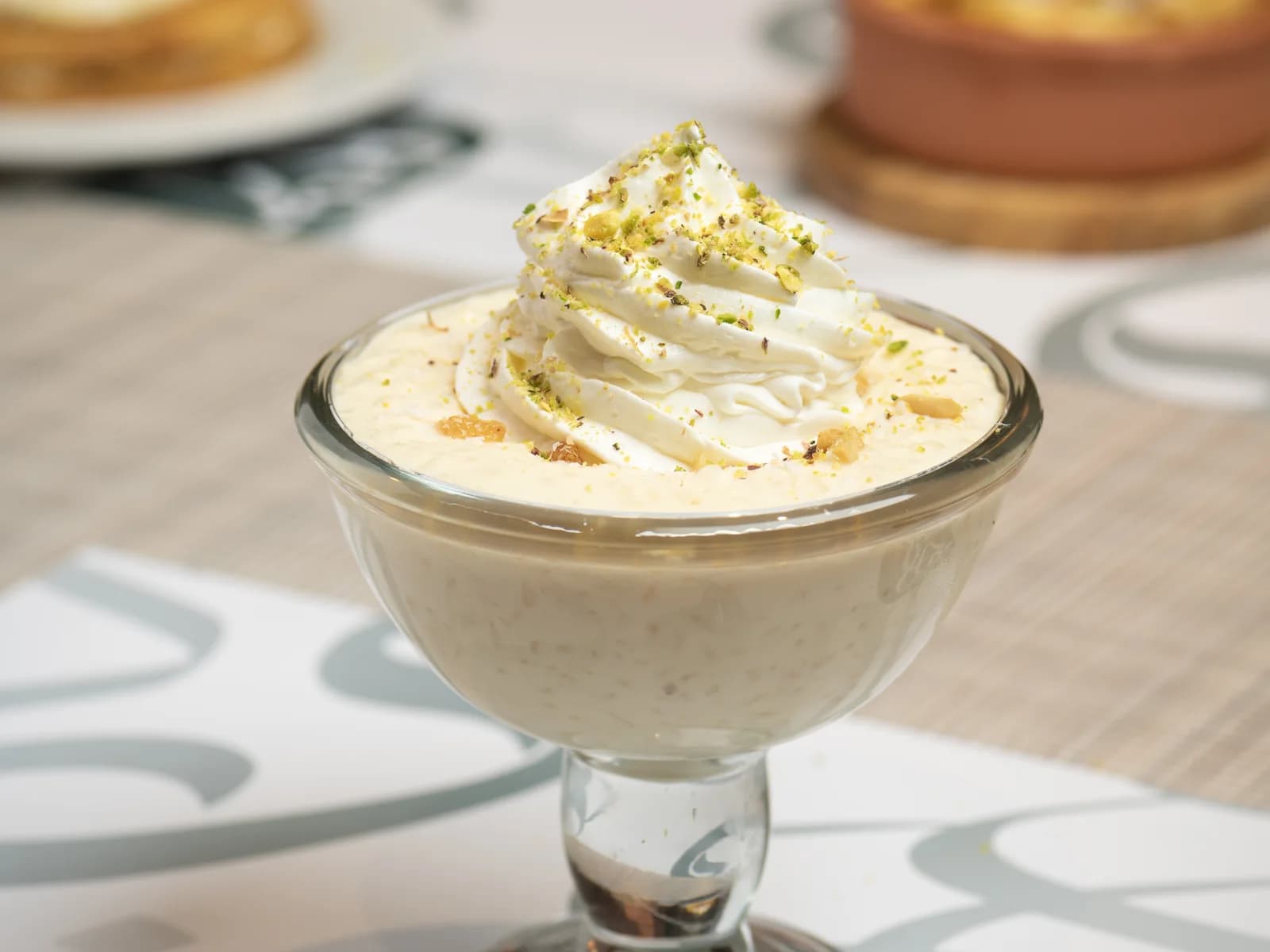
If you would like another dessert beside it or instead, we have rice pudding (creamy, topped with cream and pistachios), kunafa with cream and mango kunafa. To choose between the two kunafas, read mango kunafa or kunafa with cream?.
Frequently asked questions
Why is it called Om Ali? The well-known tale links the name to «Om Ali», wife of the Mamluk sultan Izz al-Din Aybak, but it is a folk tale, not confirmed history.
Is Om Ali eaten hot or cold? The authentic way is hot or warm. Some people like it cold, but that is not the usual way.
What is the difference between Om Ali and rice pudding? Om Ali is baked pastry in milk, cream and nuts, eaten hot; rice pudding is rice cooked in milk, usually eaten cold, with a lighter taste.
Can I order it for delivery? Yes, from the menu with delivery to Al Khobar and Dammam districts (the available districts show when you order) and order tracking, and also on HungerStation, Keeta and Ninja.
In the end, the best Om Ali is the one that reaches you hot with a golden top. See the menu and order it, or come to Al Khobar, book your table and end the evening with it.