In the homes of the Egyptian countryside there is a particular smell that tells you a guest is on the way or a feast is near: the smell of feteer meshaltet coming out of the village oven (al-forn al-baladi), layer upon layer, brushed with village ghee (samna baladi), golden, crisp outside and soft inside. It is eaten with black molasses (asal eswed), cheese and honey, with a glass of tea beside it and the whole family around it.
This article is about that pastry: what it is, how it is made at home, the story of the village oven, and why feteer became the gift you carry on a visit and a symbol of hospitality in the countryside. Let us say from the start: feteer meshaltet is not on Rokn Warda's menu; we tell its story here purely as part of Egyptian food culture.
What is feteer meshaltet?
Feteer meshaltet is a dough with very simple ingredients: flour, water and salt, and sometimes a little milk, depending on the household. The whole secret is not in the ingredients but in the hands and the ghee.
The dough is stretched until it is very thin, brushed with ghee, then folded over itself layer upon layer, and this is repeated more than once. In the oven, the ghee between the layers makes them separate, so the pastry comes out in flaky sheets you can pull apart with your fingers.
Where does the name come from?
There is no confirmed origin for the word "meshaltet". Some say it comes from the way the dough is stretched, pulled and folded; others say it describes the look of the puffed-up layers. What is certain is that the name is entirely Egyptian, and any Egyptian who hears it knows exactly what is meant.
How it differs from shop feteer
In the cities there are feteer shops that make filled feteer, sweet and savoury, with many fillings. That is a much-loved kind, but it is one thing and feteer meshaltet is another: meshaltet is plain, all its flavour comes from the dough and the ghee, and it is eaten with what is served beside it, not with what is inside it.
The shape of the feteer
The shape of the feteer itself varies from home to home and region to region. Some make it round and thick, full of layers; others make it thin and wide, as big as the oven tray; and some households brush the top with beaten egg so it comes out shiny. Every woman believes her way is "the right one", and that is part of the charm of the story.
Village ghee and the village oven: the secret of the taste
Ask any woman from the countryside about the secret of feteer and she will most likely give you two words: the ghee and the oven.
- Village ghee: ghee made at home from butter, with a strong, distinctive aroma. It gives the feteer its flavour and golden colour, and many households feel nothing can replace it.
- The village oven: an oven of mud or brick, fired with wood or crop leftovers depending on the region, its heat high and spread in a way that bakes and browns the feteer on every side.
- Patience: feteer is not a quick dish. Stretching and folding the dough and heating the oven take time and effort, which is why making it carried meaning: there was an occasion worth it.
Baking day
In rural homes the village oven was not only for feteer. Baking day was a big day: the women gathered to bake baladi bread, or sun bread (eish shamsi) in Upper Egypt, and at the end of the day the feteer came out. To learn more about the story of bread in Egypt, read the story of Egyptian baladi bread, and about clay vessels and ovens, Egyptian clay pot heritage.
What is it eaten with?
The beauty of feteer meshaltet is that it can be eaten sweet or savoury, depending on the mood and the time of day:
- With black molasses: sometimes mixed with tahini, one of the best-known combinations in Egyptian homes.
- With honey: for those who like a lighter taste.
- With cheese: cottage-style areesh cheese, or aged cheese (gebna adima) and mish for lovers of strong flavours.
- With clotted cream (eshta): and honey with it, for a big occasion.
- With powdered sugar: the simplest choice for children.
Feteer is usually served at breakfast or in the late afternoon, with a hot glass of tea. For the place of tea in the Egyptian home, read tea and coffee culture in Egypt.
Feteer as a visiting gift: countryside hospitality
If one thing sets feteer meshaltet apart from any other dish, it is that it is a gift. Among well-known rural customs, when someone visits relatives, especially those living in the city, they bring a tray of feteer wrapped in a cloth, sometimes with cheese, ghee and farm eggs. The gift means: "we made this for you with our own hands".
Among the scenes that recur in family stories:
- The bride's mother brings feteer to her daughter after the wedding, on the visits of the first days.
- A dear guest is welcomed with feteer hot from the oven, a sign that the house is happy to see them.
- Eid morning in many homes begins with feteer and honey.
- Someone travelling abroad packs feteer in their bag for friends far from home, and someone returning finds it waiting.
These customs differ from village to village and governorate to governorate, but the idea is the same: feteer is an honour offered to the guest. For the meaning of hospitality at the Egyptian table in general, read the Egyptian table, family and hospitality, and for how food changes from region to region, a journey through Egypt's regional food.
Feteer from the village
In the cities, the phrase "feteer from the village" carries a special weight. Many families left the village long ago, yet they still wait for the tray that arrives with a visiting relative or with grandmother. That feteer is stored and warmed up bit by bit, and every time it comes to the table it reminds the family of the village, its homes and its people.
Over time, many women in the cities have learned to make it themselves in the home oven, so the story does not end with the grandmothers' generation. The taste may not be exactly like feteer from the village oven, but the ritual remains: dough stretched out on the table, ghee brushed on layer by layer, a smell that fills the house, and children standing by, waiting for the first feteer to come out.
Frequently asked questions
What is the difference between feteer meshaltet and filled feteer? Meshaltet is many layers brushed with ghee and folded together, eaten plain with honey or cheese, whereas shop feteer is usually filled, sweet or savoury.
Does it have to be made in a village oven? The village oven is the traditional way, but many city homes make it in an ordinary home oven, and the taste varies a little with the oven and the ghee.
Why is it eaten with black molasses and tahini? It is an old popular combination in Egyptian homes: the deep sweetness of the molasses and the taste of tahini complement the ghee in the pastry.
Is feteer meshaltet available at Rokn Warda? No, it is not on the menu. We tell its story as part of Egypt's food and bread culture.
The Egyptian table and its bread
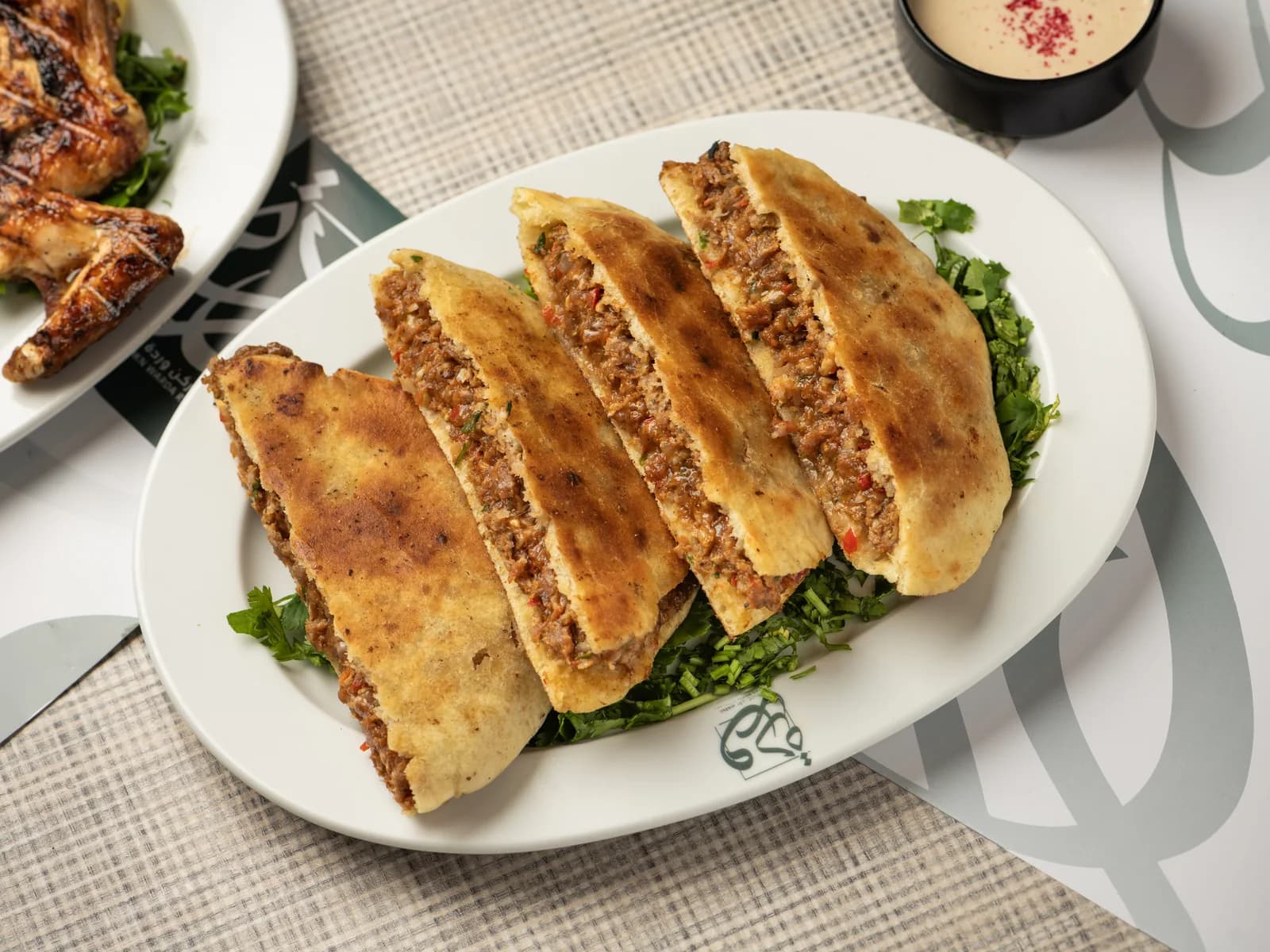
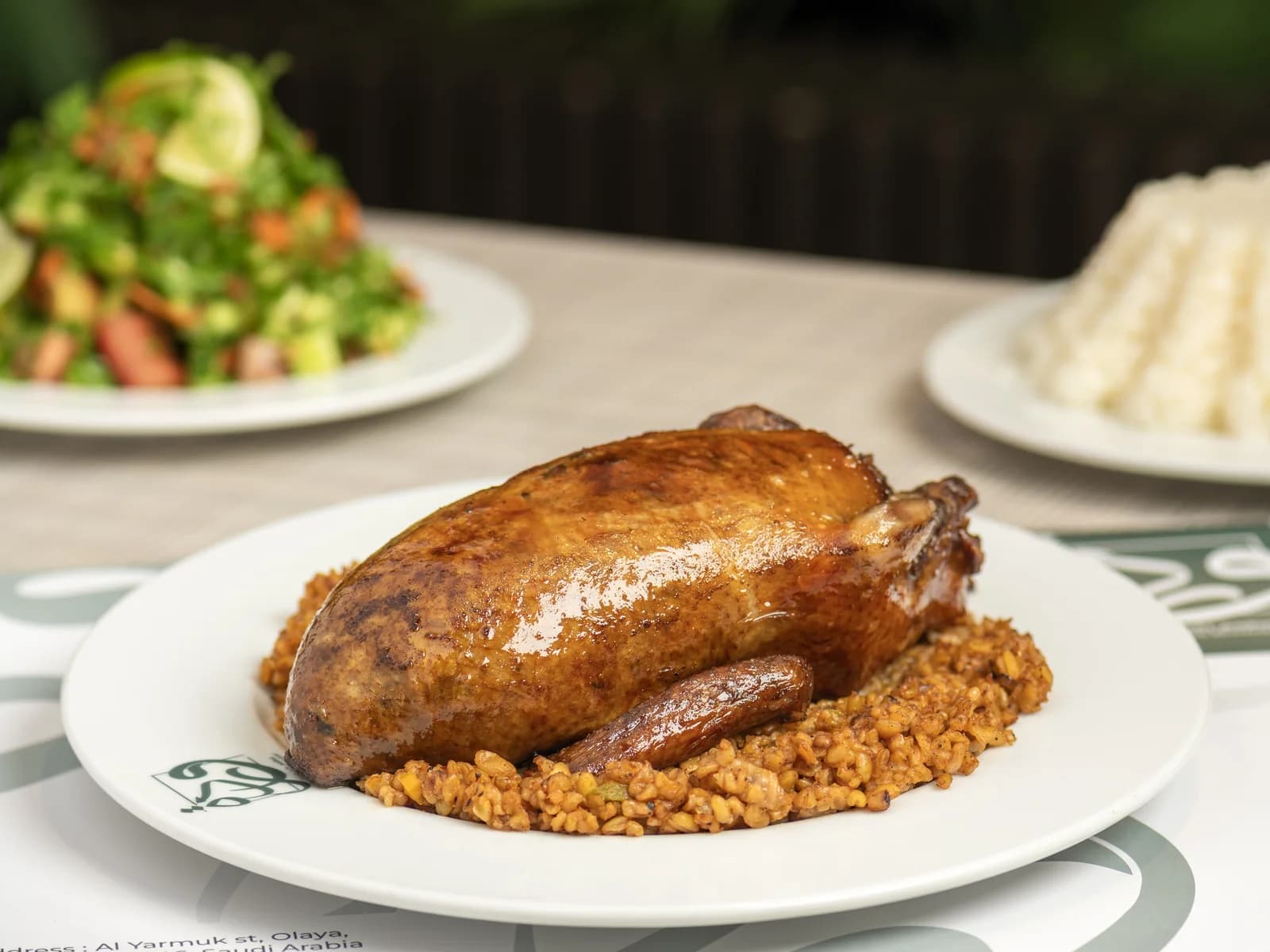
Feteer meshaltet reminds us that bread and dough in Egypt are not just something on the side of the plate but the heart of the table. The same spirit lives in many Egyptian dishes built on bread: meat hawawshi, with spiced meat inside the bread, and beef fatteh, with its layers of bread and rice, alongside rural home cooking such as pigeon stuffed with freekeh and molokhia casserole.
Open the menu and choose a dish that reminds you of the family table, or book your table at Rokn Warda on Al Yarmouk Street in Al Khobar.