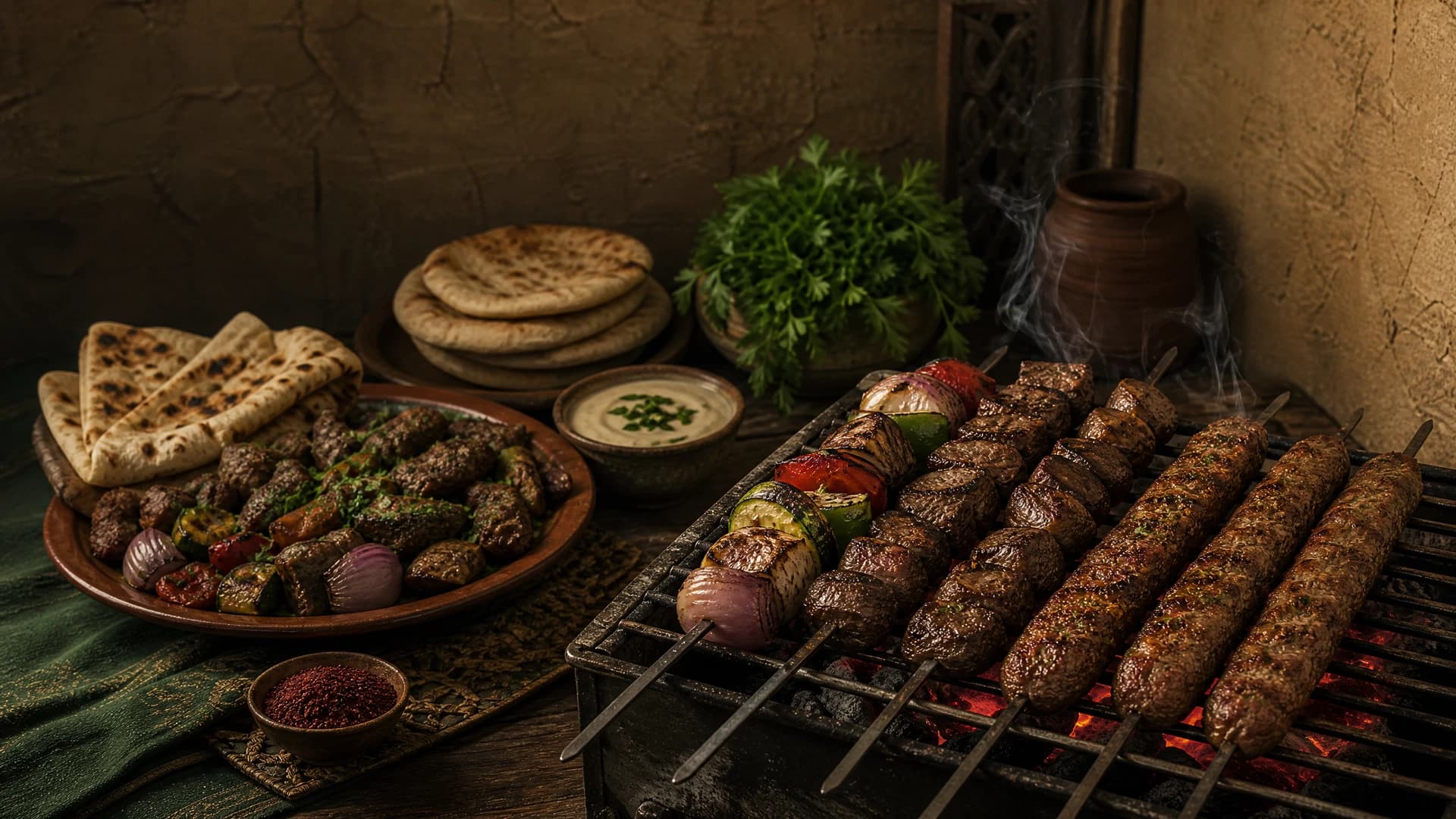
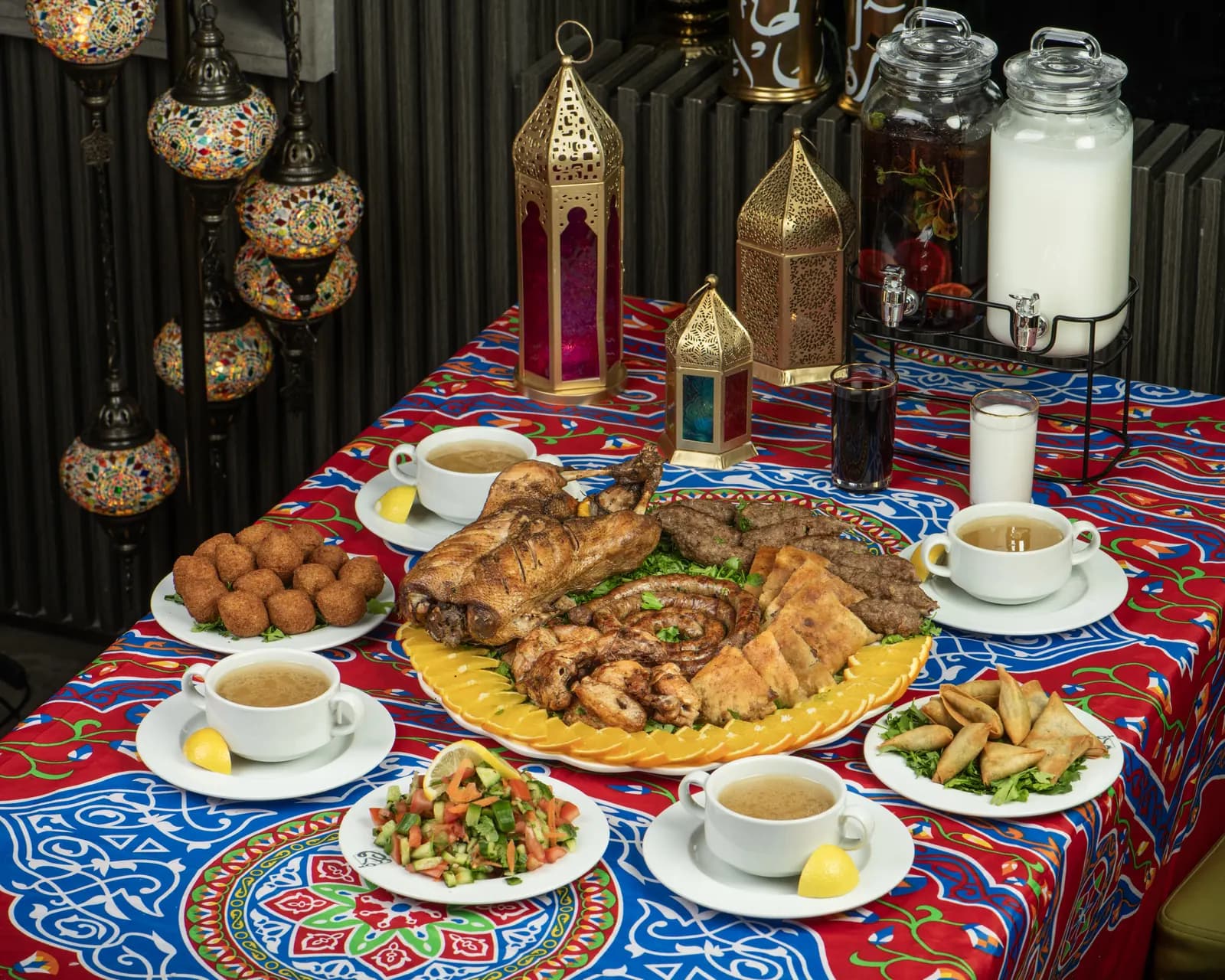
If you have ever been invited to a grill meal in an Egyptian home, you will have noticed that the kebab and kofta are not alone on the table: next to them sit a bowl of tahini, warm baladi bread, colourful pickles, a green salad and thinly sliced onion. This is how Egyptian grills are served, the way we grew up with it: the grill is the star, and everything around it completes the bite and makes it better.
In this article we talk about each of these elements as Egyptian food culture, give you a simple home tahini, and show you how to plate a mixed grill that opens the appetite, whether at home or when you order.
In this article
- 1How Egyptian grills are served: the basic idea
- 2Tahini: the sauce with no substitute
- 3Baladi bread: warm, or toasted over charcoal
- 4Egyptian pickles (torshi)
- 5Green salad and onion with sumac or parsley
- 6Rice: a choice, not a must
- 7How to plate a mixed grill
- 8From Rokn Warda's menu
- 9Frequently asked questions
- 10Your next table
How Egyptian grills are served: the basic idea
The secret of the Egyptian table is not the number of dishes but balance. Charcoal-grilled meat is smoky, with fat and marinade, so it needs things beside it that work with it:
- Something creamy to soften the bite: tahini.
- Something sour to cut the fat and open the appetite: pickles and lemon.
- Something fresh with crunch: green salad, onion and parsley.
- Something to carry the bite: baladi bread, or rice if you like it.
With all of this on the table, everyone builds their own bite: a piece of kofta in bread, tahini on top, a pickled cucumber on the side. That is what makes an Egyptian grill gathering long and full of conversation.
Tahini: the sauce with no substitute
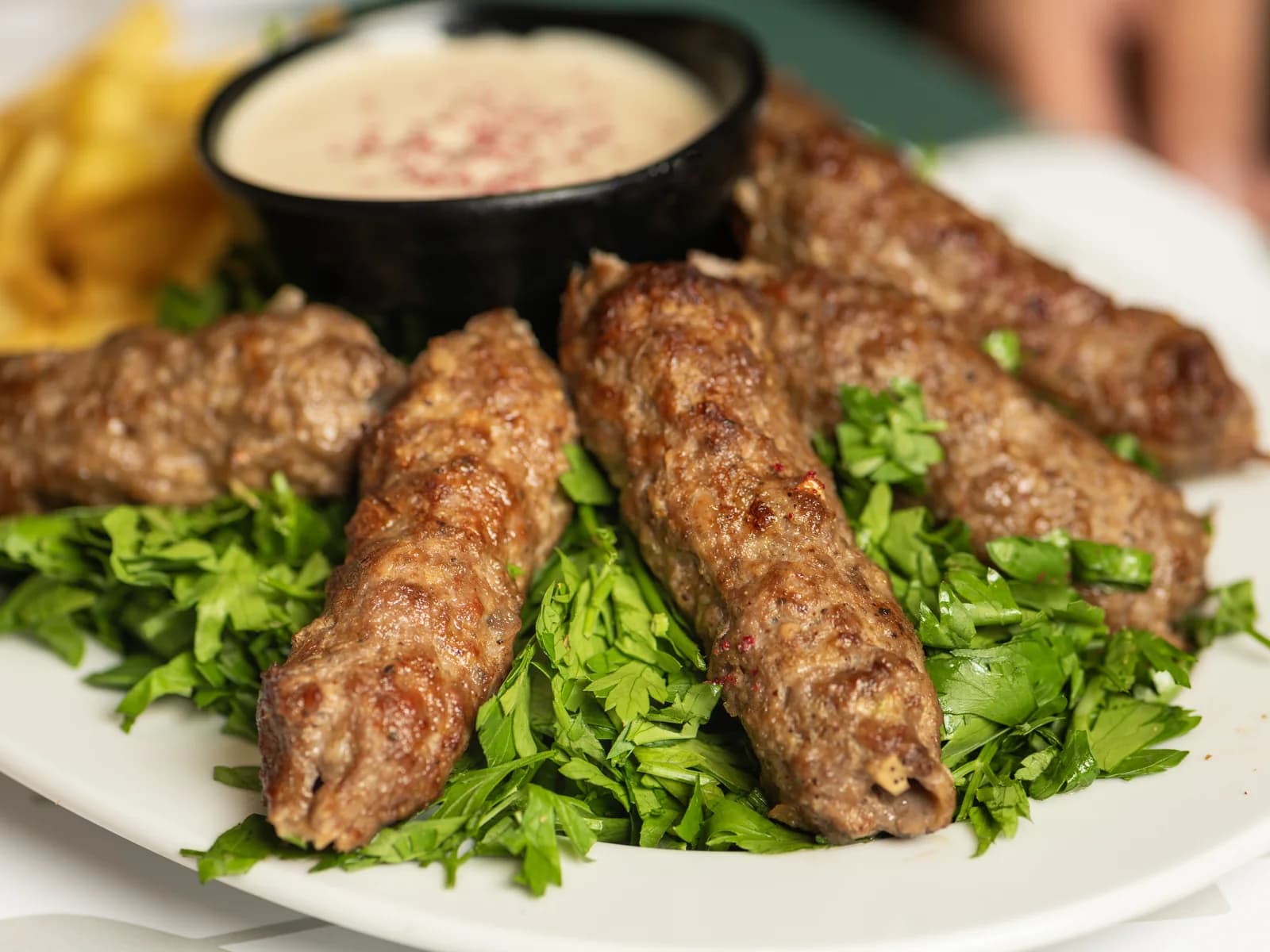
In Egypt, tahini is not just a sauce; it is a staple on any table with grills, fuul or taameya. It is made from raw tahini (ground sesame) and adjusted with lemon, garlic and water until it is smooth and pale.
A simple home tahini
Ingredients (all to taste):
- Raw tahini.
- Lemon juice.
- One or two cloves of crushed garlic.
- A pinch of cumin.
- Salt.
- Cold water.
Steps:
- Put the raw tahini in a bowl and add the crushed garlic and lemon juice.
- Stir, and you will notice it thickens and seizes as soon as the lemon goes in. That is completely normal; don't worry.
- Add cold water a little at a time while stirring, until it loosens, turns smooth and lightens in colour.
- Add salt and cumin, then taste: more lemon? More garlic? Adjust to your liking.
Small tips that make a difference
- For dipping, keep it a little thick; for drizzling over the grill, make it thinner.
- A sprinkle of chopped parsley and a little olive oil on top make it look lovely.
- Cover it and keep it in the fridge; it is best made on the day you eat.
- If someone has a sesame allergy, tahini is not for them, so keep alternatives like lemon and salad on the table.
Baladi bread: warm, or toasted over charcoal
There are no Egyptian grills without baladi bread. It is the bread we scoop tahini with, wrap kofta in and use to wipe up the last of the sauce. If you want its story and history, read the story of Egyptian baladi bread.
How to serve it well:
- Warm it on the edge of the grill for a few seconds on each side, until it is hot and soft inside.
- If you like toasted edges, leave it a little longer over the fire, but stay beside it so it doesn't burn.
- Some people put the bread under the grilled meat on the plate so it soaks up the juices, one of the nicest habits of the Egyptian table.
- Cover it with a clean cloth so it stays warm and doesn't dry out.
Egyptian pickles (torshi)
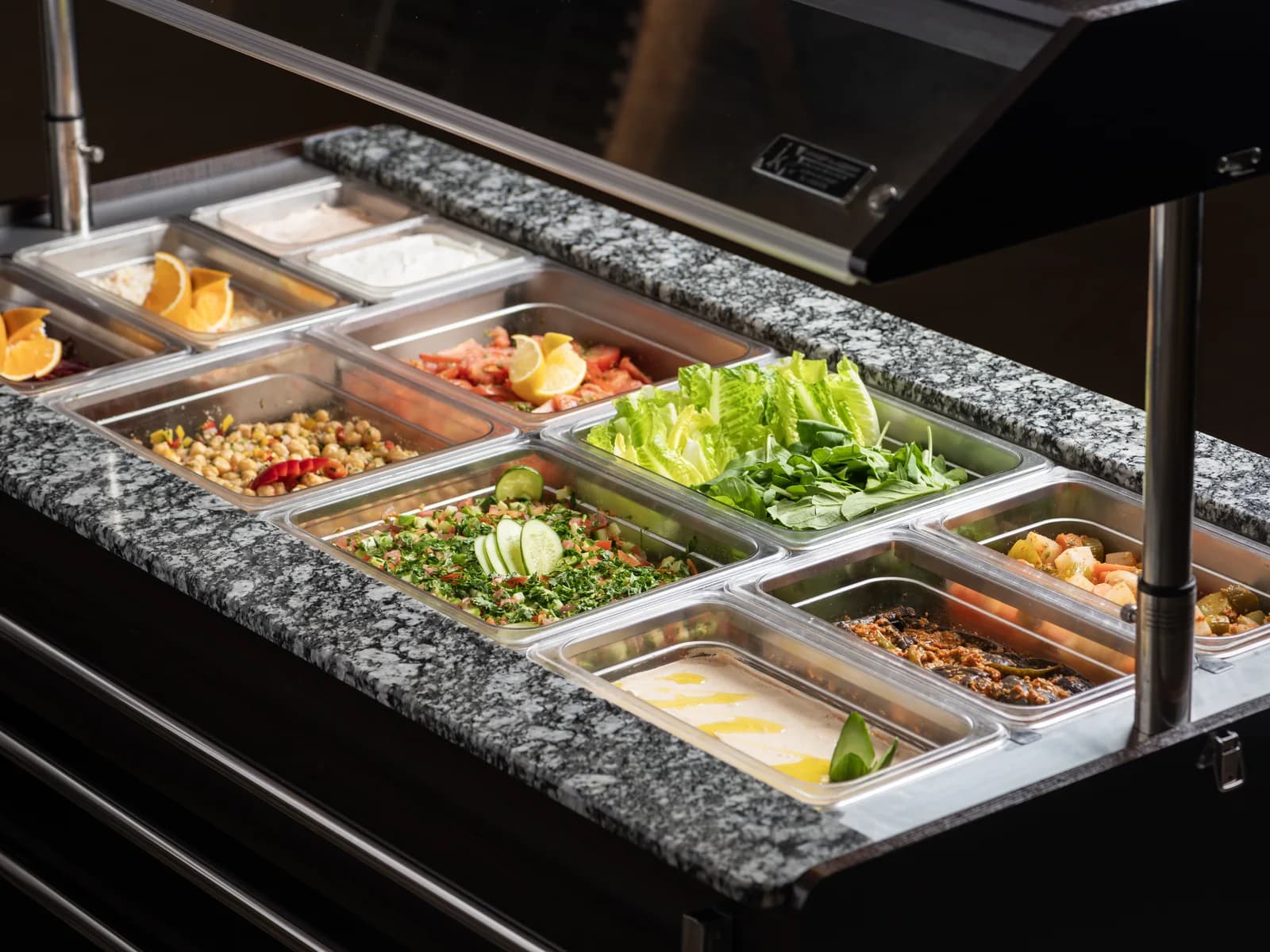
Torshi, Egyptian pickles, gives the table its colour and sourness: cucumber, carrot, turnip turned pink by beetroot, lemon, peppers and olives. Its role is simple and important: the sourness cuts the fat and lets you keep eating without feeling heavy.
Serve it in a small bowl of its own with a little of its brine, and put it in the middle of the table so everyone can reach it. If you like heat, keep the pickled chillies in a separate bowl for those who don't.
Green salad and onion with sumac or parsley
Green salad is a staple of the table, but its details and varieties have their own article: Which salad should you order with grills?, so we won't repeat them here.
What we want to stop at here is the onion:
- Slice the onion into thin rings and rub it with a little salt by hand to soften its sharpness.
- Sprinkle it with sumac if you like sourness, or chopped parsley if you like it fresher.
- Finish with a squeeze of lemon and serve it right beside the kebab and kofta.
Rice: a choice, not a must
On the traditional Egyptian table, bread is the main companion of grills, but many people like a plate of rice beside the grills, especially at gatherings and family meals. Vermicelli rice has a distinctly Egyptian taste, and white rice is lighter and simpler. If you can't decide, read Vermicelli rice or white rice?.
How to plate a mixed grill
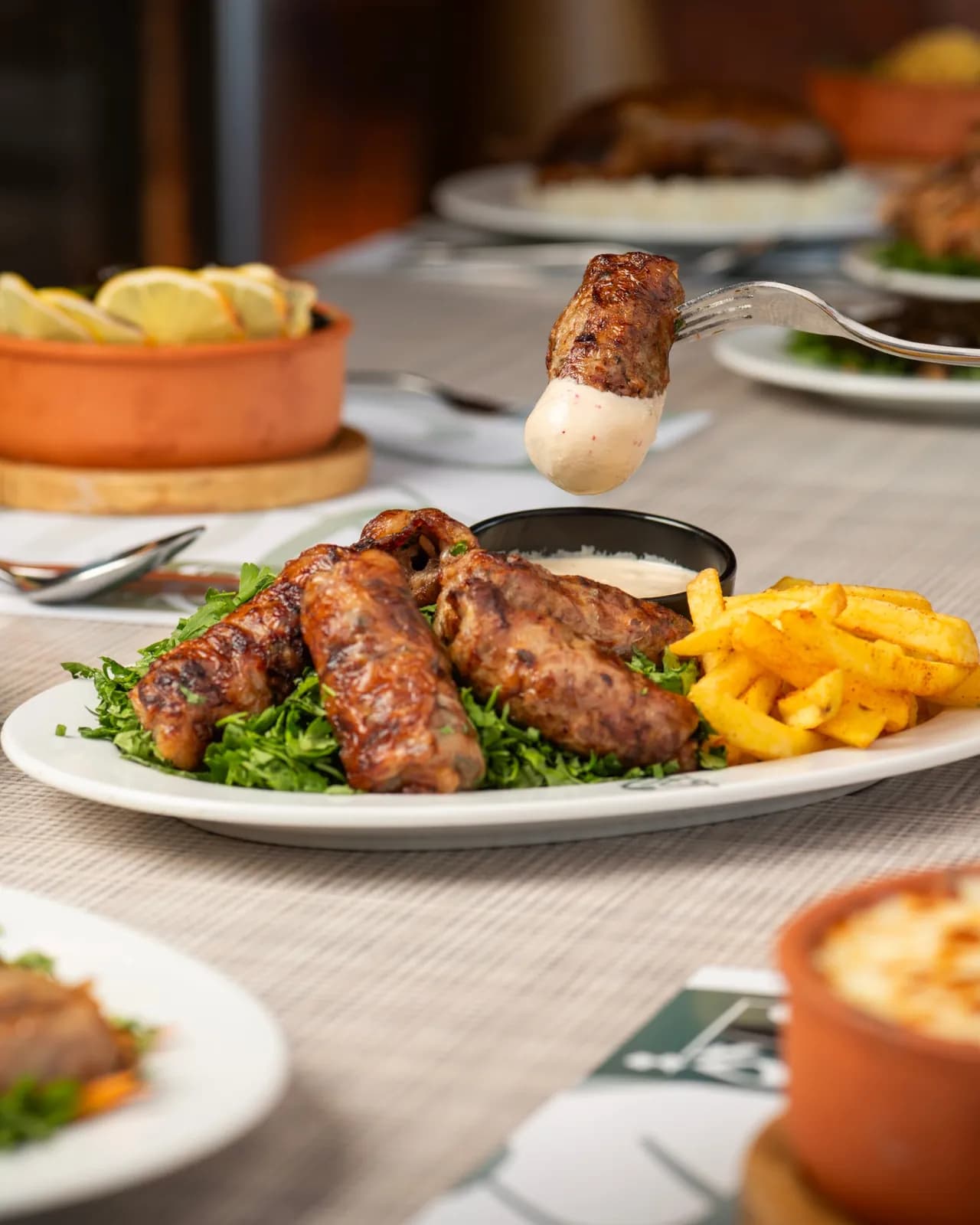
Good plating makes the same food look better and easier to eat. Here is a short checklist:
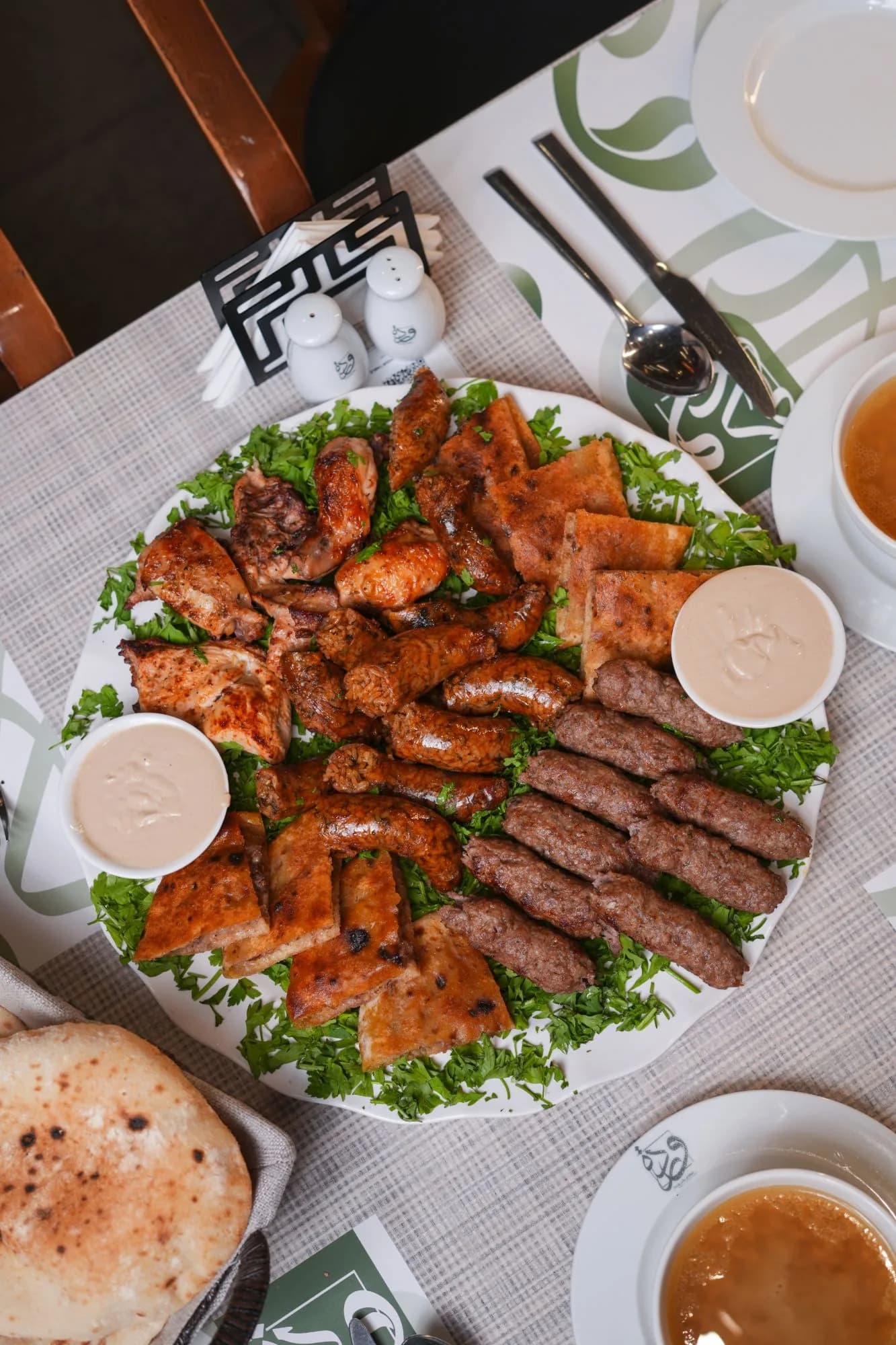
- [ ] A bed under the grill: baladi bread, or parsley and onion.
- [ ] Each type in its own area: kebab on one side, kofta on another, tarb and chicken on another, not piled on top of each other.
- [ ] Grilled tomatoes and peppers and lemon halves around the plate.
- [ ] Sauces in small bowls beside the plate, not poured over the grill, so it doesn't go soggy.
- [ ] Serve straight away, and don't cover the plate with a tight lid, because steam softens the grilled surface.
For gatherings and big tables
Put the big plate in the middle and spread small bowls of tahini, pickles and onion across the table, so nobody keeps saying "pass me that". If you are choosing a big shared plate, see the platter and mixed grills guide, and for the difference between the types themselves, Egyptian kebab and kofta.
From Rokn Warda's menu
Rokn Warda is an Egyptian restaurant on Al Yarmouk Street, Al Olaya, Al Khobar. Our grills are cooked over charcoal, and our site says the meat is fresh daily. From the menu:
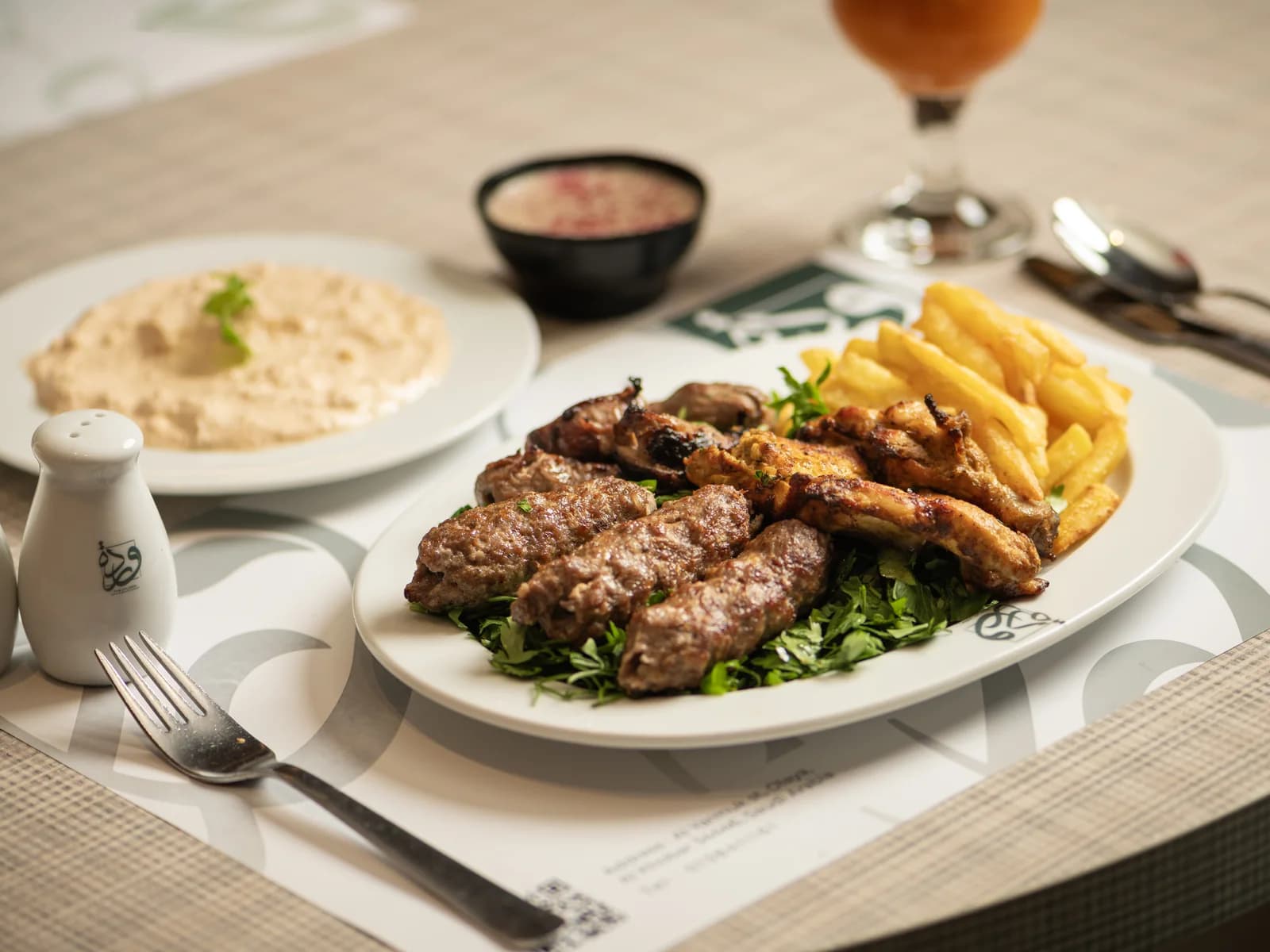
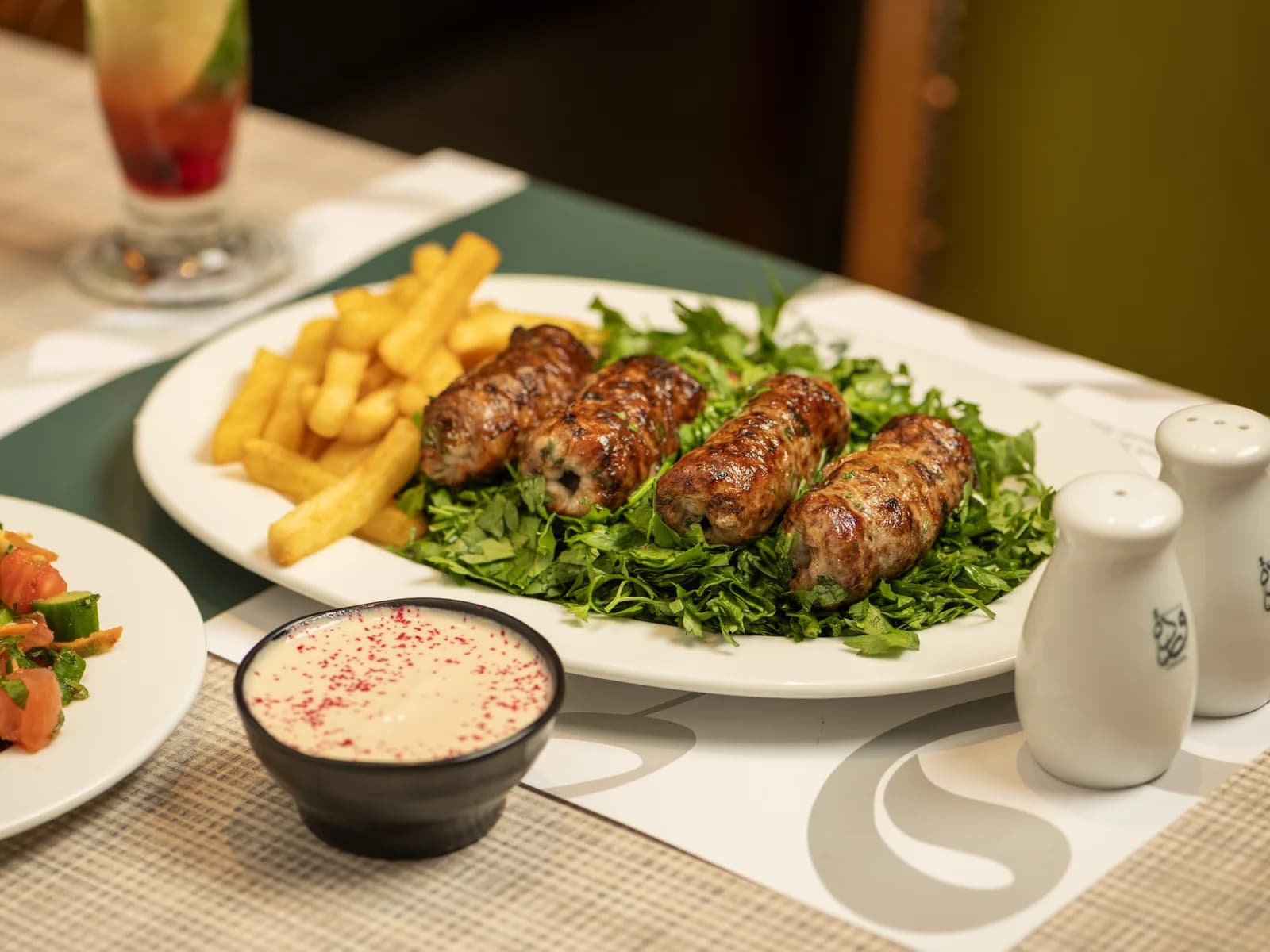
- Grills: kebab, beef marinated with oriental spices; kofta with spices and herbs; tarb, kofta wrapped in caul fat; chicken shish; and mixed grills with kebab, kofta and chicken shish. Everything is on the grills page.
- Sides: the salad buffet with vegetables, sauces and Egyptian pickles, arugula and pomegranate salad, white rice and vermicelli rice.
Each dish's description is on its page, and if you want to know exactly what comes with it, ask when you order.
Frequently asked questions
Why does tahini thicken and seize as soon as I add lemon? That is a natural reaction between tahini and acid. Keep stirring and add cold water a little at a time, and it will loosen and turn smooth.
How do I warm baladi bread without drying it out? A few seconds over the fire or on the edge of the grill, then cover it with a clean cloth so it keeps its softness.
Do pickles go with every kind of grill? Usually yes, because their sourness balances the fat, and it shows most with kofta and tarb. In the end it is a matter of taste.
If I order grills from Rokn Warda, will I find pickles and sauces? The menu has a salad buffet with vegetables, sauces and Egyptian pickles that you can add to your order. Each dish's details are on its page.
Should I order rice or stick with bread? It depends on the occasion: bread is the traditional base, and rice is a nice choice for gatherings and for anyone who wants a more filling meal.
Your next table
Tahini, warm bread, pickles, onion with sumac and grills fresh off the charcoal: the Egyptian table at its simplest. Open the menu and choose from mixed grills and the salad buffet, with delivery in Al Khobar and Dammam or pickup from the restaurant, or come in and book your table to eat your grill hot at the table.