Ask any Egyptian to name one dish that sums up the Egyptian street on a plate, and chances are they will answer without thinking: koshari. It is a popular dish made entirely from things found in any kitchen: rice, lentils, pasta and chickpeas. But when those layers come together and are topped with tomato sauce, da'ah and crispy fried onions, the result is a taste like no other, loved by young and old alike.
In this article we tell the story of koshari in detail: its layers and the role of each one, the secret of the sauce, the da'ah and the chilli, the crispy onions, what is said about its origin, and how Egyptians eat it. Let us say clearly from the start: koshari is not on Rokn Warda's menu; we tell its story here purely as part of Egyptian food culture.
In this article
- 1What is koshari?
- 2The layers of koshari: each one has a job
- 3Sauce, da'ah and chilli: the soul of the dish
- 4Crispy onions: the crown on top
- 5The story of its origin: what is said?
- 6Koshari shops: a world of their own
- 7Koshari at home
- 8Koshari and fasting
- 9How to eat koshari like an Egyptian
- 10Frequently asked questions
- 11Koshari is not on our menu… but the spirit of popular food is
What is koshari?
Koshari is a dish with no meat at all, built on grains and pulses and served in one large bowl with everything layered on top. That is a big part of its popularity: it is filling, its ingredients are simple, it is made in large quantities, and everyone adjusts it to their own taste with sauce, da'ah and chilli.
It is one of the dishes that bring everyone together in Egypt: the student, the office worker, the labourer and the family out for the day may all stand in the same shop and order the same dish. To get to know Egyptian street food as a whole, read The story of street food in Egypt.
The layers of koshari: each one has a job
Koshari is not a random mix; every ingredient has a role in taste and texture.
Rice and lentils
The base of the dish is rice cooked with lentils, usually whole lentils (brown or black) that keep their shape rather than dissolving like split yellow lentils. Rice and lentils give the dish its body and its gentle, basic flavour.
Pasta
On top of the rice and lentils comes pasta, usually more than one kind: small shapes such as elbows, sometimes broken spaghetti, and some homes and shops add browned vermicelli to the rice. The mix of shapes gives every spoonful a different texture.
Chickpeas
Boiled chickpeas go on top or inside the bowl, adding a slight bite and a taste that complements the lentils. Many people ask for "extra chickpeas", while others leave them out altogether.
Sauce, da'ah and chilli: the soul of the dish
If rice, lentils and pasta are the body of koshari, these additions are its soul. Without them koshari is just a plate of starch.
The sauce
The tomato sauce in koshari has a character of its own: tomatoes cooked down with garlic, often with vinegar and cumin, so it comes out tangy and a little hot. It is poured hot over the bowl, and everyone decides how much they want.
The da'ah
In koshari, da'ah is garlic vinegar, sometimes with cumin, served in a bottle or glass beside the bowl. Its sharpness is what opens up the flavour and cuts through the heaviness of the starch, and some people cannot imagine koshari without it.
The chilli
Chilli sauce is made differently from shop to shop and home to home, and it is added drop by drop. Some people consider the strength of the chilli to be what sets one koshari shop apart from another.
Crispy onions: the crown on top
The last thing to go on koshari is fried onions: onions sliced thin and fried in oil until brown and crisp. They give the dish aroma, flavour and crunch, and many Egyptians say the true taste of koshari lies in the onions.
In many homes, the oil the onions were fried in is then used to cook the rice or the sauce, so the flavour runs through the whole dish.
The story of its origin: what is said?
The origin of koshari is one of those stories nobody agrees on. A well-known account holds that its name and idea are related to an Indian dish called "khichdi", made of rice and lentils, and that the dish reached Egypt and changed there, gaining pasta, tomato sauce, da'ah and crispy onions until it became a thoroughly Egyptian dish in the form we know.
Whatever its origin, what is certain is that koshari in this form has become a quintessentially Egyptian dish, and wherever people know it they connect it with Egypt. That is no surprise for a cuisine that has so often taken ideas from abroad and given them its own taste, as we tell in The history of Egyptian cuisine.
In Alexandria and some other governorates there is also yellow koshari: rice with split yellow lentils, without pasta or sauce, eaten in many homes with fish or pickles. One name, two completely different dishes.
Koshari shops: a world of their own
A koshari shop in Egypt has a familiar look: big pots behind the counter holding rice, lentils, pasta, chickpeas and onions, and a server who scoops at great speed and builds a bowl in seconds. Orders are given by size, each shop has its own names, and the customer finishes the job at the table with sauce, da'ah and chilli.
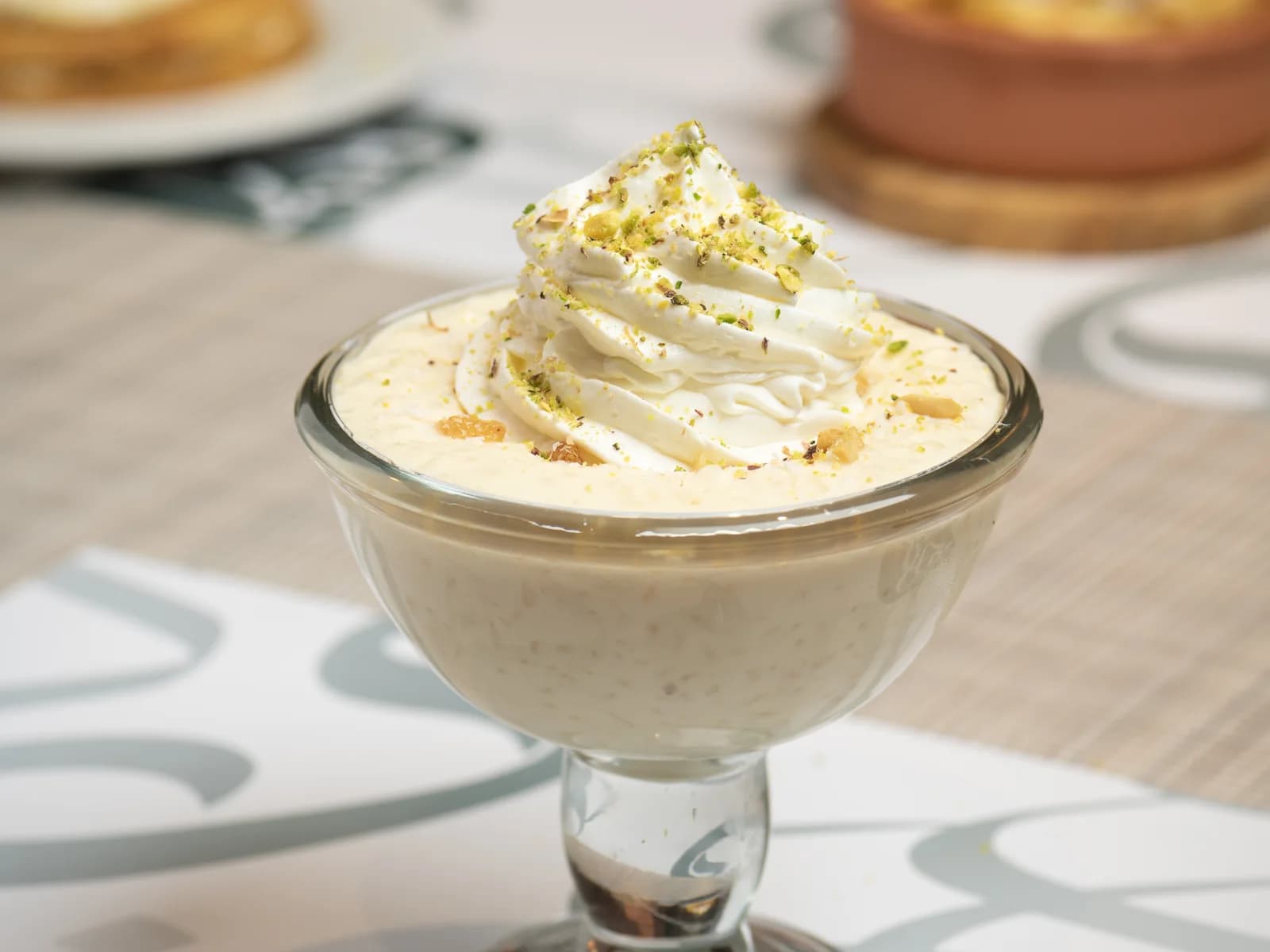
Many koshari shops also sell a simple dessert such as rice pudding or muhallabiya, so that whoever finishes their bowl can end on something sweet. Some old shops have become known by name in their neighbourhood, and people argue good-naturedly about "the best koshari in Egypt".
Koshari at home
Koshari at home has a different taste: it is slower to prepare because each ingredient is cooked separately, but the cook adjusts the sauce and onions to the family's taste. Some homes make a big batch on Friday or a day off, and everyone serves themselves as they like.
The well-known steps at home
- Fry the onions first and keep the oil.
- Boil the lentils until cooked but not mushy.
- Cook the rice with the lentils in some of the onion oil.
- Boil the pasta and the chickpeas.
- Cook the sauce with garlic and vinegar.
- The da'ah: garlic, vinegar and cumin in a bottle on the table.
Koshari and fasting
Because koshari contains no meat and no dairy, it is much loved during the Coptic fasting periods and is part of the "siyami" food we write about in Fasting food in Egypt. It is also a well-known choice for anyone looking for Egyptian food without meat.
How to eat koshari like an Egyptian
- Mix the bowl well after adding the sauce, so every spoonful has a little of everything.
- Go easy on the da'ah at first, then add to taste.
- Chilli drop by drop; it may be stronger than you expect.
- Crispy onions: if you love them, ask for extra.
Frequently asked questions
Does koshari contain meat? No. Traditional Egyptian koshari has no meat at all and is based on rice, lentils, pasta and chickpeas.
What is the difference between the sauce and the da'ah? The sauce is tomato cooked down with garlic and vinegar and poured over the bowl, while the da'ah is garlic vinegar, sometimes with cumin, added in whatever amount you like.
What is yellow koshari? A dish known in Alexandria and some other governorates: rice with split yellow lentils, without pasta or sauce, usually eaten with fish or pickles.
Is koshari originally Indian? It is said that its name and idea are related to an Indian dish of rice and lentils, but the dish in its present form, with its pasta, sauce, da'ah and onions, has become entirely Egyptian.
Is koshari on Rokn Warda's menu? No, koshari is not one of the dishes on Rokn Warda's menu. We tell its story here as part of Egyptian food culture.
Koshari is not on our menu… but the spirit of popular food is
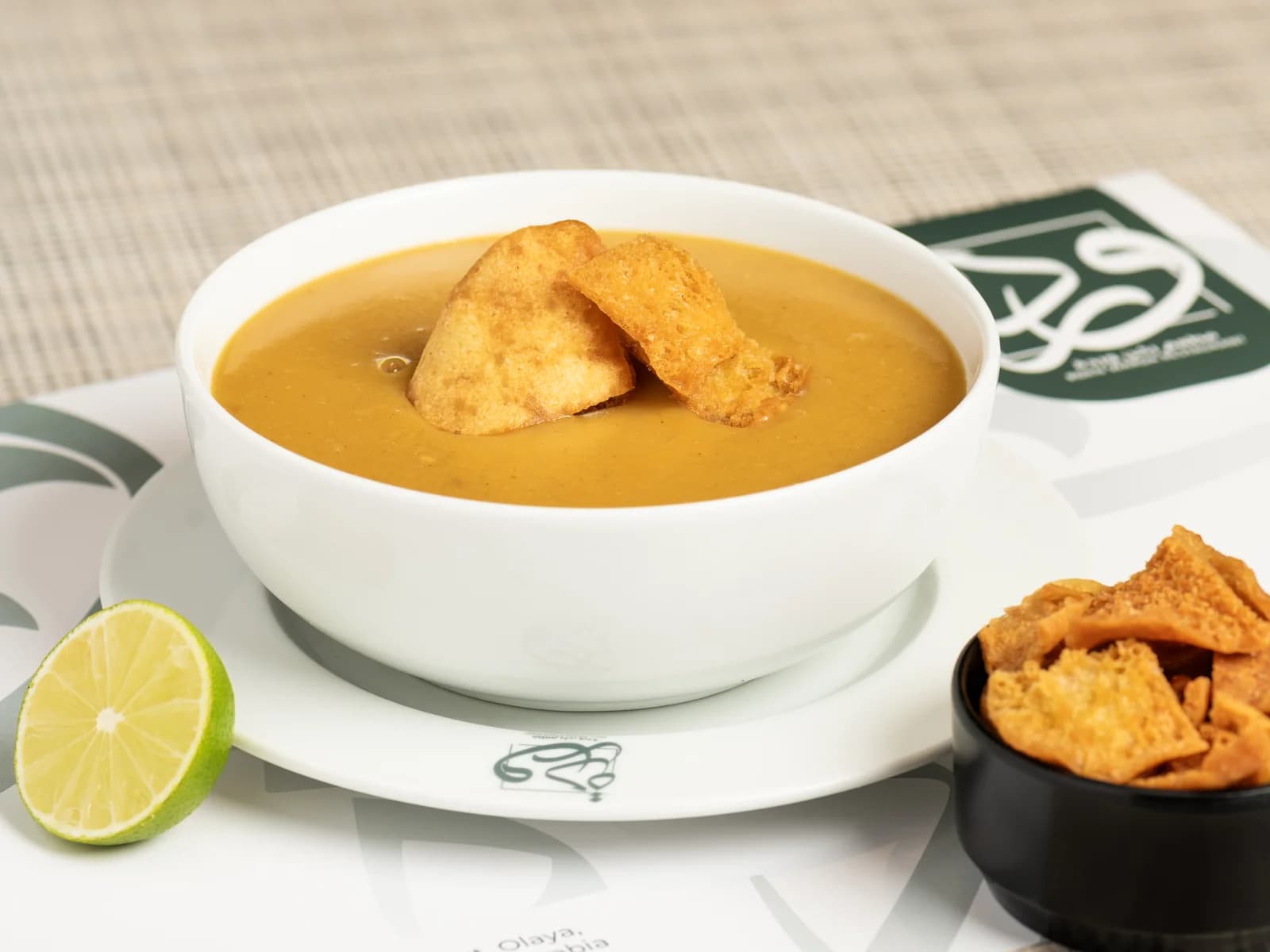
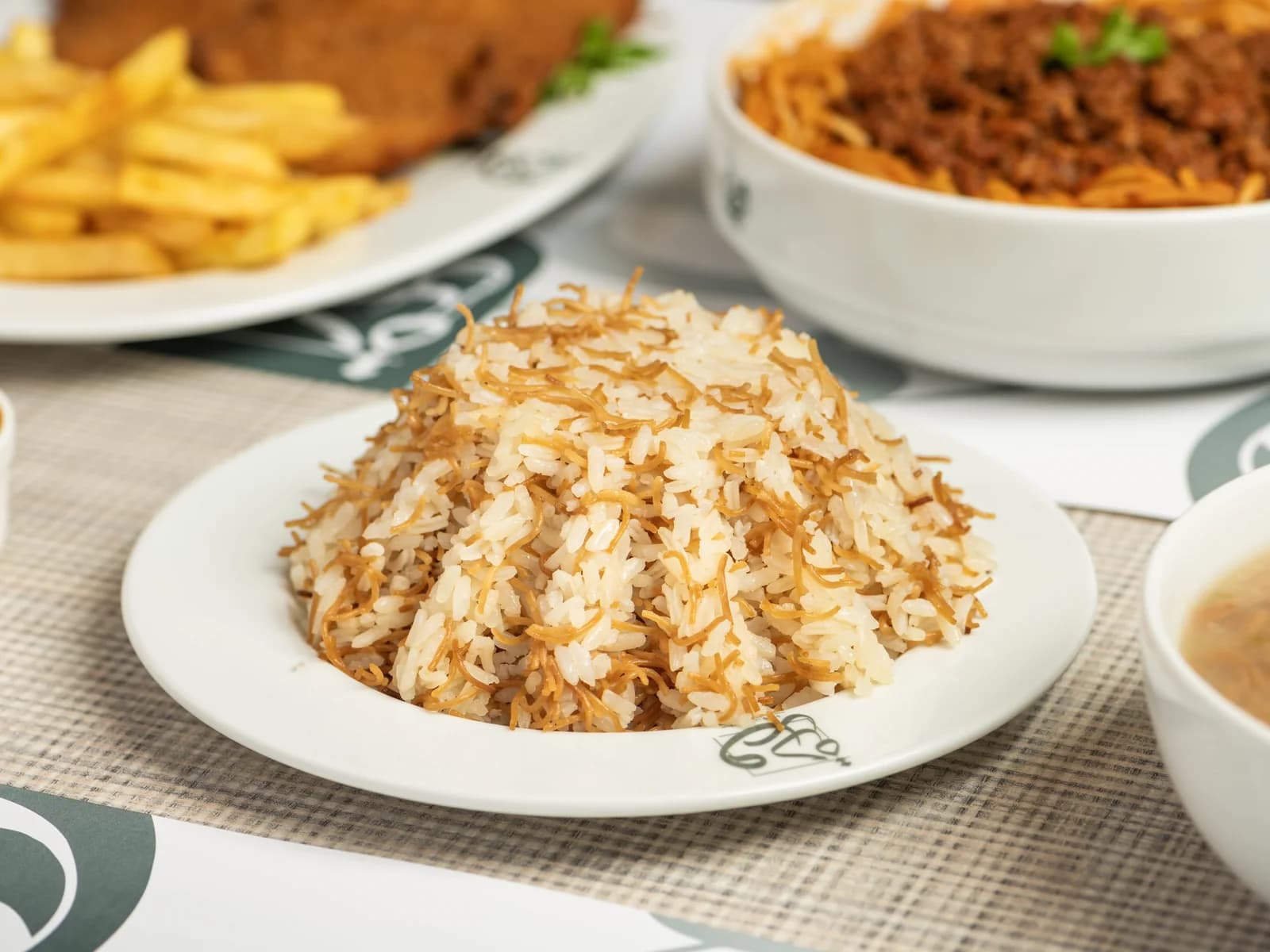
Koshari is a story of the Egyptian street and home, and its true taste lives in its shops and in home kitchens. But if you are craving warm, popular Egyptian food in Al Khobar, at Rokn Warda on Al Yarmouk Street you will find dishes in the same spirit: hot lentil soup, Egyptian rice with vermicelli alongside the casseroles, meat hawawshi born of the spirit of street food, and to finish, rice pudding like the one koshari shops end with. If you are looking for dishes without meat, read Egyptian food without meat. Browse the full menu, and book your table if you are coming with family.