Some dishes in the Egyptian kitchen tell you by their aroma alone that today is a special day. One of the best known is roz me'ammar: rice that goes into the oven in a clay pot (bram), covered with milk, cream and ghee, and comes out with a golden, browned top and a soft, creamy heart. For many people it is tied to the countryside, to family feasts, and to the hands of a grandmother who knows when the pot is ready without even looking.
In this article we tell the story of roz me'ammar: what it is, how it is made at home, how it differs from ordinary rice, and the occasions it appears at. Let us say from the start: roz me'ammar is not on Rokn Warda's menu; we tell its story here purely as part of Egyptian food culture.
What is roz me'ammar?
Roz me'ammar is Egyptian rice that is either half-cooked or placed raw in the bram, covered with milk and sometimes broth, topped with cream and ghee or butter, then put in the oven on gentle heat until it absorbs all the liquid and forms a browned crust.
In Egyptian speech, the word "me'ammar" carries the sense of something full and abundant. It is said that the name comes from this: rice "filled" with ghee, cream and milk, rich and heavy, not everyday rice. There is no single agreed account, but the meaning is clear to anyone who has tasted it.
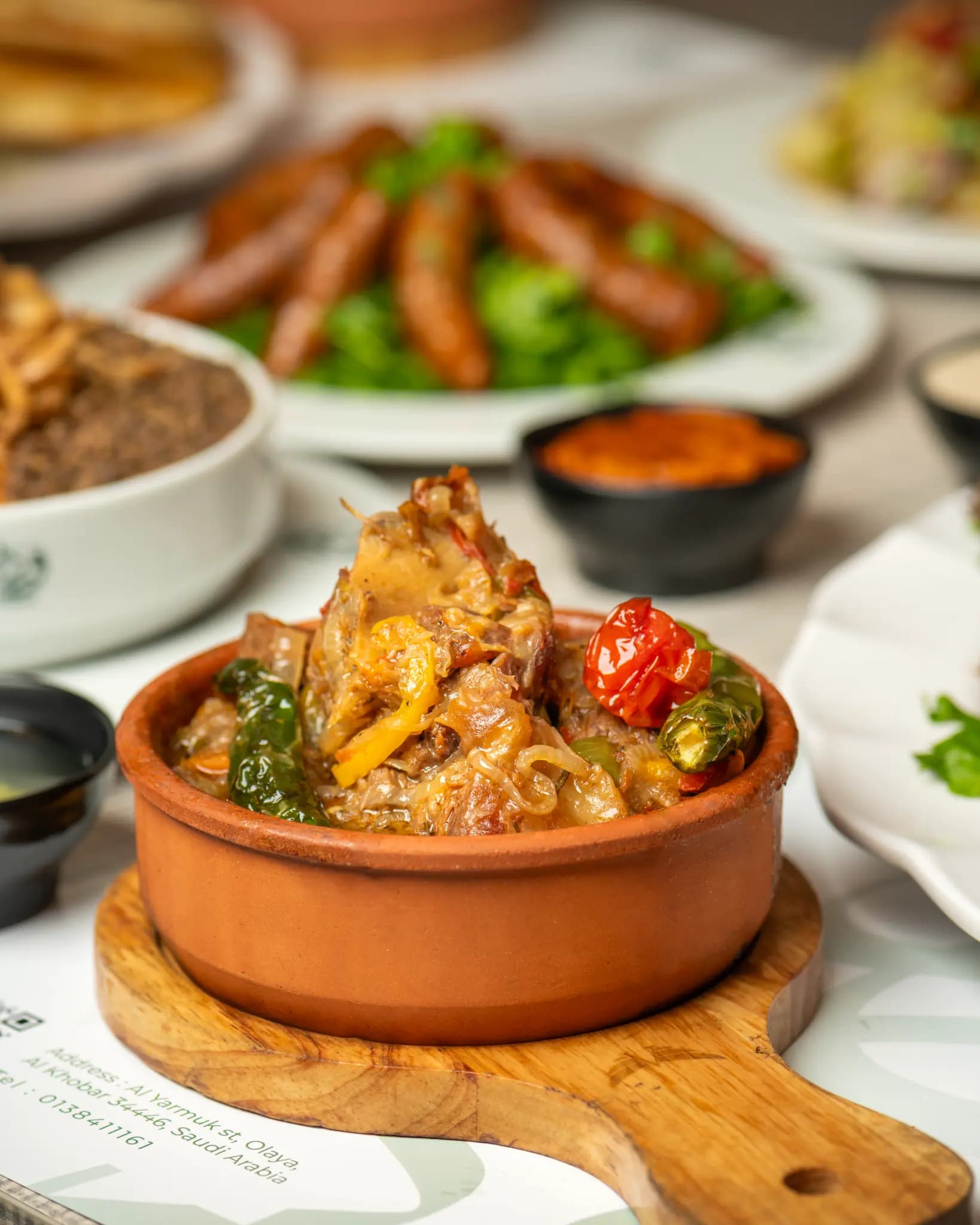
The bram: the home of roz me'ammar
Roz me'ammar without a bram is not the same dish. The bram is a lidded clay pot that can take the heat of the oven and spreads that heat gently around the rice from every side. Clay also holds heat, so the pot reaches the table with the rice still bubbling inside.
Clay has a long story in the Egyptian kitchen: the bram, the qulla, the zeer and the tagine, each with its own role. Read more in Egyptian clay cookware.
Why does the oven matter?
- Gentle heat lets the rice cook slowly and absorb the milk without sticking.
- Heat from above creates the golden top everyone waits for.
- The base browns a little too, and some people love that layer more than anything.
The crust: the best part of the pot
When the bram comes out of the oven, everyone looks at the top. The golden layer formed by the cream and ghee is the first thing served, and in many homes it goes to the guest or the eldest at the table. If the top has browned just right, the cook knows the pot has succeeded.
How is it made at home?
The method changes from home to home and from town to town, but the well-known steps recur:
- Wash and drain the rice; some homes parboil it.
- Grease the bram with ghee or butter.
- Spread the rice in the pot with a pinch of salt.
- Add the milk; some homes mix it with chicken or meat broth.
- Cream and ghee on top: the more there is, the richer the crust.
- The oven on gentle heat until the liquid is absorbed and the top turns golden.
Sweet or savoury?
This debate really exists in Egyptian homes. Most commonly roz me'ammar is savoury and eaten with poultry and meat. But some homes add a small pinch of sugar for a different taste, while others consider that a serious mistake. As with most Egyptian food, the right way is the one you grew up with.
With broth or milk only?
Some homes make roz me'ammar with milk only, so it comes out white and creamy with a gentle taste. Others mix the milk with broth from chicken, pigeon or meat for a deeper flavour. This choice, too, is a family habit more than a rule.
Roz me'ammar versus ordinary rice
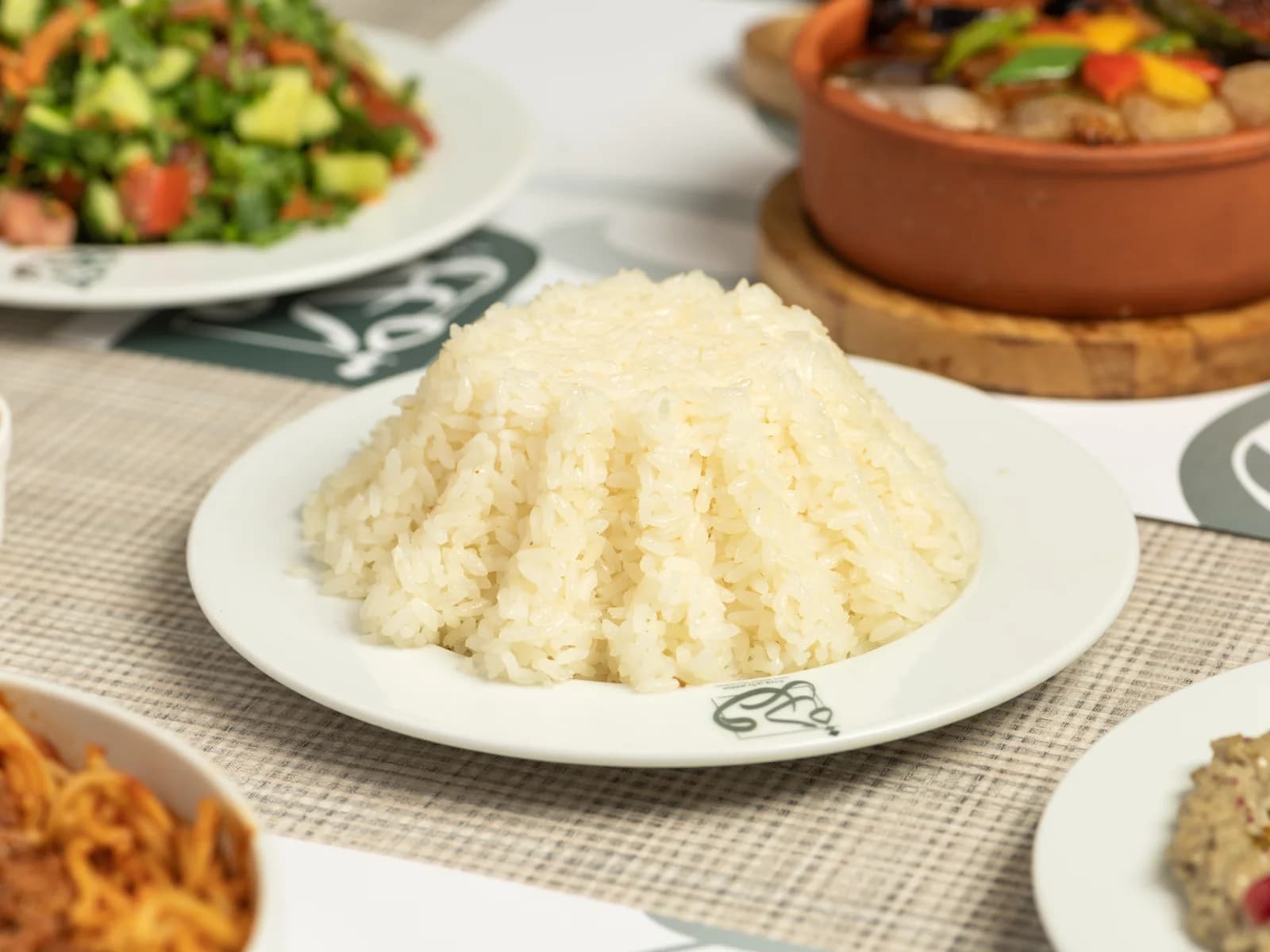
- Ordinary rice is cooked on the stove in water or broth, its grains separate, and it is served every day beside casseroles and mahshi.
- Roz me'ammar is baked in the oven with milk and cream, softer and richer in texture, with a browned top, and is treated as a main dish at a feast rather than just a side.
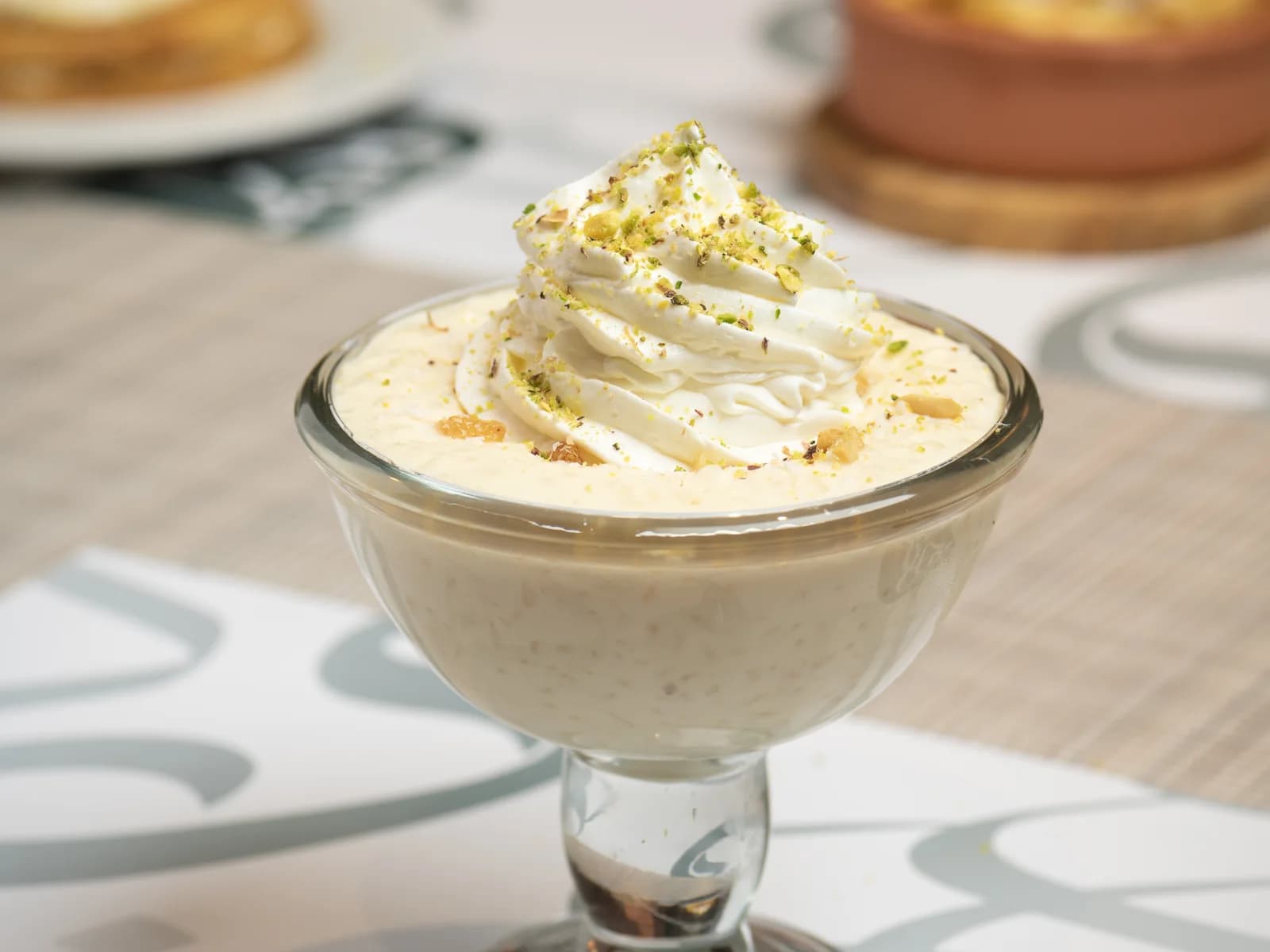
- Rice pudding is something else entirely: sweet, served cold or warm as a dessert after the meal.
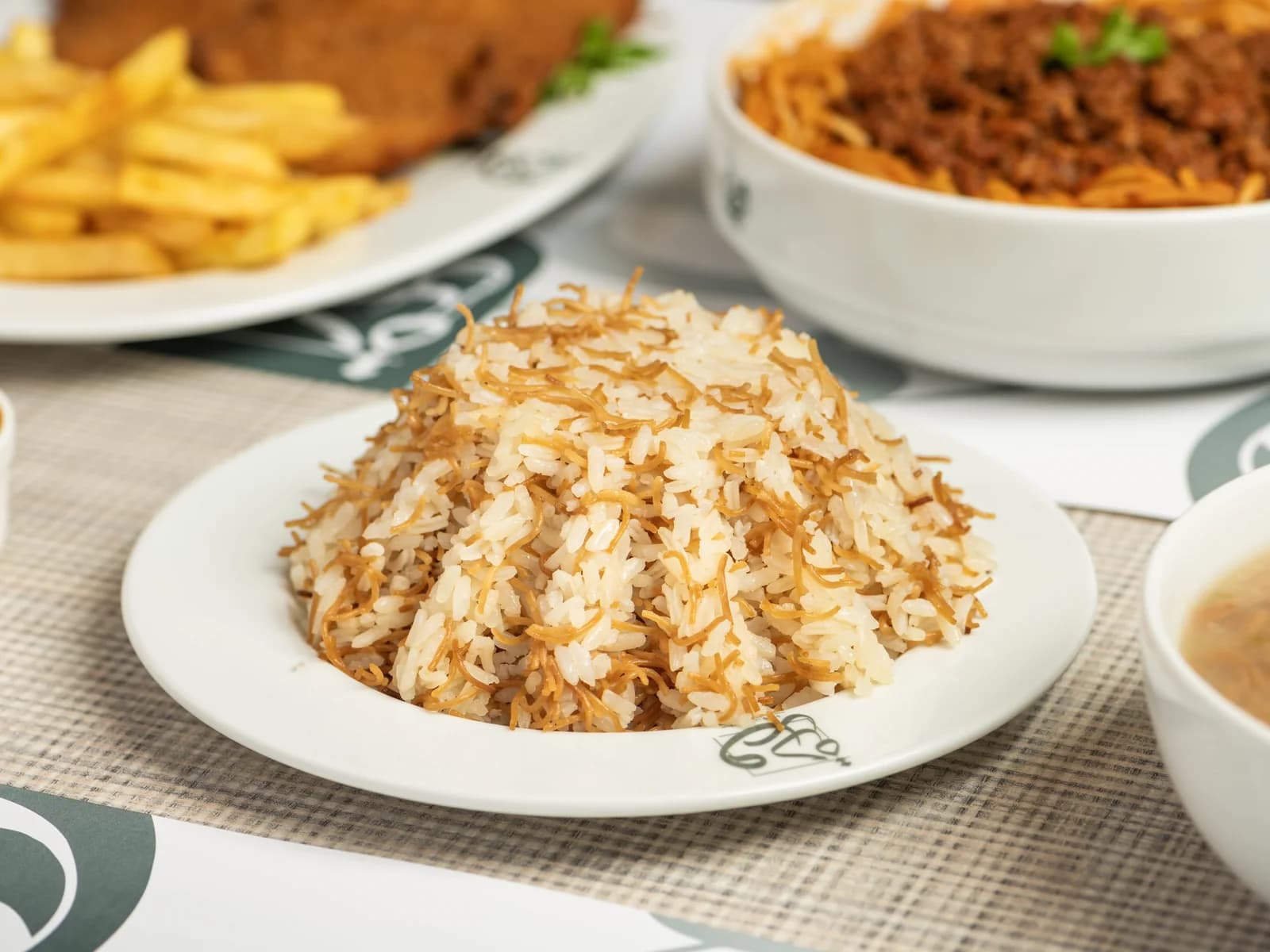
To learn the difference between the kinds of rice served with Egyptian food, read Vermicelli rice or white rice?.
Roz me'ammar on special occasions
Roz me'ammar is not everyday food, because it needs time, an oven and rich ingredients. That is why it is tied to days with a flavour of their own:
Feasts and visiting guests
When a dear guest arrives, especially in country homes, the bram comes out of the oven alongside duck, chicken or pigeon. Some homes place pieces of chicken or pigeon on top of the rice in the same pot and bake them together, so the rice soaks up the flavour of the bird.
Holidays and Fridays
In many homes, on the day of Eid or on a Friday when the family gathers, roz me'ammar is one of the stars of the table. The smell of milk and ghee in the oven is part of many people's childhood memories.
The newlyweds' tray
A custom told in some homes is that the bride's family sends food to the newlyweds in the first days after the wedding, and roz me'ammar can be among the dishes alongside poultry. The details vary from family to family and town to town; for wedding food in general, read Egyptian wedding and sebou food.
Roz me'ammar and pigeon: neighbours on the table
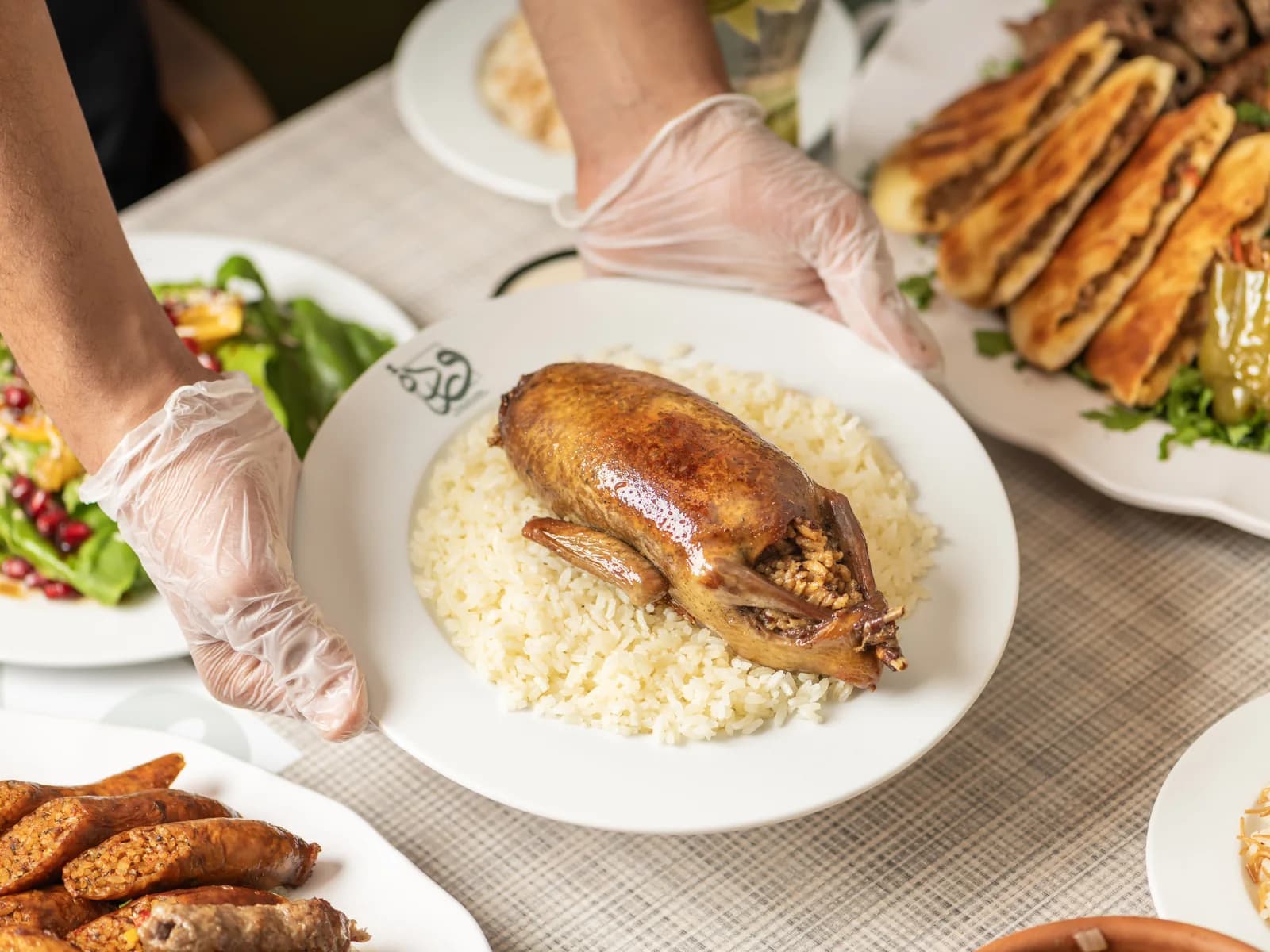
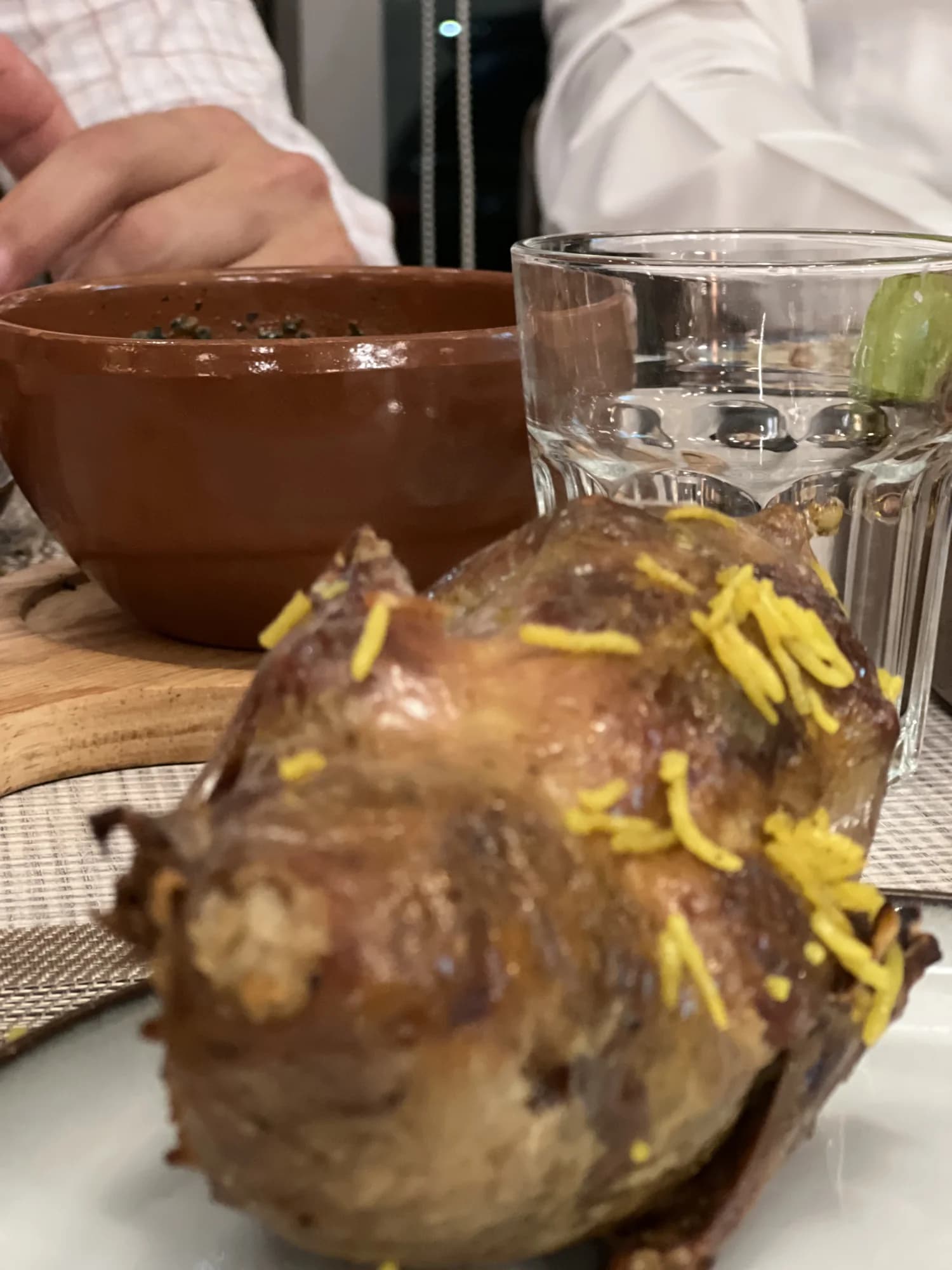
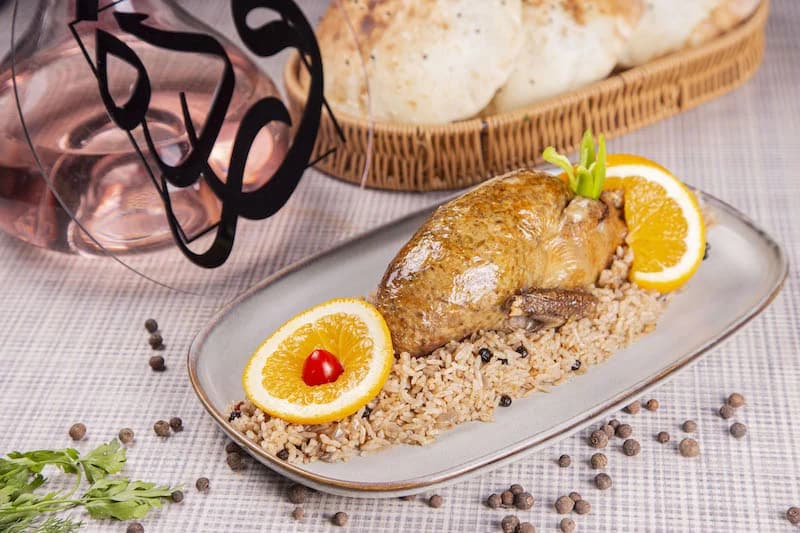
Anyone who has tried roz me'ammar with pigeon knows they complete each other: the taste of browned pigeon with creamy rice and its golden top. In some homes the pigeon itself is stuffed and laid on top of the pot. For the story of pigeons in the Egyptian countryside, read Pigeon towers of the Egyptian countryside.
Frequently asked questions
Is roz me'ammar the same as rice pudding? No. Rice pudding is sweet and served as a dessert, while roz me'ammar is usually savoury, baked in the oven with cream and ghee, and eaten with poultry and meat.
Does it have to be made in a clay bram? The bram is the traditional way and gives the rice gentle cooking and a browned top, but many city homes make it in an ordinary oven dish.
What is roz me'ammar eaten with? Most often with pigeon, duck or chicken, sometimes with meat, with salad or pickles on the side.
Why is it called "me'ammar"? It is said the name comes from the sense of something full and abundant, because it is rice made rich with ghee, cream and milk, but there is no single confirmed account.
Is roz me'ammar on Rokn Warda's menu? No, it is not on the menu. We tell its story here as part of Egyptian food culture.
The taste of home on your table in Al Khobar
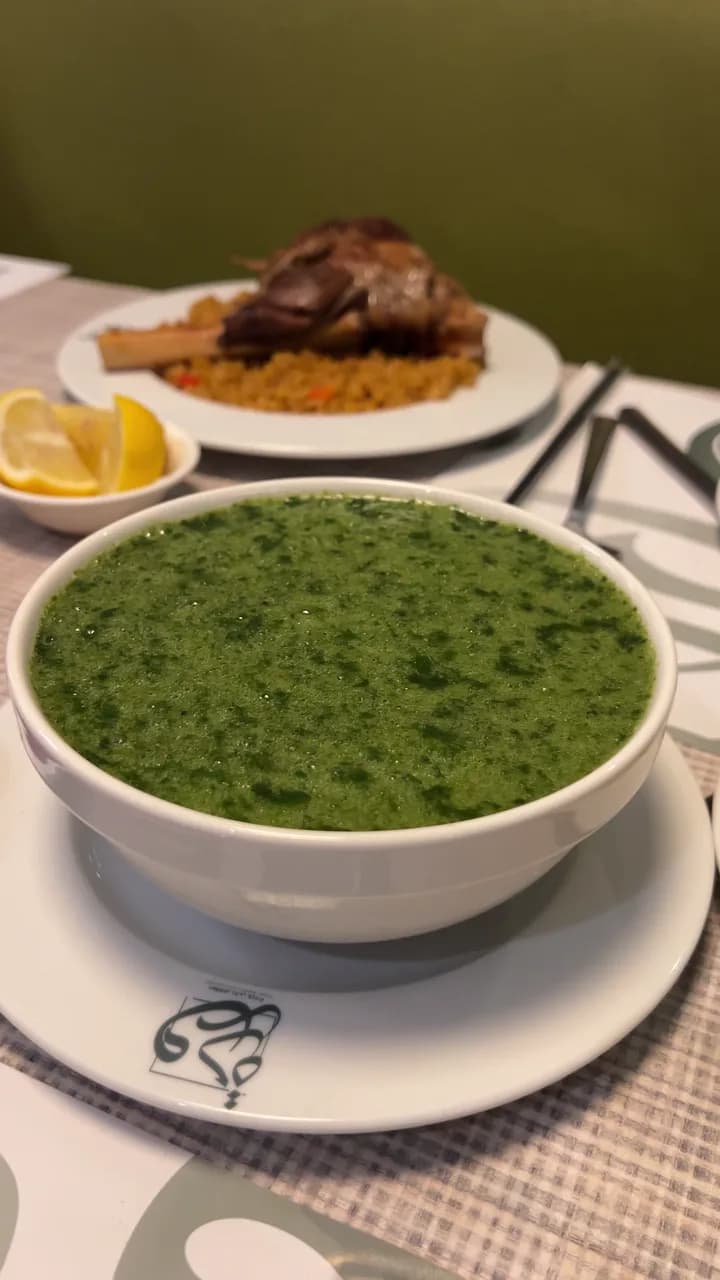
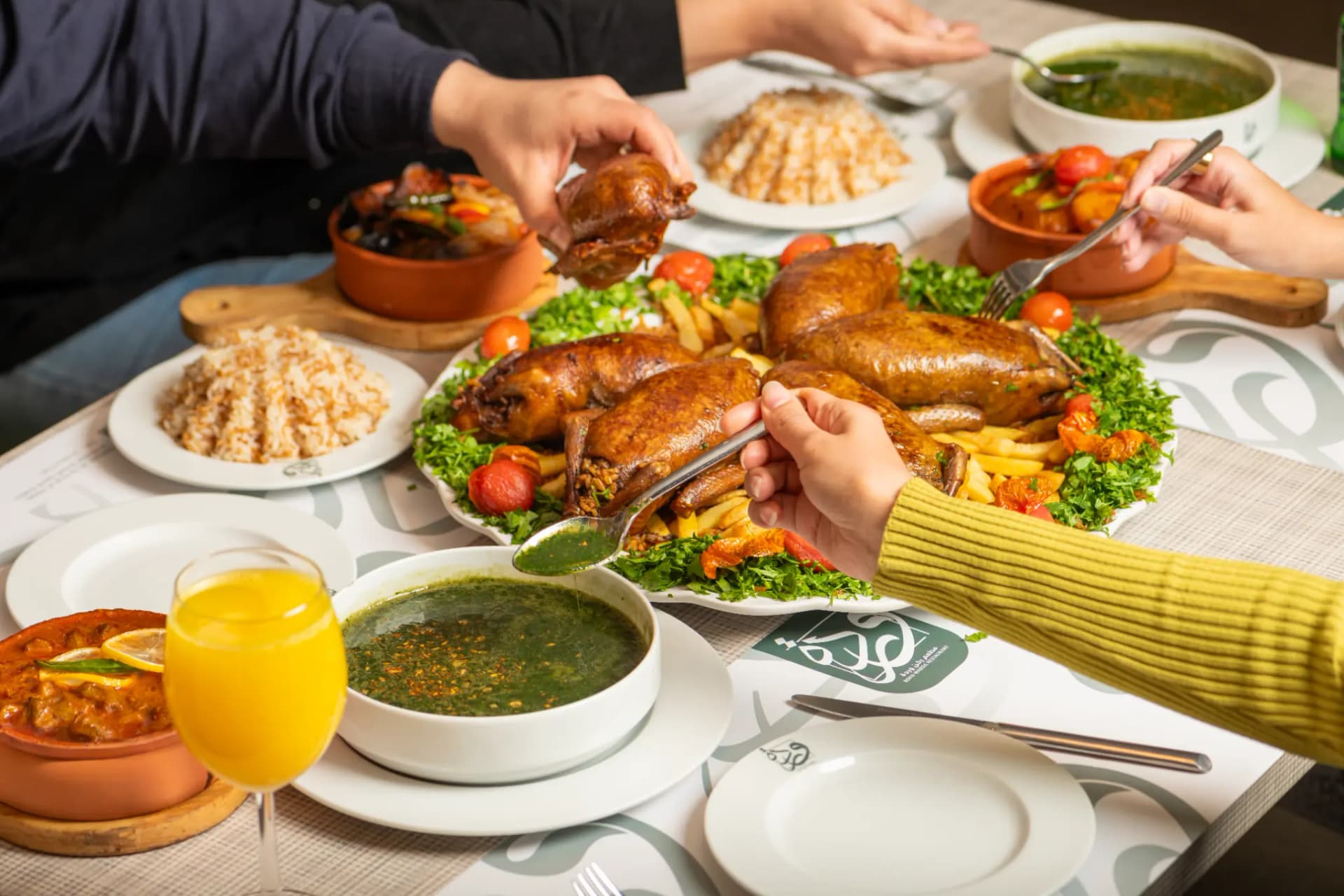
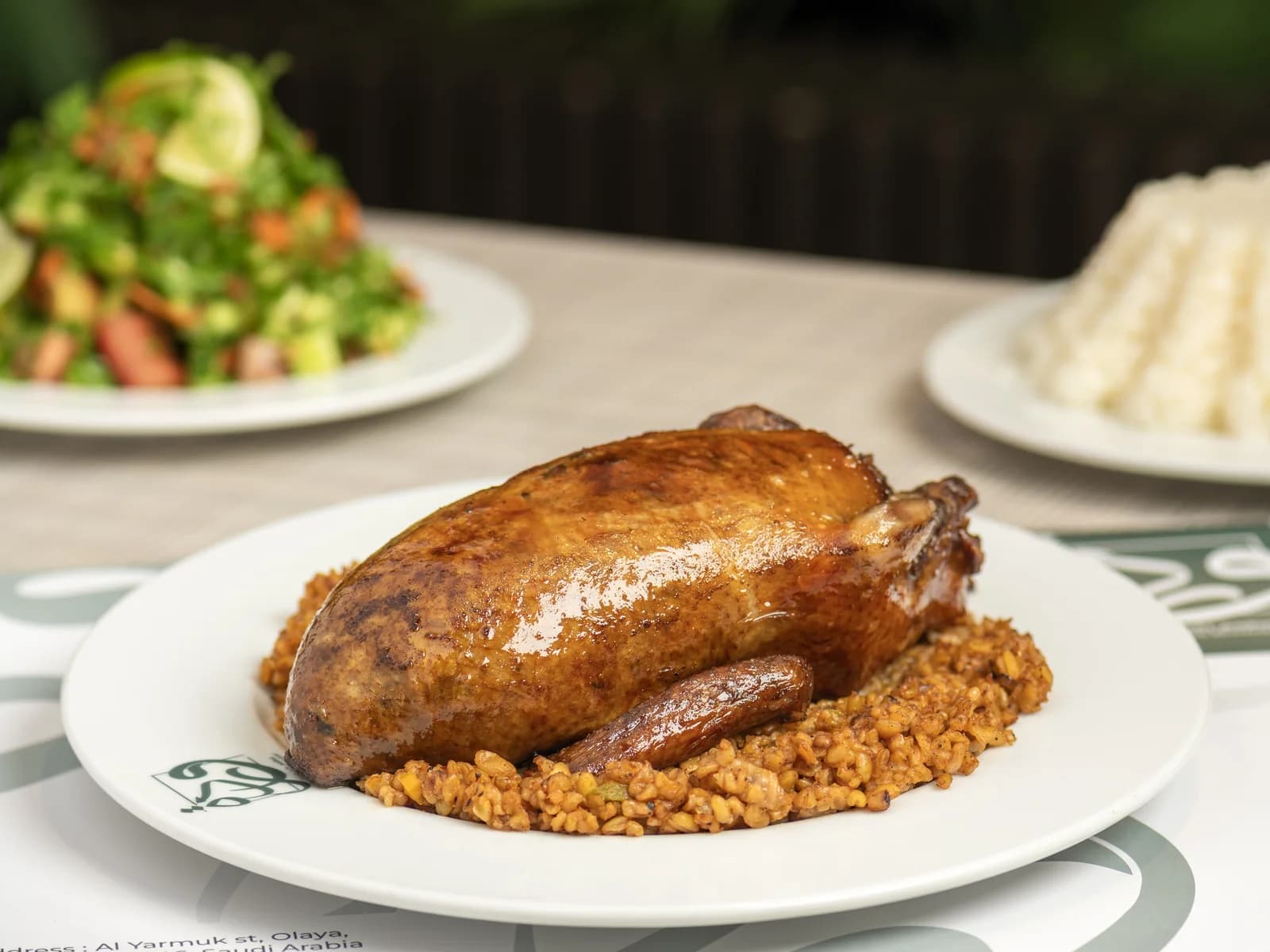
Roz me'ammar is a story of a clay pot, an oven and a patient grandmother, and its true taste lives in homes. But if you are craving an Egyptian table with rice and poultry done the proper way in Al Khobar, at Rokn Warda on Al Yarmouk Street you will find stuffed pigeon with rice and stuffed pigeon with freekeh, and beside the casseroles Egyptian white rice or Egyptian rice with vermicelli, with a molokhia casserole to complete the table. And if you love milk and rice in dessert form, finish with rice pudding. Browse the full menu, and book your table if you are coming with family.