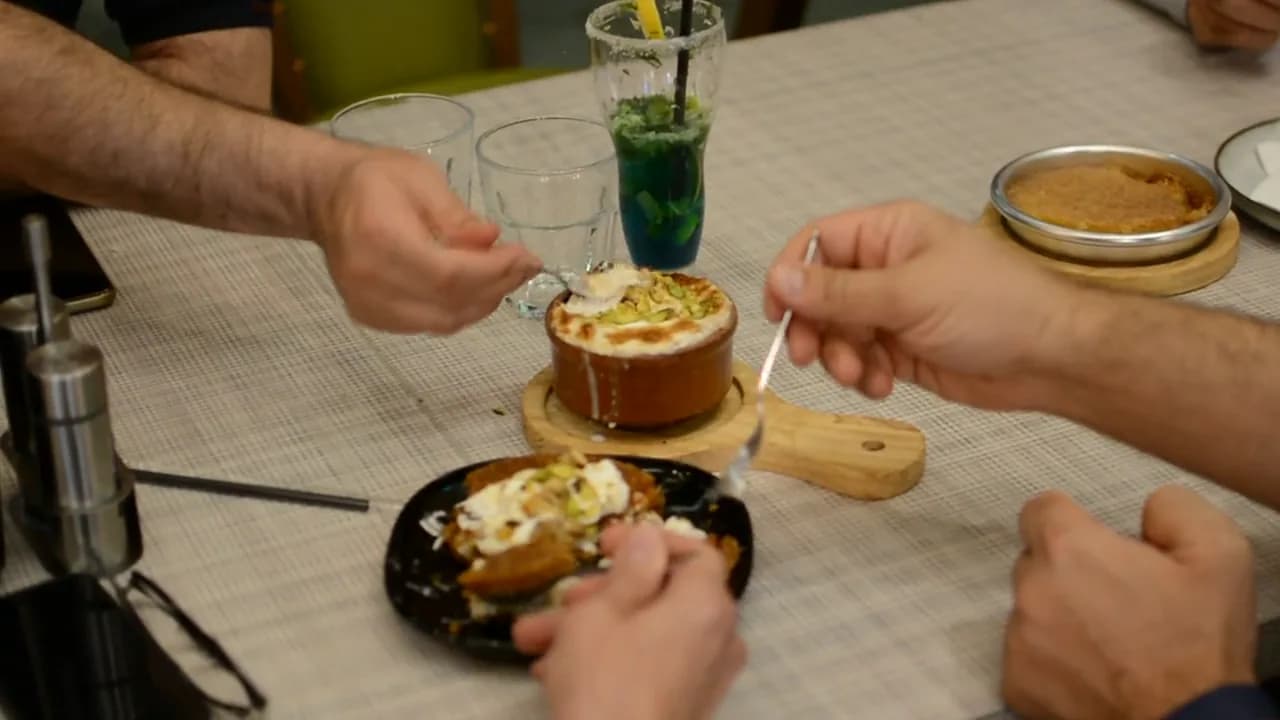
Desserts in Egypt are not only the end of a meal. They are the tray of basbousa made when a guest arrives, the smell of qatayef in Ramadan, the bowl of mahalabia put in the fridge since morning, and the kahk the whole family gathers to make before Eid. Ask any Egyptian about the most famous popular desserts in Egypt and they will list many names, each one carrying a memory.
In this guide we walk through the best-known popular Egyptian sweets, made at home and sold in sweet shops in every neighbourhood, and what makes each one distinctive.
In this article
- 1Why do popular sweets hold such a special place?
- 21. Basbousa
- 32. Harissa
- 43. Luqmat al-qadi (zalabia)
- 54. Qatayef
- 65. Kunafa
- 76. Mahalabia
- 87. Rice pudding
- 98. Aish el-saraya
- 109. Om Ali
- 1110. Kahk, ghorayeba and biscuits
- 12Sweets for occasions
- 13The neighbourhood sweet shop
- 14How to choose your Egyptian sweet
- 15Frequently asked questions
- 16Egyptian sweets on your table in Al Khobar
Why do popular sweets hold such a special place?
- Simple ingredients: semolina, flour, milk, sugar and ghee, things found in any home.
- Tied to occasions: Ramadan, Eid, the Mawlid, weddings and the sebou.
- Food for sharing: the tray goes in the middle and is cut for everyone, and some is sent to the neighbours too.
1. Basbousa
Basbousa is one of the best-known Egyptian sweets of all: semolina mixed with ghee, yoghurt or milk and sugar, baked in a tray and soaked in syrup while hot. Many homes top it with almonds or hazelnuts, and there are versions with coconut or with cream in the middle. Every cook has her own secret for the texture. The tray is usually cut into diamonds or squares before baking, with an almond or hazelnut in the centre of each piece.
2. Harissa
Harissa is a name used in Egypt for a semolina sweet very close to basbousa, and in cities such as Alexandria it is the more common name. The difference between them varies from shop to shop and home to home: some say harissa is denser, others say they are two names for the same thing. Either way, both are loved.
3. Luqmat al-qadi (zalabia)
Small balls of dough fried until golden, crisp outside and airy inside, then dipped in syrup or honey, sometimes dusted with powdered sugar or cinnamon. In Egypt some people call them luqmat al-qadi and others zalabia, and many folk tales are told about the name. They are eaten hot, and it is hard to stop after the first one; many homes make them on winter nights and special days, and the plate empties in minutes.
4. Qatayef
Qatayef are tied to Ramadan in Egyptian homes: small pancakes filled with nuts or cream (ashta), folded into half-moons, fried or baked, then soaked in syrup. Sweet shops in Ramadan are crowded for qatayef in particular. There is also a small kind called asafiri qatayef, folded around cream and eaten without frying. Read about the sweets of the holy month in Egyptian Ramadan desserts.
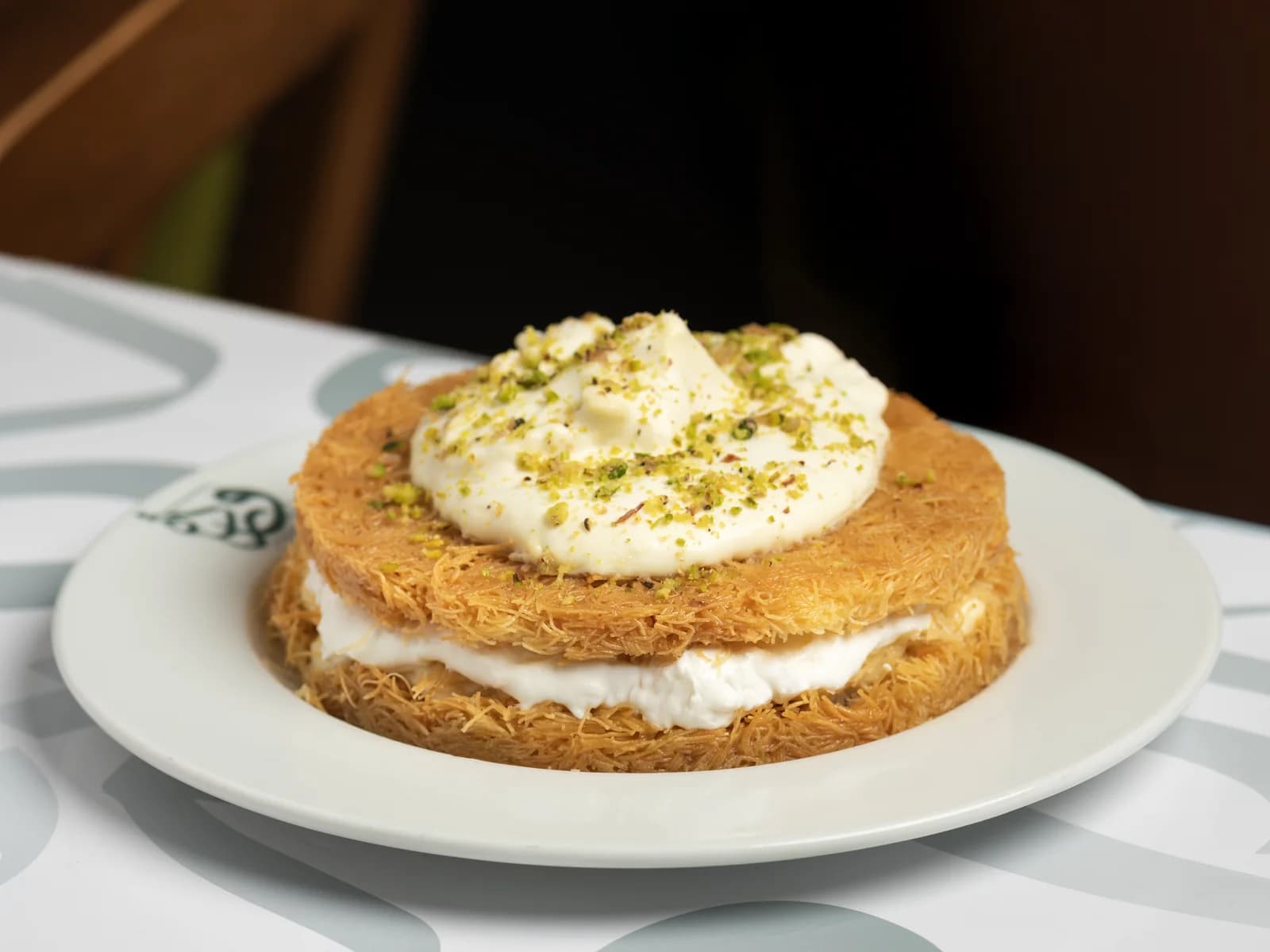
5. Kunafa
Kunafa is fine strands of pastry with ghee, filled with cream or nuts, baked until golden and soaked in syrup. Over time new versions appeared, such as mango kunafa. If you cannot decide, read Mango kunafa or cream kunafa?.
6. Mahalabia
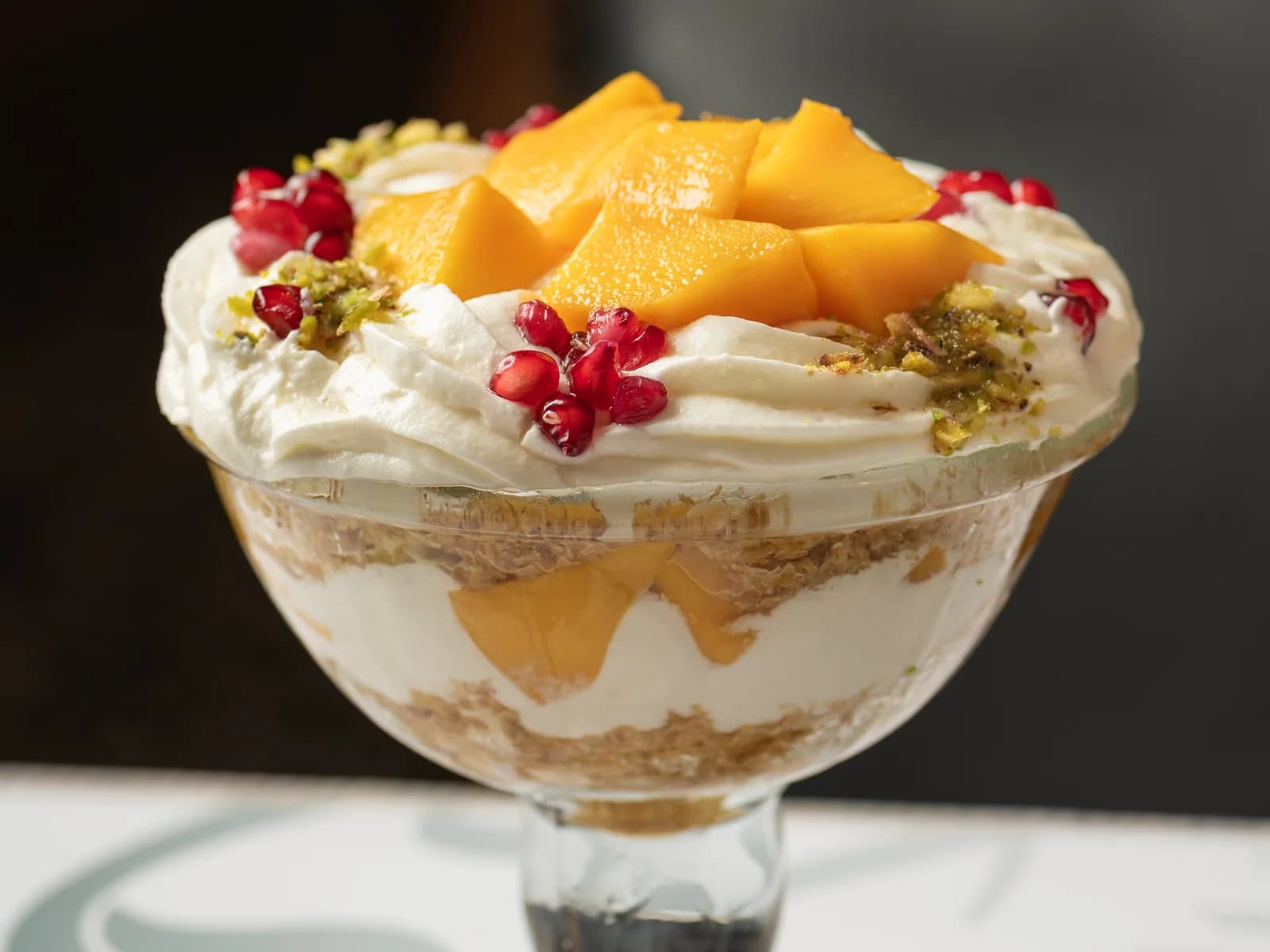
Mahalabia is a smooth, cold pudding: milk cooked with starch or rice flour and sugar until thick, poured into small bowls and left to cool. Many homes add rose water or mastic, and decorate it with pistachios or coconut. A dessert for summer and quiet days at home, and many mothers make it for children because it is quick and simple.
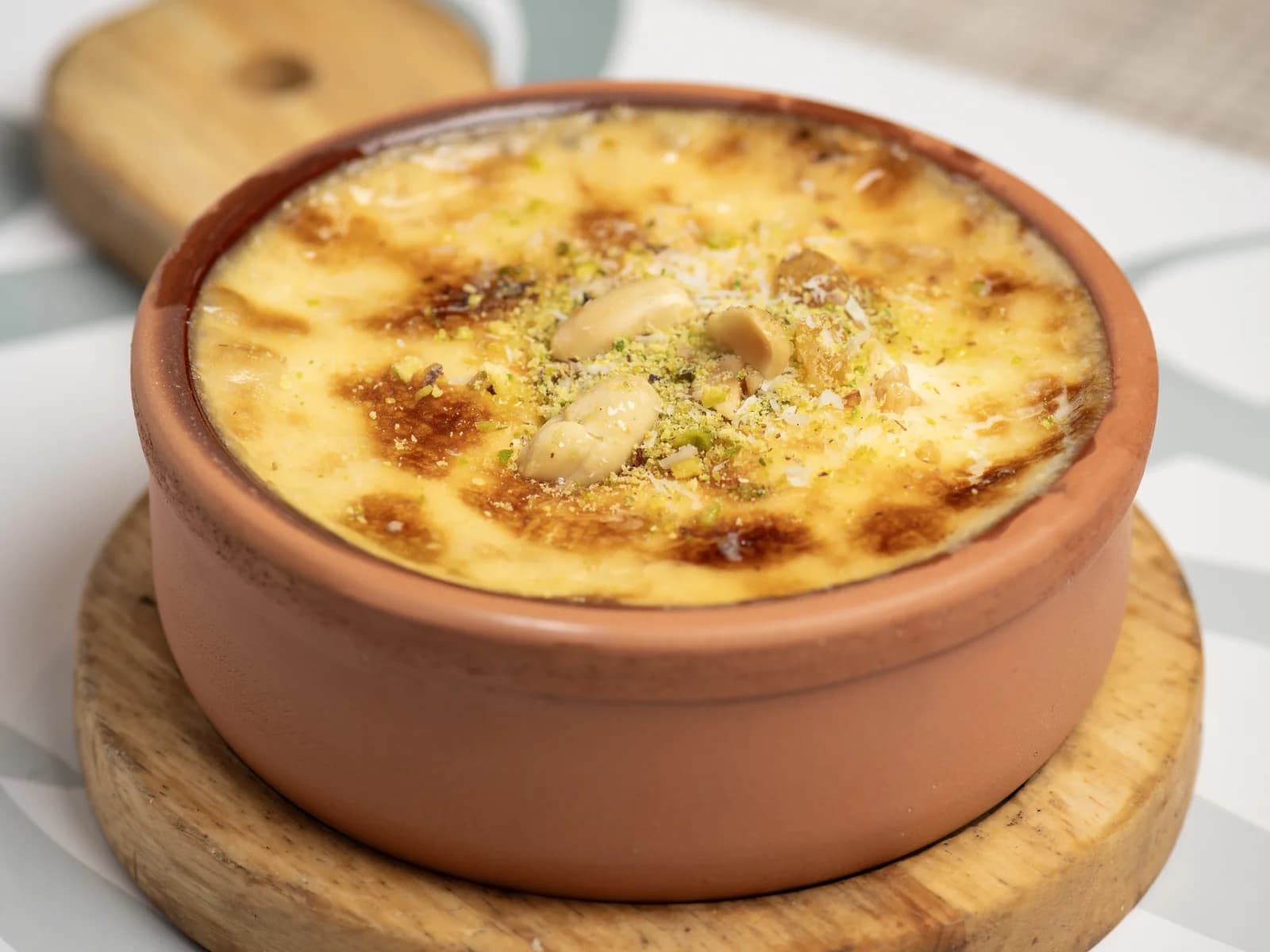
7. Rice pudding
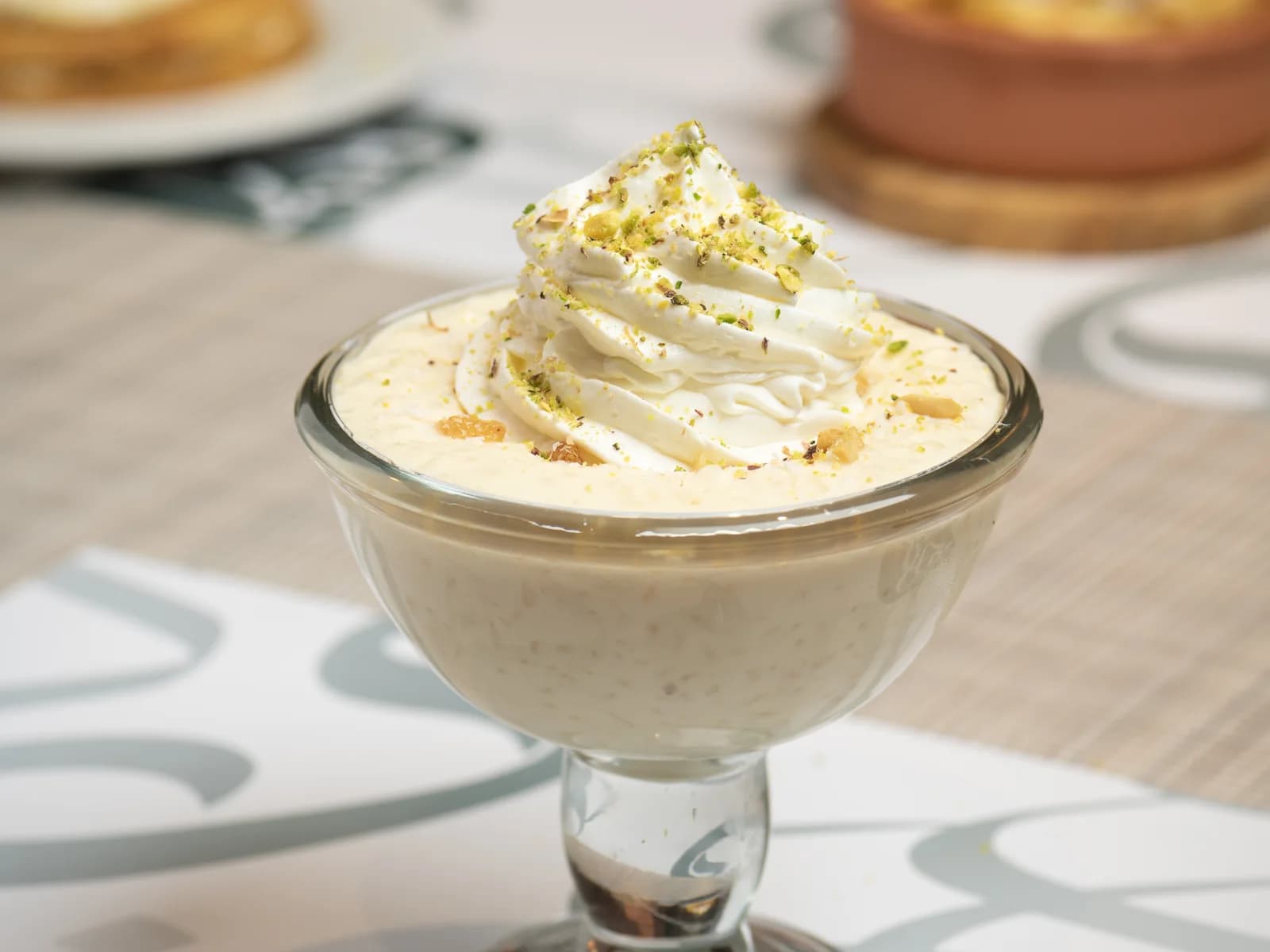
Close to mahalabia but with grains of rice: rice pudding (roz bel laban) is rice simmered in milk and sugar over low heat until creamy. It is eaten cold or warm, and some people like cinnamon or nuts on top. It is one of the sweets Egyptians think of as "home dessert".
8. Aish el-saraya
Aish el-saraya is bread or toast soaked in caramel syrup until soft and dark, topped with a layer of cream or mahalabia and nuts, and served cold in small bowls or in a tray cut into squares. Its name means "palace bread", and it is said to be linked to the sweets of the palaces of old. For palace cooking, read Egyptian food in the khedivial era.
9. Om Ali
Om Ali is one of the best-known warm Egyptian desserts: layers of pastry or puff pastry with milk, sugar, nuts and raisins, baked until the top turns golden. Its story has its own article: Om Ali: the story of the dessert.
10. Kahk, ghorayeba and biscuits
Before Eid al-Fitr, many Egyptian homes turn into workshops: kahk made with ghee, filled with agameya, malban or dates and dusted with powdered sugar, ghorayeba that melts in the mouth, plus biscuits and petit fours. The whole family gathers to knead, stamp patterns and bake. The patterns are pinched with small tongs or pressed with moulds, and every family has its own design. Read about feast customs in Ramadan and Eid in Egypt.
Sweets for occasions
Beyond these, some sweets have their own seasons, such as halawet el-mawlid and the mawlid doll we write about in Mawlid sweets and the mawlid doll, and belila, wheat with milk and sugar, on winter nights.
The neighbourhood sweet shop
Most Egyptian neighbourhoods have a well-known sweet shop that people know by name and use to give directions. In its window you find trays of basbousa and kunafa and racks of ghorayeba and biscuits, and in Ramadan the whole street queues for qatayef. The cardboard box tied with string is the popular gift that goes along on a visit, especially on occasions and Eid visits.
How to choose your Egyptian sweet
If it is your first time tasting Egyptian sweets, you can choose by mood:
- Love syrup and crunch? Try luqmat al-qadi or kunafa.
- Love something soft made with semolina? Basbousa or harissa.
- Want something cold and light? Mahalabia or rice pudding.
- Want something warm after the meal? Om Ali.
- Love cream? Qatayef with cream or aish el-saraya.
Frequently asked questions
What is the difference between basbousa and harissa? Both are semolina sweets soaked in syrup, and the difference varies from city to city and shop to shop; in Alexandria, harissa is the more common name.
Are luqmat al-qadi and zalabia the same? In Egypt both names usually refer to the same sweet: fried dough balls dipped in syrup or honey.
When are qatayef eaten? They are tied to Ramadan in most Egyptian homes, but can be made at any time.
Which Egyptian desserts are served cold? Mahalabia and rice pudding are usually served cold, though rice pudding is sometimes eaten warm.
Egyptian sweets on your table in Al Khobar
Basbousa, harissa, luqmat al-qadi, qatayef, mahalabia, aish el-saraya and kahk are not among Rokn Warda's dishes; we write about them here as part of Egyptian food culture only. But other famous Egyptian desserts are with us at Rokn Warda on Al Yarmouk Street in Al Khobar: rice pudding, Om Ali, cream kunafa and mango kunafa, with a Turkish coffee to close the sitting. Browse the full menu, read Beloved Egyptian desserts in Saudi Arabia, and if you are coming with family, book your table.