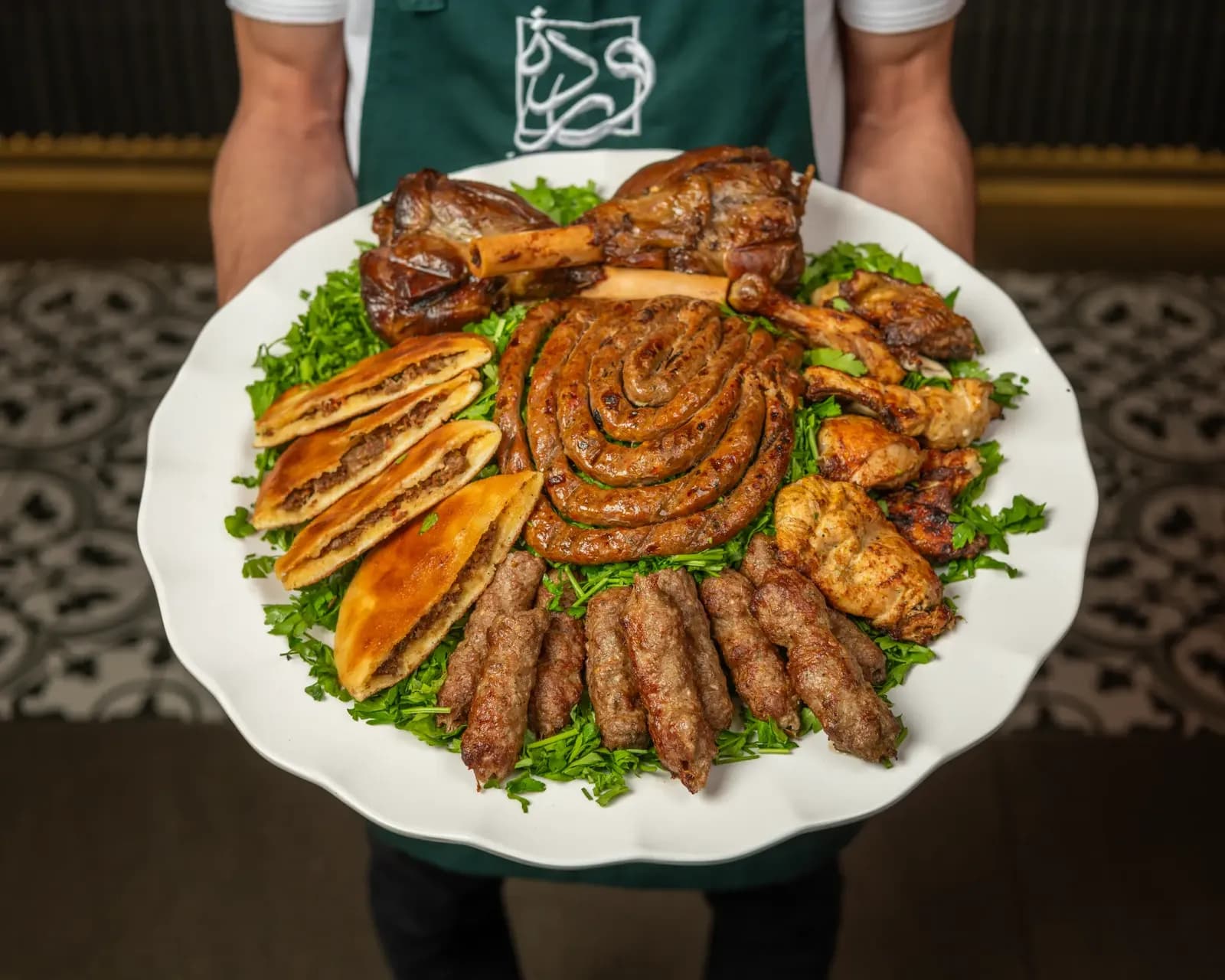
If a table held food from several countries, you would probably recognise the Egyptian food without being told: the smell of garlic frying, a plate of rice beside a casserole in sauce, and mahshi rolled into small fingers. So what makes Egyptian food different from other cuisines? Not that it is «better» — every cuisine has its people and its taste — but that it is different in clear ways we can list.
This article covers 8 traits behind the Egyptian taste, each with what it means and an example. For the story from the beginning read the history of Egyptian cuisine, and for a comparison with the Saudi table read Egyptian and Saudi cuisine. Here we talk about the taste itself.
8 things that make Egyptian food distinctive
1. The taqleya: the «tasha» that changes a dish
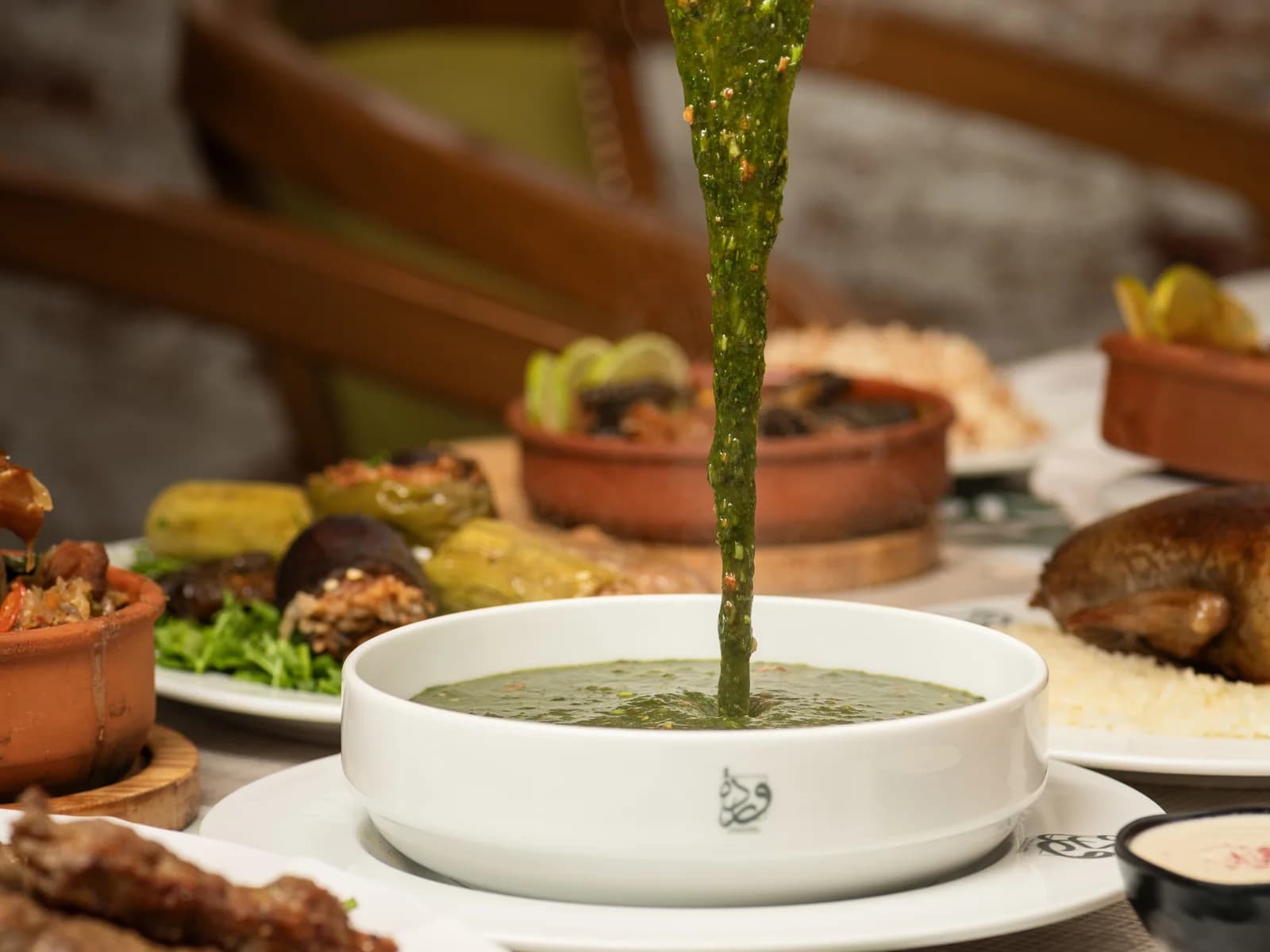
The taqleya is minced garlic sautéed in samna (clarified butter) or oil until golden, with dried coriander added. It is poured onto the food while hot and makes a «tash» sound, which is why many people call it the tasha. A small move, but it is what gives molokhia its familiar aroma, and it goes into okra and some soups too.
Example: Egyptian molokhia, finely chopped and finished with the taqleya. The spices themselves are covered in the spices of Egyptian cooking.
2. Stews in sauce, with rice beside them
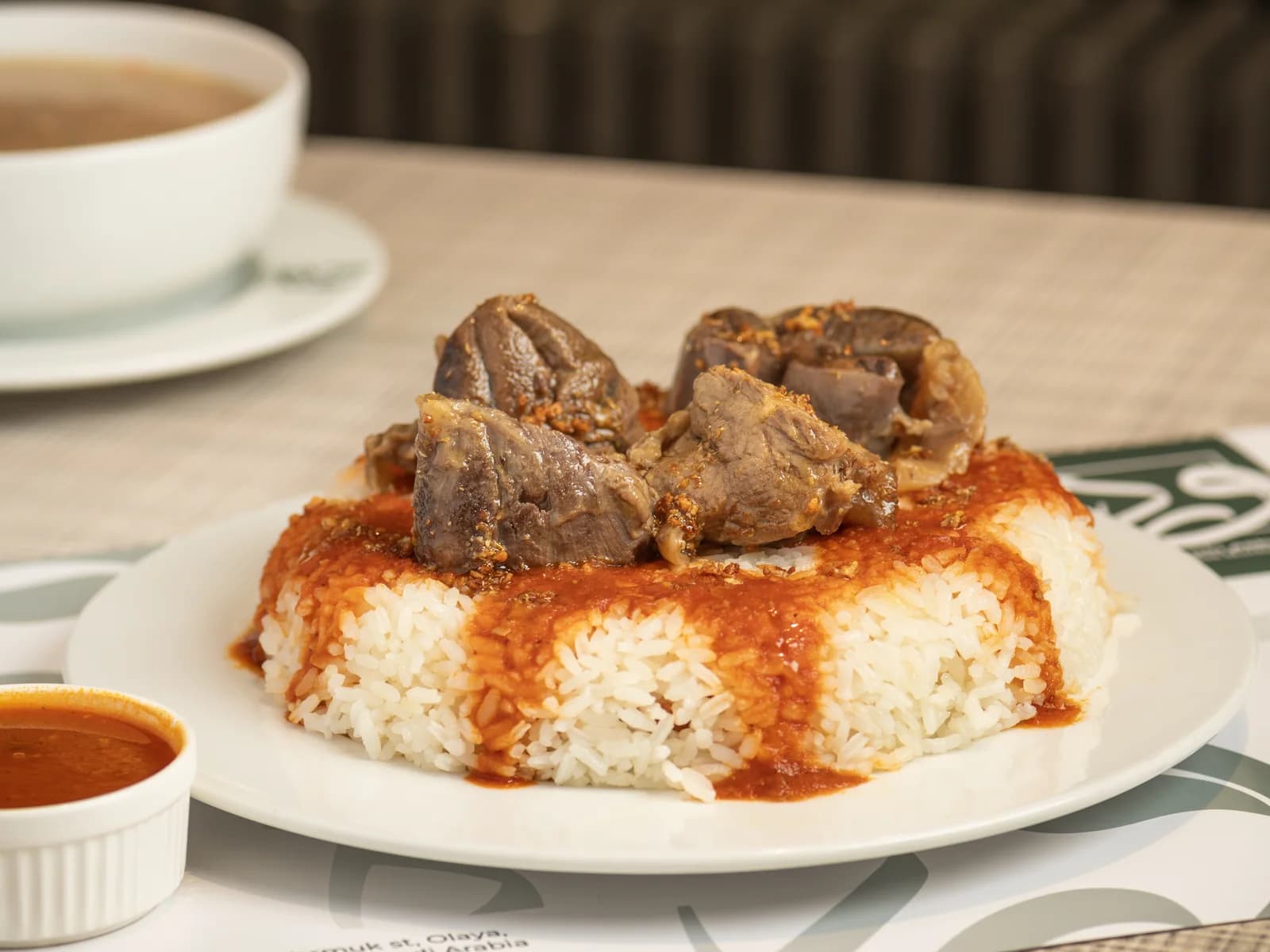
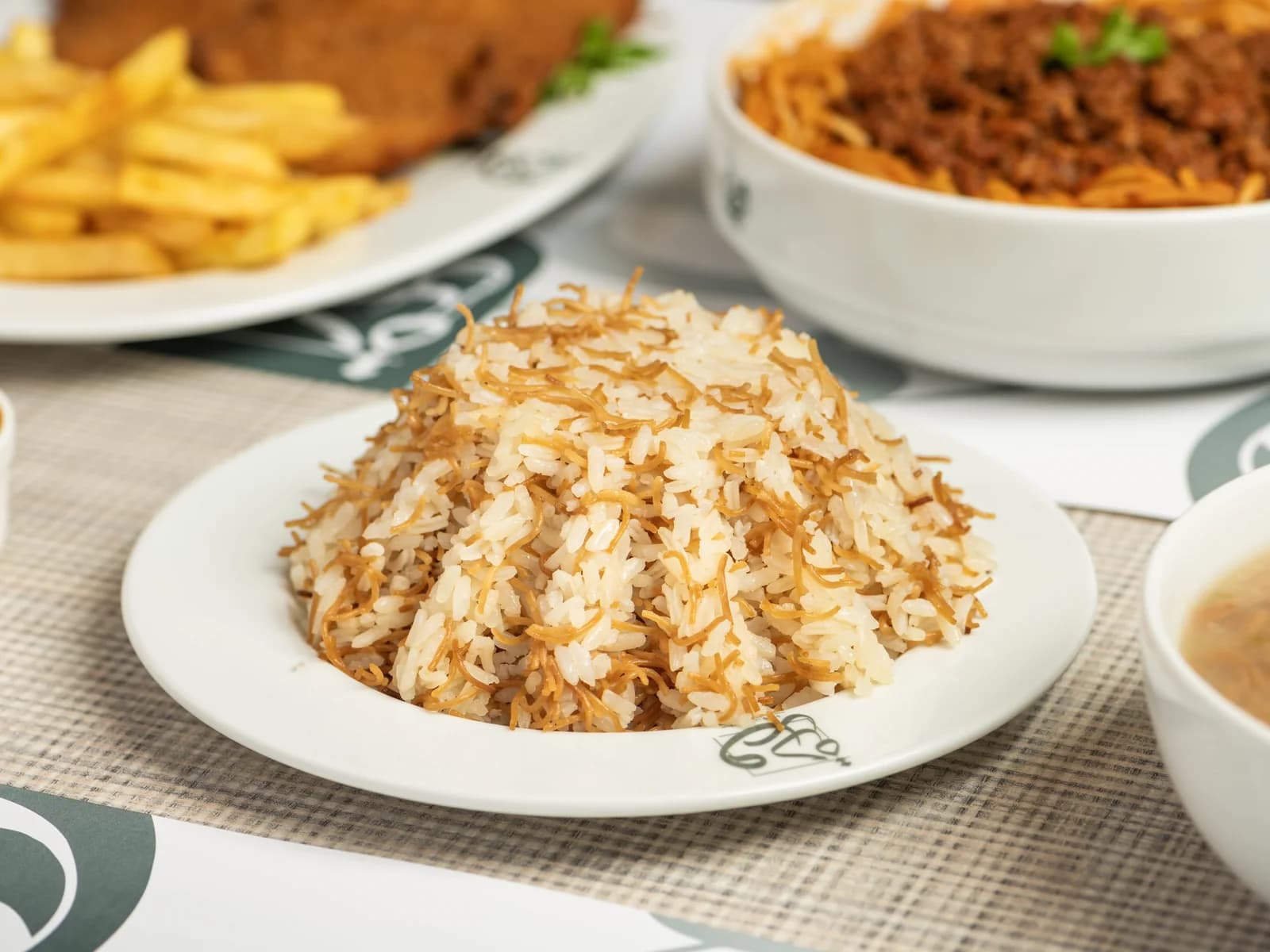
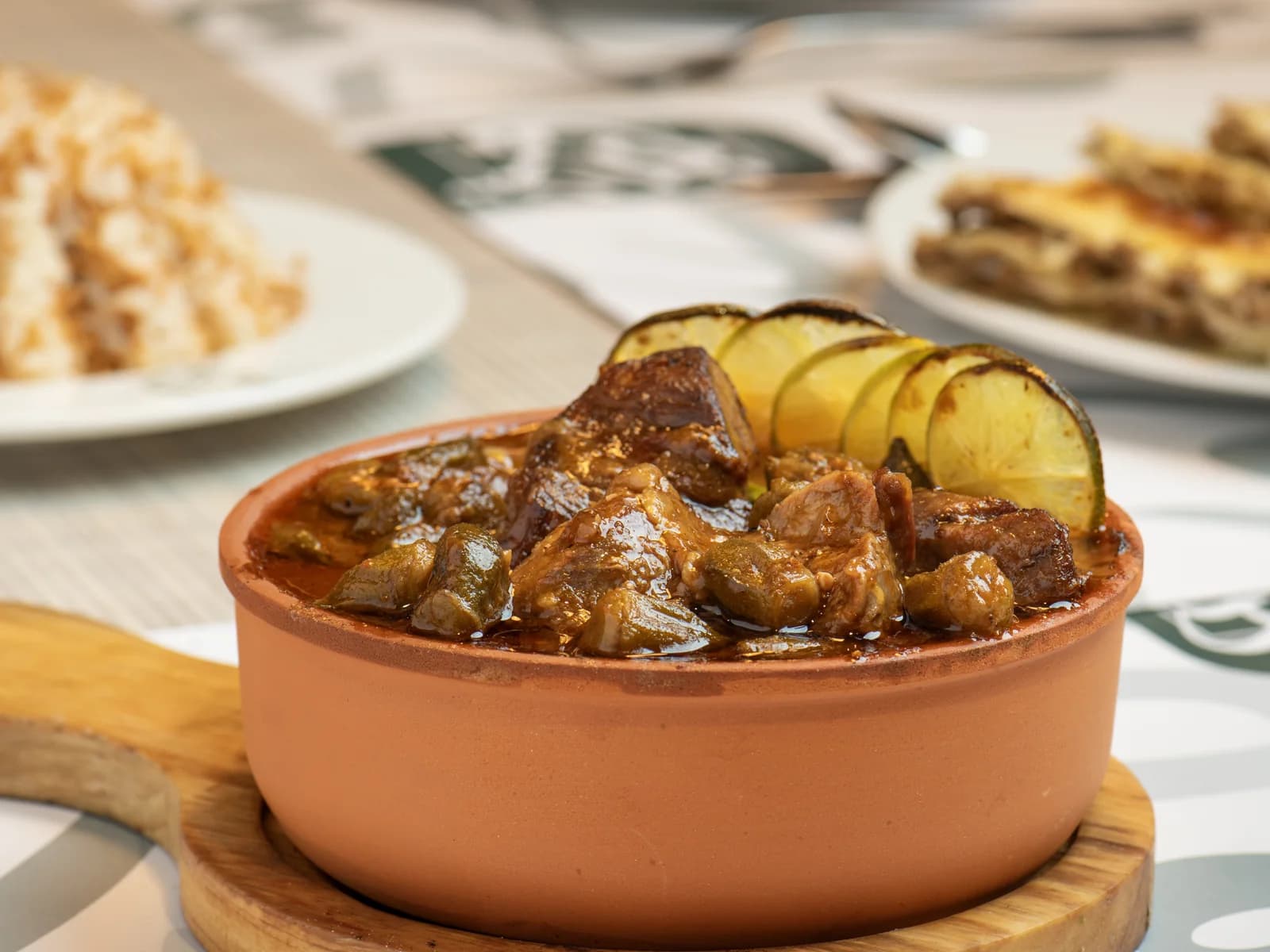
In the Egyptian home, tabeekh means vegetables and meat in a tomato sauce, cooked slowly: okra, potatoes, peas, green beans. It is eaten beside a plate of short-grain Egyptian rice, often rice with browned vermicelli, not cooked together in the same pot. This pair, «tabeekh and rice», is lunch in many Egyptian homes.
Example: okra with meat and vermicelli rice. When the stew goes into the oven in clay it becomes a tagen; the types are in Egyptian casseroles: the best-known types.
3. Mahshi: almost anything can be stuffed
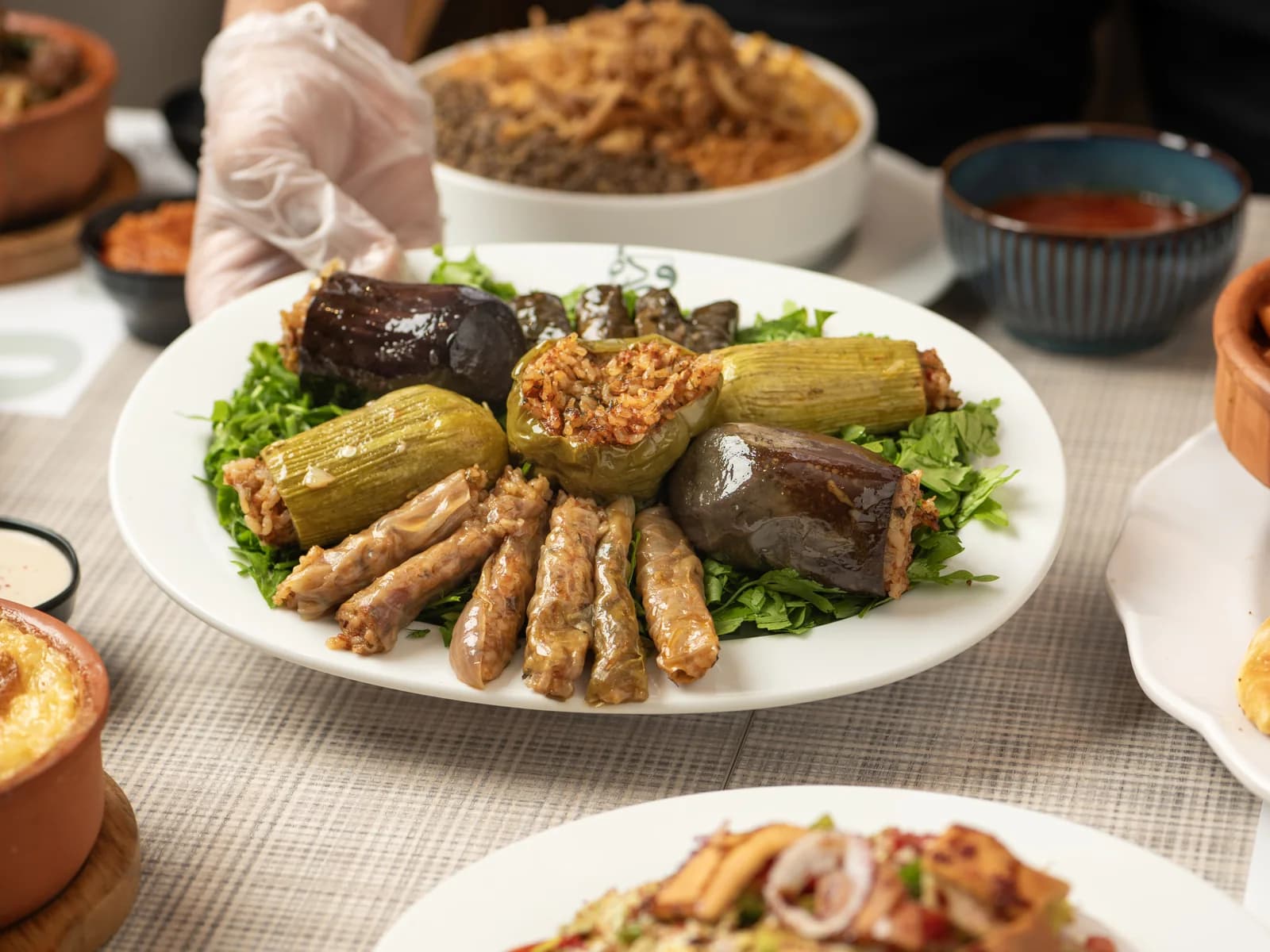
Egyptian cooking is known for stuffing nearly everything: zucchini, aubergine, peppers, cabbage and vine leaves with a filling of rice, herbs and sauce, as well as pigeon with rice or freekeh, and mombar. Mahshi takes patience and hand rolling, which is why it belongs to feasts and family gatherings.
Example: a tray of mixed mahshi in the middle of the table with everyone around it.
4. Bread and fatteh
Baladi bread is present at most Egyptian meals: used to scoop, eaten alongside, and turned into whole dishes. The best known is fatteh: toasted bread, rice, a vinegar and garlic sauce, broth, and meat on top. Bread also gives hawawshi: baladi bread stuffed with seasoned meat and baked.
Example: meat fatteh on the Eid table. The differences between its types are in Egyptian fatteh: its types.
5. Pulses and street food
Much of everyday Egyptian food rests on pulses: ful medames, taameya, which in Egypt is usually made from fava beans rather than chickpeas, lentils, and koshary, which brings together rice, lentils, pasta and sauce. From this came an Egyptian street food with its own character; its story is in street food in Egypt.
Example: a plate of ful with oil and cumin at breakfast, or a hot lentil soup in winter.
6. Freekeh
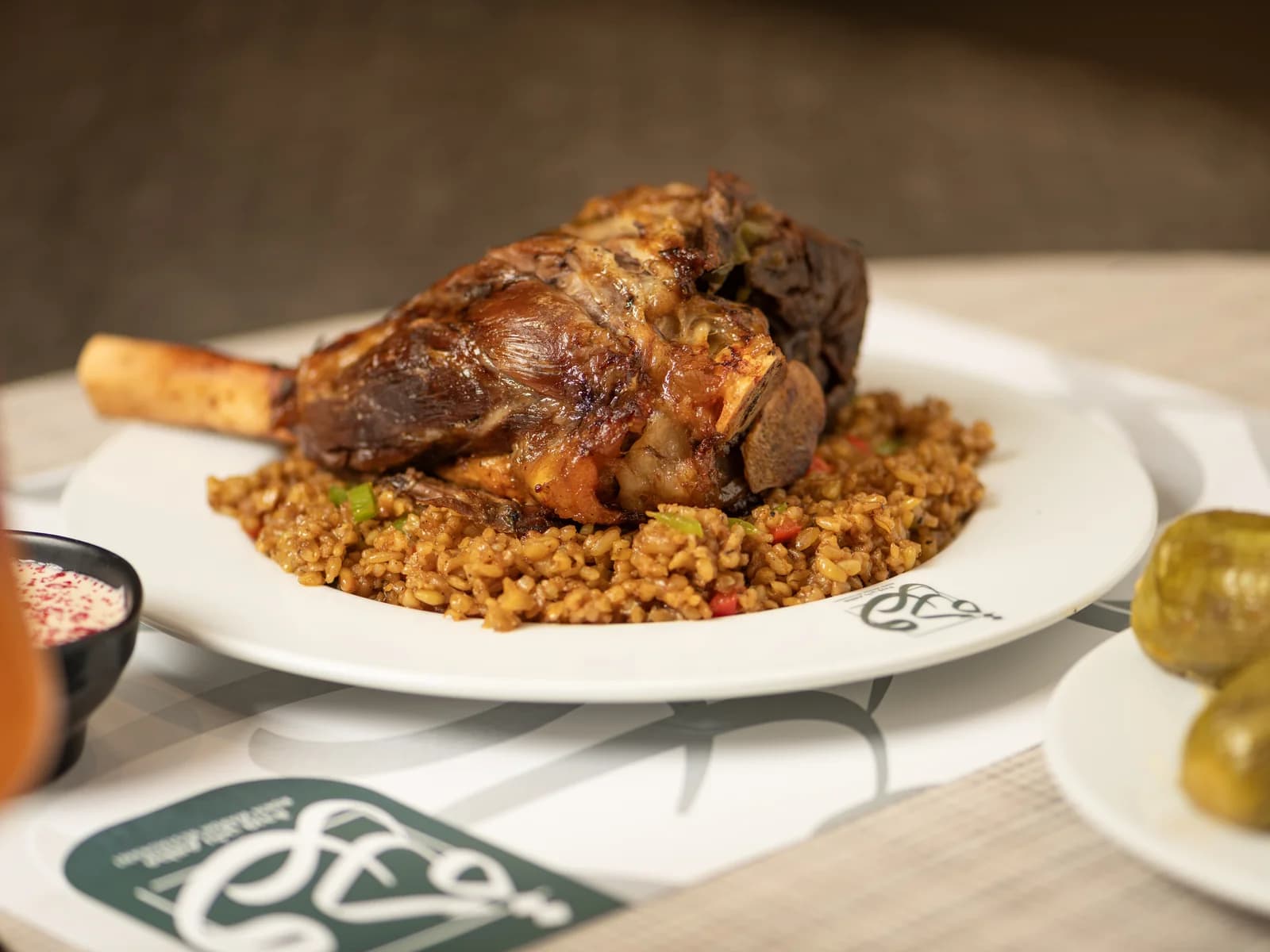
Freekeh is wheat harvested while still green and roasted, which gives it a light smoky taste. It is known in other cuisines of the region too, but in Egypt it is tied to stuffing pigeon and is served beside lamb.
Example: pigeon stuffed with freekeh at a family feast.
7. Samna baladi
Samna baladi (clarified butter) has a special place in Egyptian cooking, especially for the older generation and in the countryside: the taqleya is made with it, rice is sautéed in it, and it goes into feteer meshaltet and desserts. Its smell is one of the things that most reminds Egyptians of their grandmother's house. Today many homes mix it with oil or use oil only; every home has its way.
Example: feteer meshaltet made with samna, with honey and cheese at breakfast.
8. Desserts with milk and cream
Egyptian desserts love milk and cream: hot om ali with nuts, rice pudding, kunafa with cream (kunafa is known across the region, and Egyptians love it with cream), and basbousa. They are usually eaten after the meal, with a glass of tea.
Example: a hot dish of om ali after lunch.
The 8 traits in one table
| Trait | What it means | Example | On Rokn Warda's menu |
|---|---|---|---|
| Taqleya | Garlic and dried coriander fried and poured over the food | Molokhia | Molokhia casserole |
| Stews and rice | Vegetables and meat in sauce, with rice beside | Okra with meat | Okra & beef casserole, potato & beef casserole, Egyptian vermicelli rice |
| Mahshi | Vegetables and birds stuffed with rice or freekeh | Mixed mahshi | Mixed mahshi, stuffed vine leaves, mombar, rice-stuffed pigeon |
| Bread and fatteh | Toasted bread, rice, vinegar and garlic | Meat fatteh | Beef fatteh, lamb shank fatteh, meat hawawshi |
| Pulses and street food | Ful, taameya, lentils and koshary | Lentil soup | Lentil soup (ful, taameya and koshary are not on the menu) |
| Freekeh | Roasted green wheat | Pigeon with freekeh | Freekeh-stuffed pigeon, lamb shank with freekeh |
| Samna baladi | The traditional cooking fat of Egyptian homes | Feteer meshaltet | Culture only (feteer is not on the menu) |
| Milk and cream desserts | Milk, cream and nuts | Om ali | Om ali, rice pudding, kunafa with cream |
In Saudi Arabia: how to find this taste
If you live in Saudi Arabia and want to taste these traits together, look for a place that makes stews, mahshi and fatteh, not only grills, because these are the dishes that carry the spirit of the Egyptian home. Why this food has become close to so many people in the Kingdom is in Egyptian food in Saudi Arabia.
At Rokn Warda on Al Yarmouk Street in Al Khobar you can go through the traits one by one:
- Taqleya, stews and rice: molokhia casserole or okra & beef casserole, with Egyptian vermicelli rice beside them.
- Mahshi: mixed mahshi with cabbage, vine leaves, peppers, zucchini and aubergine.
- Bread and fatteh: beef fatteh or lamb shank fatteh.
- Freekeh: lamb shank with freekeh or freekeh-stuffed pigeon.
- Pulses: lentil soup to start.
- Dessert: warm om ali, or kunafa with cream.
If you are choosing between lunch and dinner, read Egyptian dishes for lunch and dinner.
Common questions
What is the single most distinctive thing about Egyptian food? There is no single answer, but if we pick two: the taqleya that gives stews their aroma, and stew beside rice as the base of lunch. The rest comes around them.
Is Egyptian food spicy? Mostly not. The Egyptian taste relies on few spices such as cumin, coriander and garlic, and chilli is usually served on the side for each person to add.
Is Egyptian food heavy? Some dishes are rich, like fatteh and trotters, and some are lighter, like lentil soup, salads and grills. You can build your table the way you like.
Can I find koshary, ful and taameya at Rokn Warda? No. They are among Egypt's best-known foods, which is why we mention them, but they are not on Rokn Warda's menu. What we serve is what is on the menu.
Taste the difference yourself
The best way to know what makes Egyptian food distinctive is to taste it. Order from the menu for delivery in Al Khobar and Dammam (the available districts show as you order), or come to our dining room in Al Khobar and book your table. Start with a taqleya dish and a mahshi dish, and keep dessert for last.