In the early twentieth century, Cairo and Alexandria were cities full of languages and nationalities. On a single street you might find a Greek grocer, a Levantine sweet shop, an Armenian basterma shop and an Italian bakery. Older people tell of those days as if they were another age, and what is certain is that these communities left a mark on the food of Egyptian cities that we still feel today.
In this article we talk about the best-known communities that lived in Egypt and what is said about each one's influence on food. We will not name shops or people, because many of these stories are passed down by word of mouth and their details change from one teller to the next.
In this article
- 1Cosmopolitan Egypt
- 2The Greeks: groceries, pastry shops and cafés
- 3The Levantines: sweets and Levantine cooking
- 4The Armenians: basterma and sausage
- 5The Italians: pasta, baking and ice cream
- 6Food that "became Egyptian"
- 7After the communities left
- 8Frequently asked questions
- 9The city's story on your table in Al Khobar
Cosmopolitan Egypt
From the nineteenth century, with expanding trade, the digging of the Suez Canal and growing cities, many communities came to live and work in Egypt, most of them settling in Alexandria and Cairo and the Canal cities. Alexandria in particular became famous as a "cosmopolitan" city, one that brought people from many countries together in one place.
Food was one of the clearest places where these communities showed: shops, bakeries, sweet makers, restaurants, and recipes that entered Egyptian homes through neighbours and friendships and became Egyptian over time.
The Greeks: groceries, pastry shops and cafés
The Greeks were among the largest communities in Egypt, and they are well known for:
- Groceries: the phrase "the Greek grocer" (el-ba'al el-gerigi) recurs in old stories about the corner shops found in many neighbourhoods.
- Pastry shops and bakeries: shops for sweets, gâteaux and European-style baked goods, some of which became landmarks of downtown Cairo and Alexandria.
- Restaurants and cafés: especially in Alexandria, including fish restaurants and Greek-style mezze.
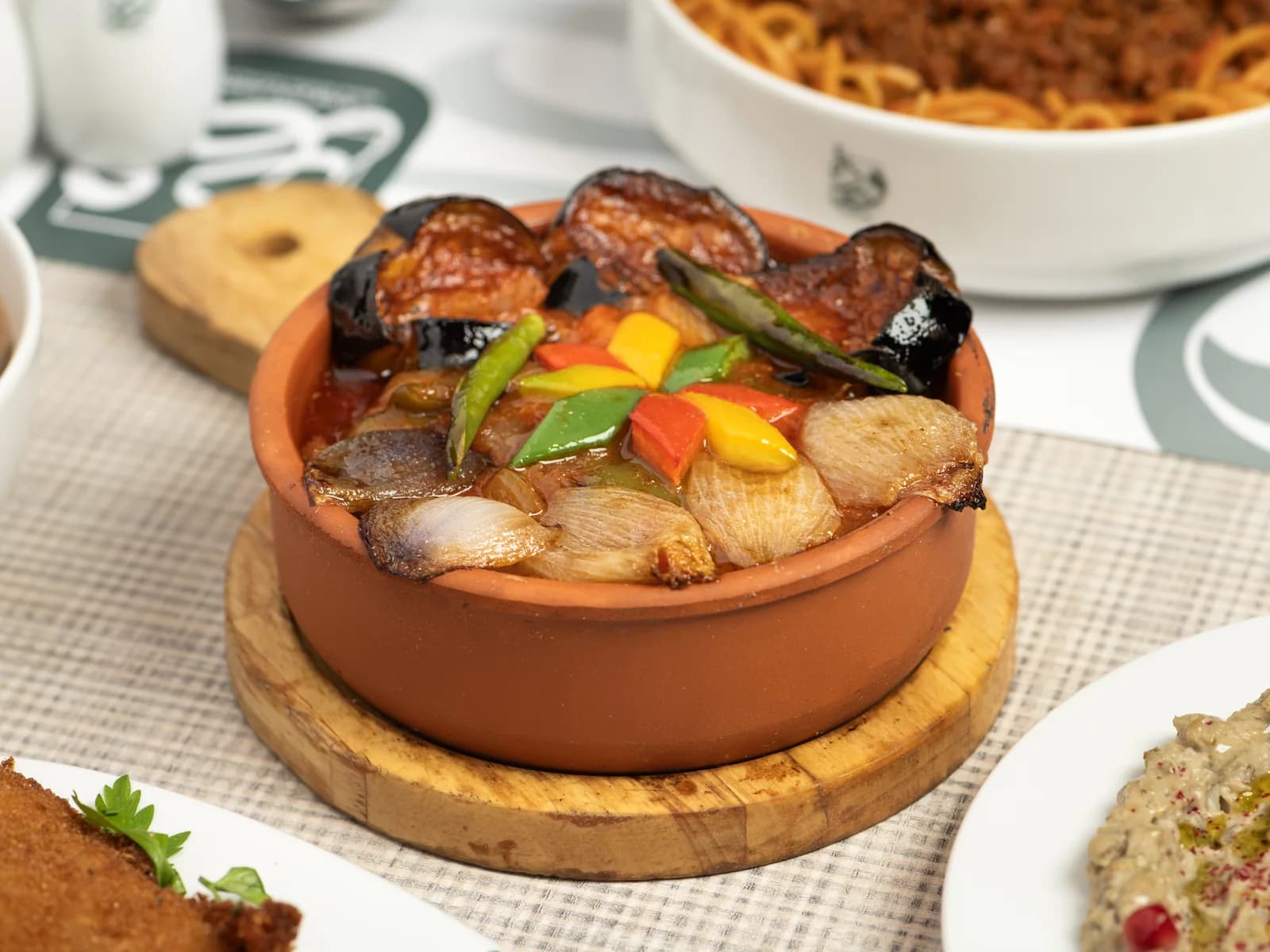
Moussaka: a shared name, a different dish
Moussaka is a nice example of the ties between kitchens: the name exists in Greece, Turkey and Egypt, but Egyptian moussaka has its own look and taste. The full story is in Egyptian moussaka.
The Levantines: sweets and Levantine cooking
The Shawam, people from Syria, Lebanon and Palestine, are said to have settled in Egypt in large numbers in the nineteenth and early twentieth centuries, working in trade, the press and the arts, and in food too. Among the influences commonly attributed to them:
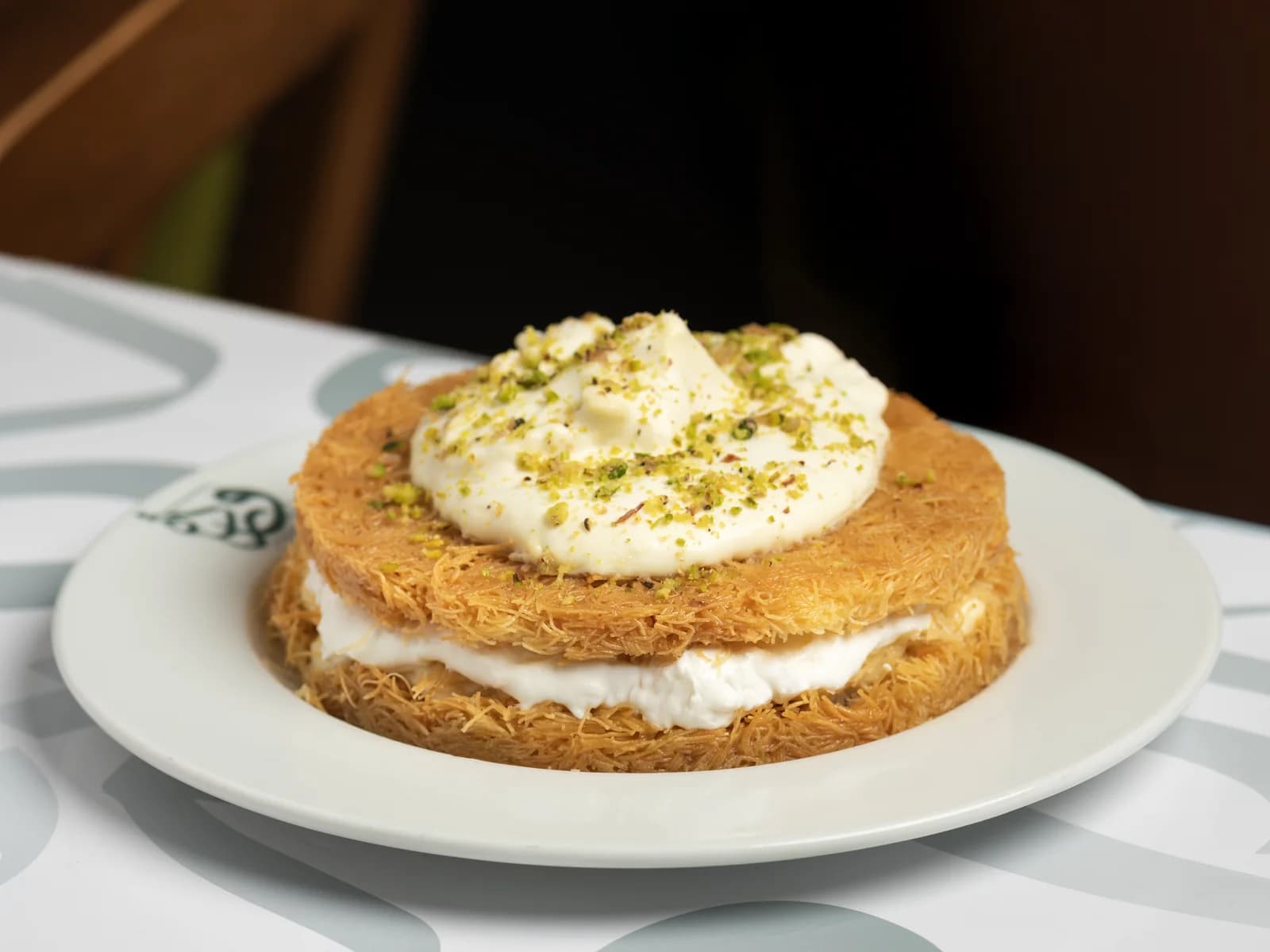
- Levantine sweets: baklava and other oriental sweets made the Levantine way, whose shops came to stand beside Egyptian sweet makers.
- Levantine mezze: such as hummus with tahini and tabbouleh, which spread through city restaurants.
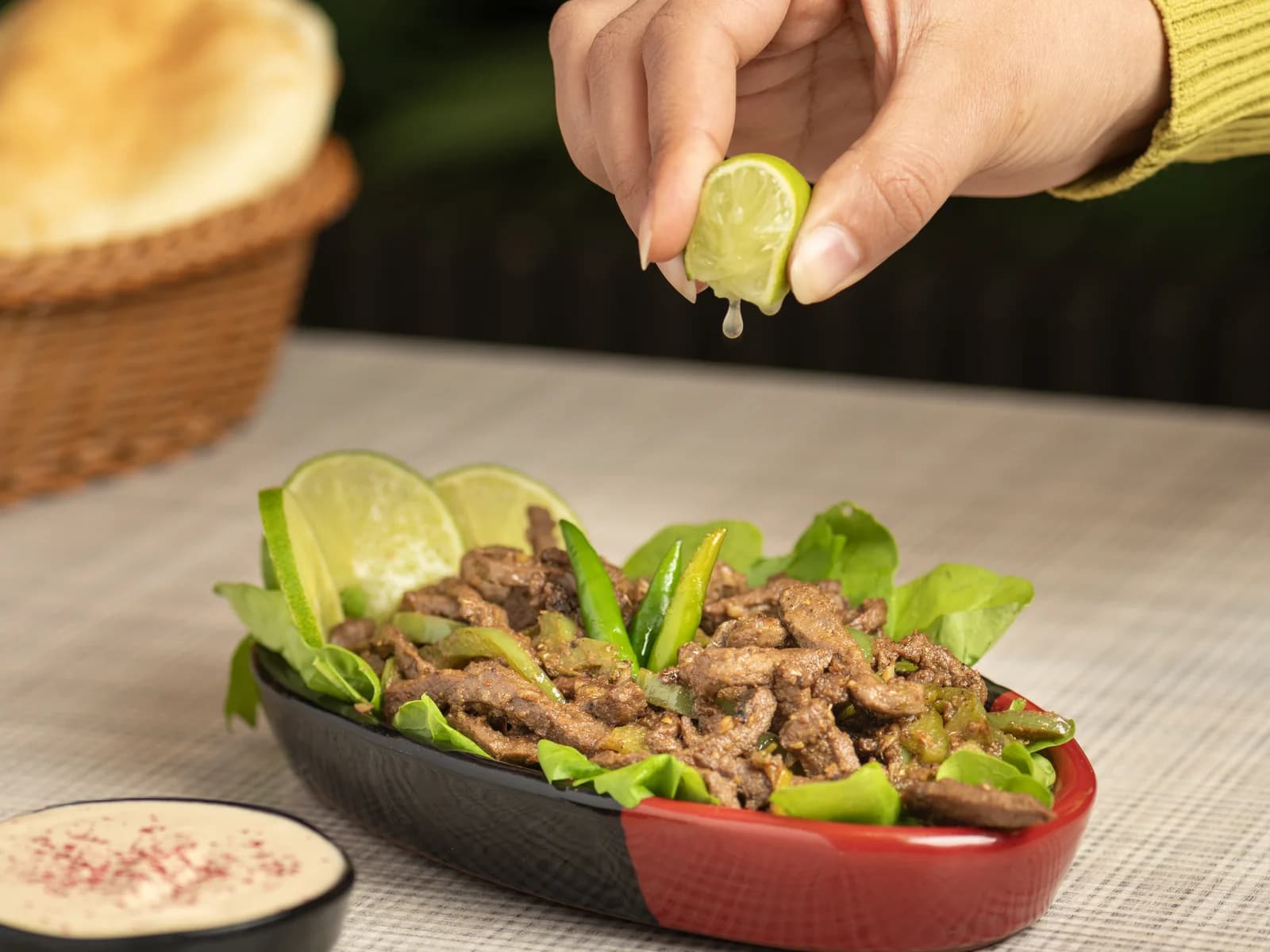
- Shawarma and Levantine sandwiches: which over time became part of street food in Egyptian cities.
Still, Egyptian and Levantine cooking shared a great deal long before that, through neighbourliness and history, so not everything they have in common came with the community. Read about the differences in grilling in Egyptian, Levantine and Turkish grills.
The Armenians: basterma and sausage
Armenians lived in Egypt for a long time, and more of them arrived in the early twentieth century. The best-known thing Egyptians link with Armenians in food:
- Basterma: meat cured with fenugreek and spices and dried. A well-known story says that basterma shops in Cairo were tied to Armenians, and that Egyptians came to love it from their shops. Basterma also has Ottoman roots, which we cover in What did the Ottomans leave in Egyptian cuisine?.
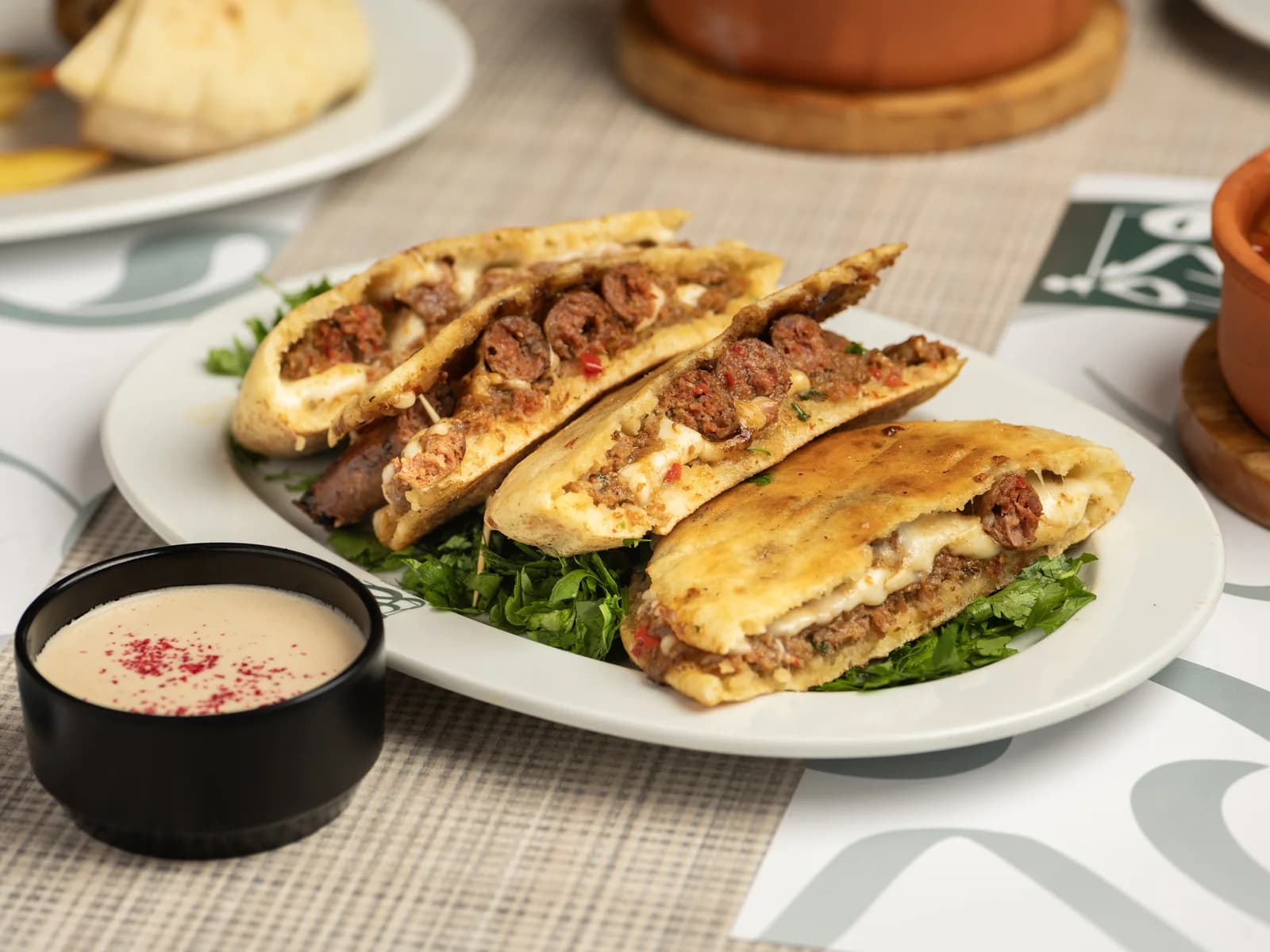
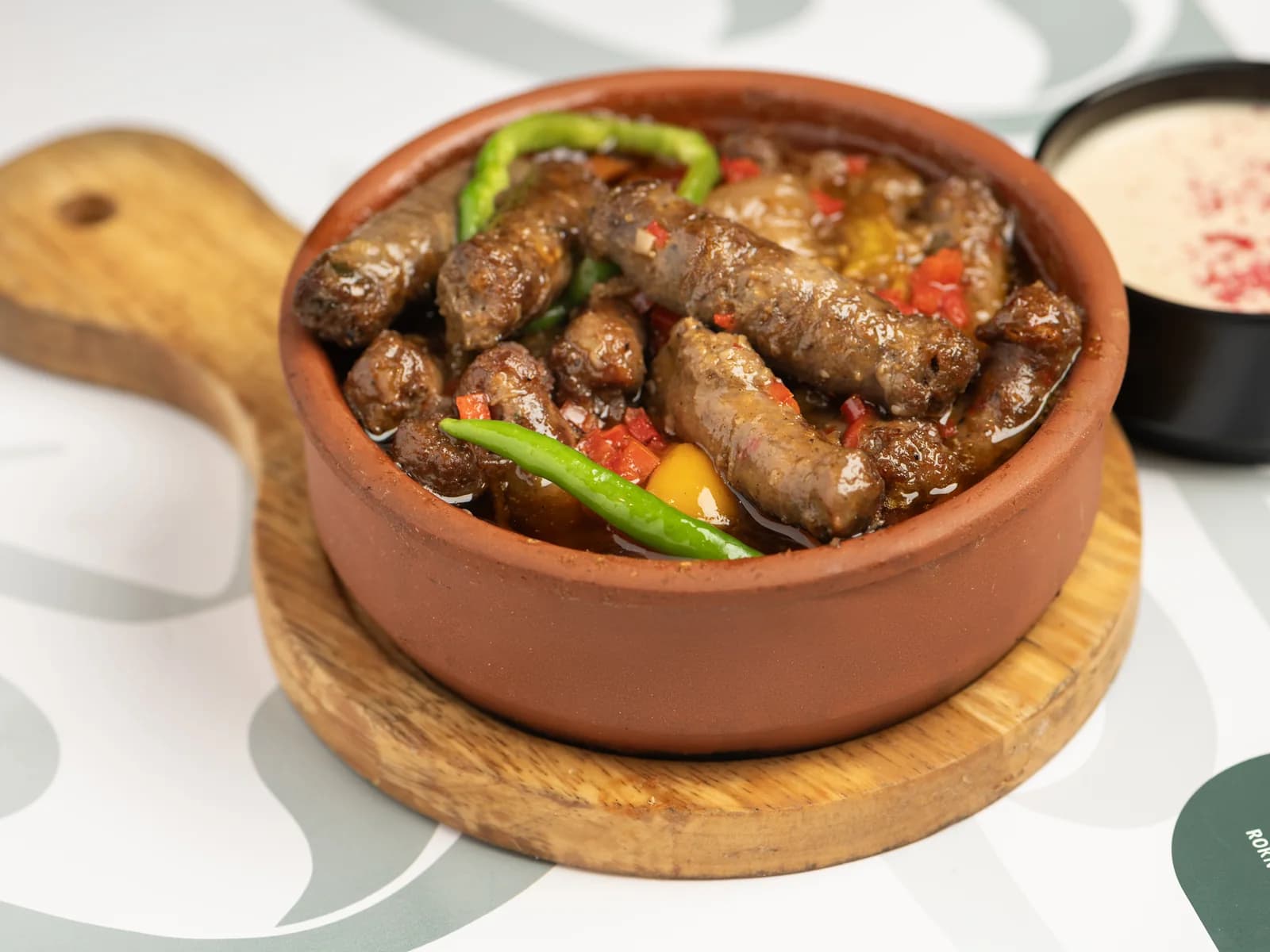
- Sausage: it is said that spiced sausage was among the familiar items in their shops, and Egyptian sausage today has its own character and seasoning. Read about it in Egyptian sausage and naqaniq.
The Italians: pasta, baking and ice cream
The Italians also had a large community, especially in Alexandria. What is commonly said about their influence:
- Pasta: it became everyday food in Egyptian homes, though its spread has many causes, not the Italian community alone.
- Bakeries and pastries: kinds of bread, biscuits and pastries made the European way.
- Ice cream: it is said that Italian-style ice cream shops were part of the face of old Alexandria.
- Kitchen words: like the word "makarona" itself, which comes from Italian.
And béchamel?
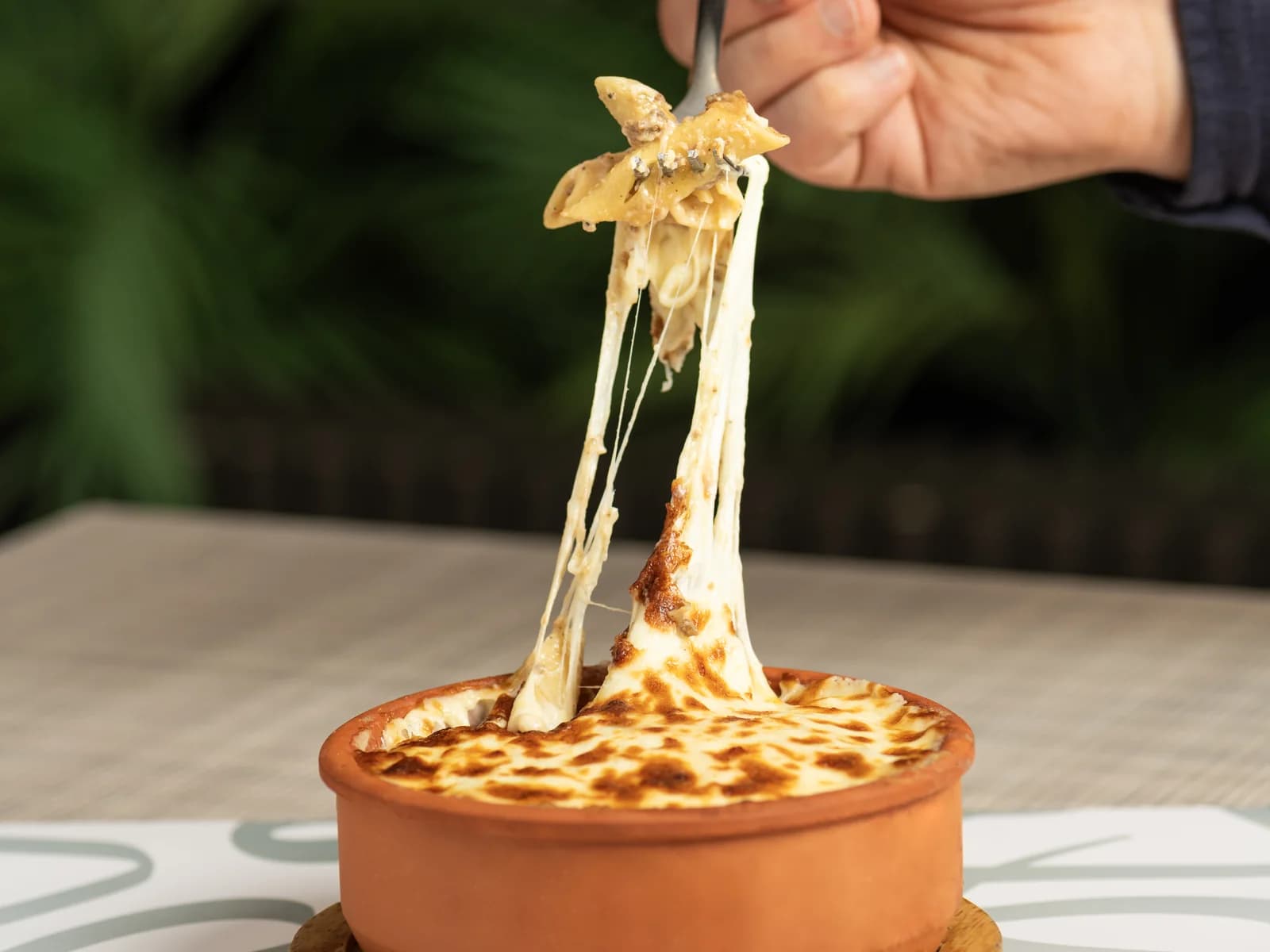
Macaroni béchamel is a very Egyptian dish whose sauce has a French name (béchamel) and whose main ingredient is Italian (pasta), yet it was made in a thoroughly Egyptian way until it reached every home. The story is in The story of macaroni béchamel.
Food that "became Egyptian"
The loveliest part of the story is that the food that came with these communities did not stay as it was: Egyptians took it and added the ghee, garlic, tomato sauce and spices they love, until it became Egyptian food with an Egyptian taste. Egyptian moussaka is not the Greek one, Egyptian macaroni béchamel became a dish in its own right, and Egyptian sausage has a seasoning every Egyptian recognises.
It worked the other way too: the communities themselves, it is said, came to love Egyptian food, and molokhia, ful and mahshi entered many of their homes, because living side by side for many years makes the table a shared one.
A plate going out, a plate coming back
In the buildings and neighbourhoods that brought different nationalities together, being neighbours was the strongest cooking school. A story repeated in many homes tells how an Egyptian woman would send her neighbour a plate of mahshi, or kahk at the feast, and the neighbour would return the plate filled with something from her own kitchen. From that plate the questions began: "How did you make it?" The recipe was written down, entered the home and changed a little to suit the family. In this simple way, it is said, many recipes passed from kitchen to kitchen without anyone recording their history.
After the communities left
As circumstances changed in the middle of the twentieth century, large numbers of these communities left Egypt. Some of their shops closed, some carried on with new owners, and some still carry their old names on the sign. But the biggest mark remained in homes: recipes neighbours learned from one another, and dishes that became part of the everyday Egyptian table, so much so that nobody asks where they came from.
Frequently asked questions
Is moussaka a Greek dish? The name is shared by many kitchens in the region, but Egyptian moussaka has its own method and taste.
Is basterma Armenian or Turkish in origin? Its roots are tied to Ottoman cooking, and a well-known story in Egypt holds that Armenians were among its most famous makers and sellers.
Which Egyptian cities were most influenced by these communities? Mostly Alexandria and Cairo, where most communities lived, and Alexandria in particular was famous for its cosmopolitan character.
Is this food still found in Egypt? Yes, much of it has become part of ordinary Egyptian food, such as macaroni béchamel, moussaka, sausage and Levantine sweets.
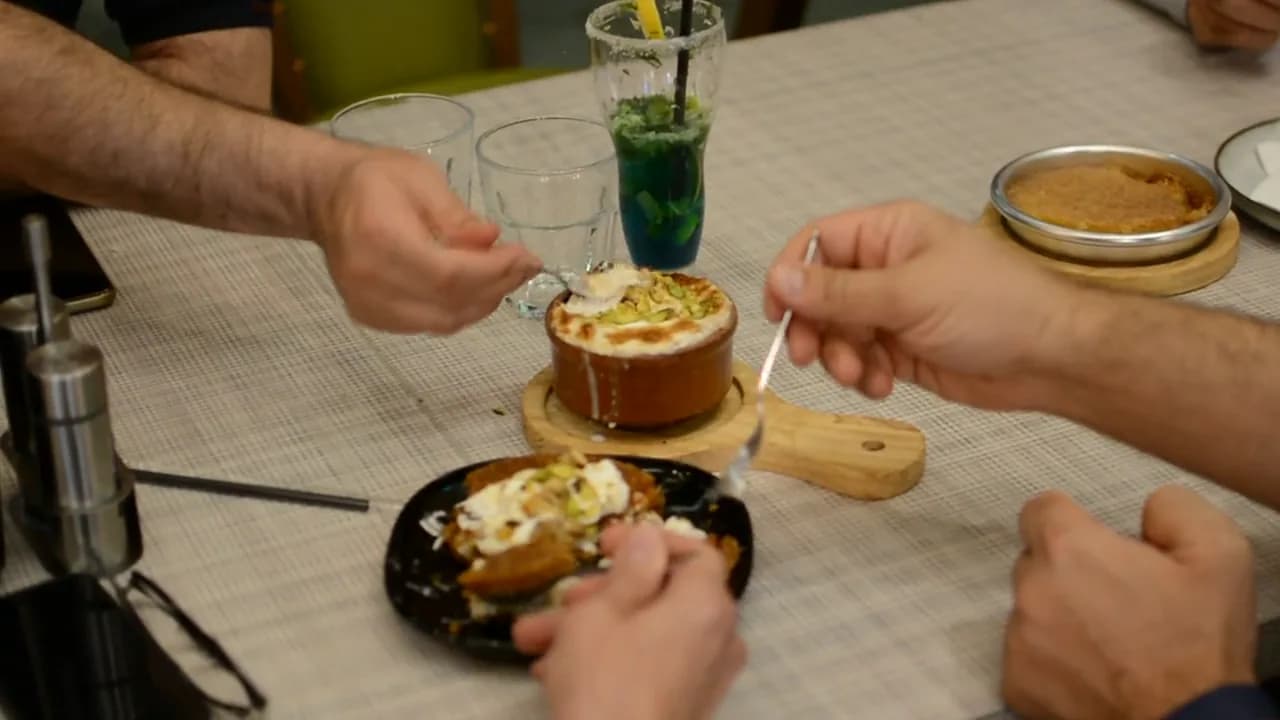
Did kunafa come with the Levantines? No, kunafa has been known in Egypt for a very long time, as we tell in Food in Fatimid and Mamluk Cairo. But Levantine sweet shops added new varieties and ways of serving.
The city's story on your table in Al Khobar
The food of Egyptian cities is the story of many people who lived together. At Rokn Warda on Al Yarmouk Street in Al Khobar, you can taste Egyptian dishes that have neighbours in other kitchens: moussaka with minced meat, macaroni béchamel casserole, sausage casserole and sausage hawawshi, then finish with kunafa with cream and a Turkish coffee. Browse the full menu, read The story of macaroni béchamel, and book your table.